1926: The Gold He Took to His Grave: Two Men Hanged in Fremantle for Killing Two Police Officers

William Coulter and Phillip Treffene were illegal gold buyers on the Kalgoorlie goldfields, trading in stolen bullion. When Detective-Inspector John Walsh and Sergeant Alexander Pitman closed in near Boulder on 28 April 1926, the two men shot them dead, then cut up and burned as much of the bodies as they could before dumping the rest down a mineshaft.

At trial, the pair claimed the shootings were a freak accident, a shotgun discharging as Treffene stumbled while fleeing. The jury took four hours to reject the story, returning a verdict of guilty and adding that they bitterly regretted the accomplice who had helped dispose of the bodies was not standing trial alongside them.

In the condemned cell, Coulter let slip a stranger secret: for years he had buried stolen gold bars across the goldfields, marking a chosen tree with a notch and pacing out the distance with a length of string he always carried. He never told a soul where the bars lay, and with his death the locations, worth thousands of pounds, were lost for good.

Coulter and Treffene were hanged in Fremantle on this day in 1926, within minutes of each other.

Both protested their innocence from the gallows. Coulter said, "I am innocent of the crime that I have been charged with," while Treffene called it, "purely and simply an accident."
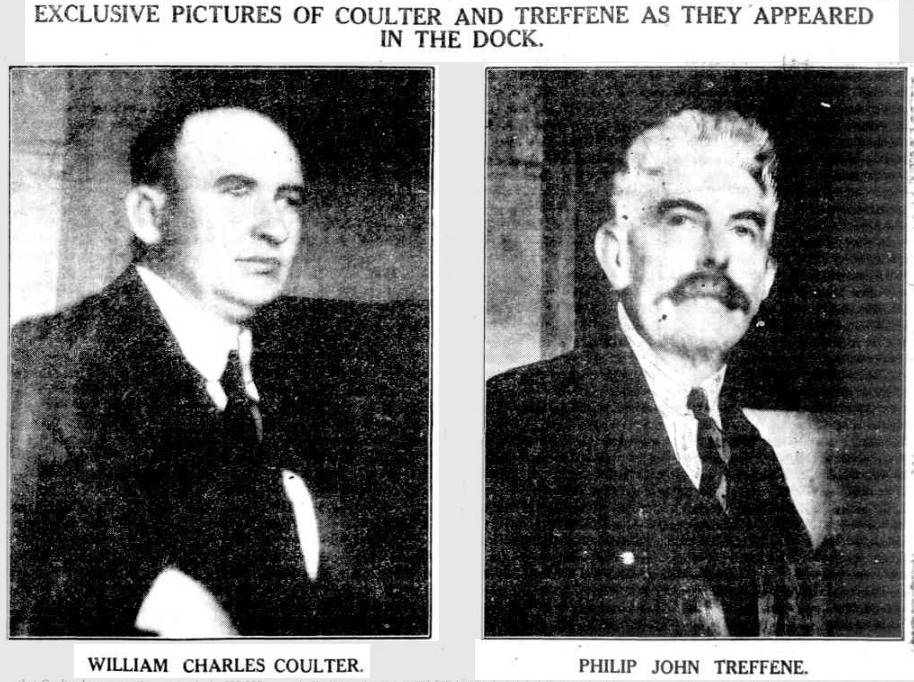

Coulter and Treffene in the dock courtroom pictures 1926

⬅ See all events from 25 October

Spread the word on your favourite platform!

1884: He Helped Murder a Policeman, Then Willed His Estate to the Widow

Thomas Carbury and an accomplice, Andrew Miller, were arrested for drunkenness in a small Western Australian town, and Constable Patrick Hackett refused to return the new clothing found in their swag, worth about £20, until they explained how they had got it. Released that evening, the pair bludgeoned and stabbed him to death on 12 September 1884; the hammers used on him turned up cleaned but still blood-stained, quietly returned to the local blacksmith's shop.

Police hunted the two men for a week. Cornered in a shootout, Miller was fatally wounded and confessed with his dying breath that "both Carbury and myself killed him." Carbury fled but was soon tracked down and arrested, reportedly carrying a bottle of strychnine, as if hoping to cheat the gallows.

Awaiting execution in Perth, Carbury made a will leaving his savings, horses and stock of cut sandalwood entirely to Hackett's widow. He never once spoke his victim's name, calling him only "that man," and said he wanted everything he owned "to go to the benefit of the child of that man." He was hanged in Perth on this day in 1884, so overcome with terror that two constables had to carry him to the scaffold.

He had earlier acknowledged his guilt to the prison chaplain, though he never explained why he and Miller had killed Hackett.

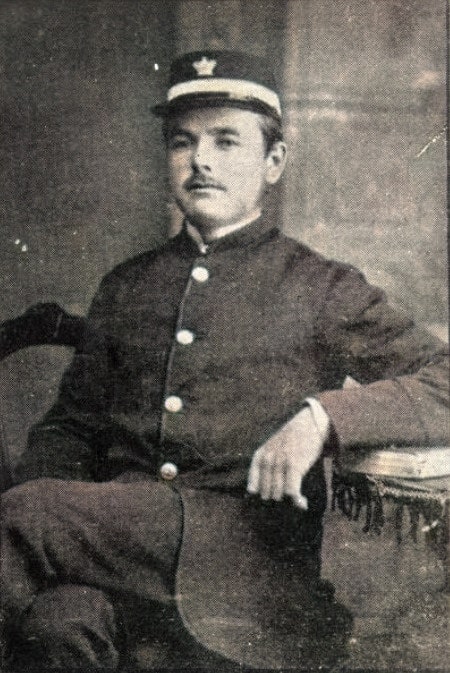
Portrait of police Corporal Evan Williams Western Australia

⬅ See all events from 23 October

Spread the word on your favourite platform!

1907: The Confession That Confessed Nothing: Hanged in Fremantle for the Waroona Farm Murder

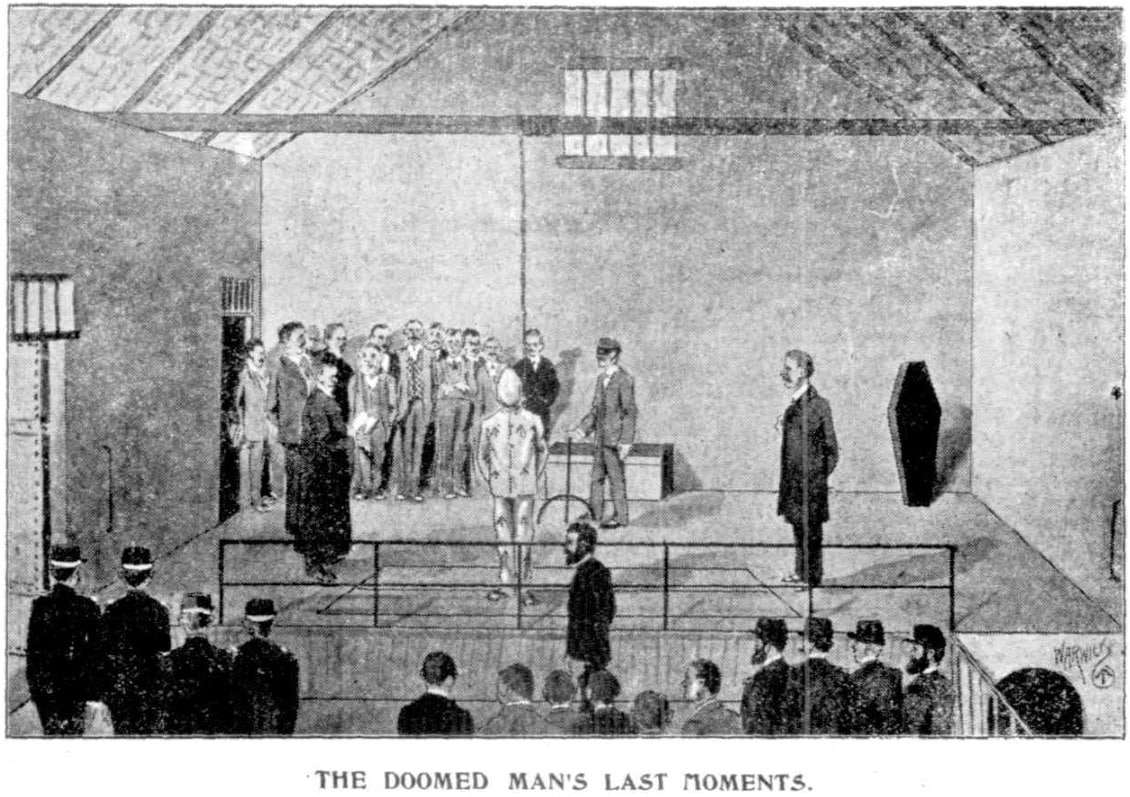
Augustin De Kitchilan, a young drifter from Ceylon, had been living and working at Leah Fouracre's isolated farm near Waroona, Western Australia, breaking in her horses in exchange for board. When Fouracre disappeared in mid August 1907, her farmhouse was found burnt to the ground with her charred remains inside, while De Kitchilan was soon found riding her horse and pawning her jewellery across the district. Convicted of her murder after a trial in Perth, he was hanged at Fremantle Prison on 23 October 1907. In his final days he wrote what he titled 'my last confession', a rambling letter to the public that never actually admitted guilt, instead taunting readers in verse to guess who had pulled the trigger if not him. De Kitchilan denied the murder to the end, declaring at his sentencing, 'I absolutely deny the committal of the dirty crime with which I am charged.'

Kitchilan's Execution for the Peppermint Farm Murder : Illustration 1907

⬅ See all events from 23 October

Spread the word on your favourite platform!

1986: Forced to Write Home That She Had Gone Away: a Perth Murder by the Birnies

Susannah Candy was walking home along Stirling Highway in Perth when she accepted a lift from David and Catherine Birnie, unaware of the danger awaiting her. She was taken to the couple's home, held captive and forced to write letters to her family claiming she had run away to Queensland with friends.

On 20 October 1986, Susannah was murdered by the couple, who subsequently buried her body in a shallow grave in a State Forest. The letters, posted from Perth and Fremantle, led her family to believe she was safe for weeks, concealing the terrible truth of what had happened to her.

Girl writing a letter on white paper with a black pen

⬅ See all events from 20 October

Spread the word on your favourite platform!
On This Day in True Crime History

Subscribe to Dark Stories

True crime stories, dark history and tour news, straight to your inbox.