1952: Australia’s First Thallium Poisoning Murder Conviction: Yvonne Fletcher Sentenced to Death in Sydney

At the Central Criminal Court in Sydney, 30-year-old Yvonne Gladys Fletcher of Newtown was sentenced to death after a seven-day trial for the 1948 murder of her first husband, Desmond George Butler, who died after months of wasting illness caused by thallium poisoning. Asked if she had anything to say before sentence was passed, she replied simply, “No, your Honor,” but moments later a prayer book she had carried through every day of the trial crashed to the floor and she collapsed in the dock, sobbing, as police lifted her out.

Mr Justice Kinsella told the court the crime was “horrible” because the poison had been “secretly administered within the family circle” to an unsuspecting victim, destroying him “mentally and physically while permitting him to linger for months in wretched agony.” Fletcher was the first person in Australian criminal history convicted of murder by thallium poisoning, and the jury recommended that the sale of the poison to the public be banned outright.

What the sentencing did not reveal to onlookers was already known to the court: Fletcher had also been committed for trial over the death of her second husband, who had died from the same poison at Newtown only months earlier. The Crown Prosecutor noted the chilling parallel between the two cases, telling the jury, “There is no question that both Butler and Fletcher died from thallium poisoning… the same matrimonial discord, the same hatred towards each man, the same sudden illness, and the same dreadful symptoms.” The judge himself observed that had this conviction concerned her second husband, evidence of his cruelty toward her might have offered some mitigation, but no such excuse existed for the killing of her first.
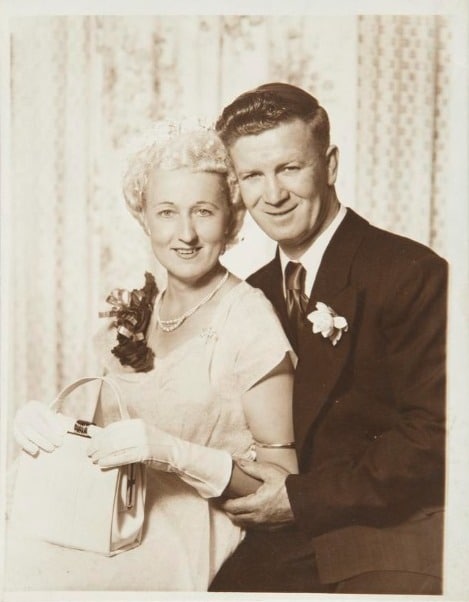

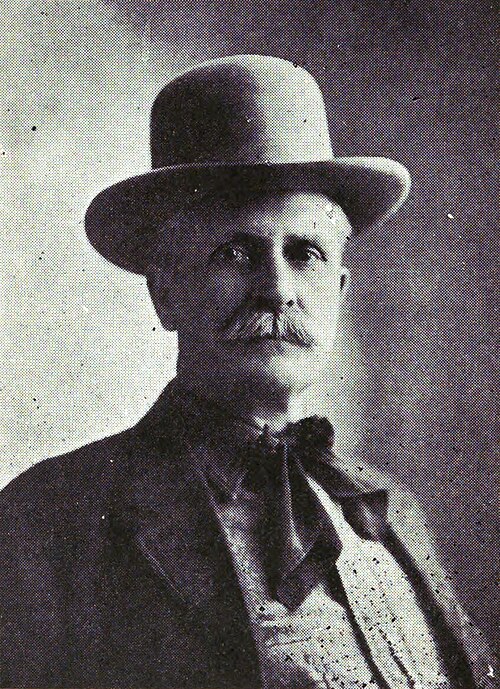
Yvonne Fletcher and Second Husband: Photograph by Robert Haswell. Gift, 2006. Justice & Police Museum Collection, Museums of History New South Wales, JP2006/1.

⬅ See all events from 23 September

Spread the word on your favourite platform!

1852: The Last Public Hanging in NSW: Francis Thomas Green Executed at Darlinghurst Gaol

Francis Thomas Green was hanged at Darlinghurst Gaol on 21 September 1852 for the murder of John Jones at Buckley’s Creek on 10 March that year, shot dead with a pistol. The execution holds a grim distinction: it was the last public hanging carried out in New South Wales.

The morning of the execution broke dark and drizzling, yet the crowd was of the usual size, with women reportedly outnumbering men by nearly three to one. A carriage carrying women described by the press as being of “respectable exterior” was drawn up directly in front of the gallows, its occupants showing what one newspaper called a “disgusting eagerness” to secure the best view, while mothers nursed infants and children ran boisterously among the onlookers.

Green’s wife visited him for a final farewell the day before his death, the only moment he was seen to show real emotion. He spent his last night in prayer with a Roman Catholic priest, having initially refused all ministers before requesting Catholic clergy in his final days.

Green made a partial admission to a gaol official before his death, saying that Jones had fallen by his hand “in the heat of a sudden quarrel”.

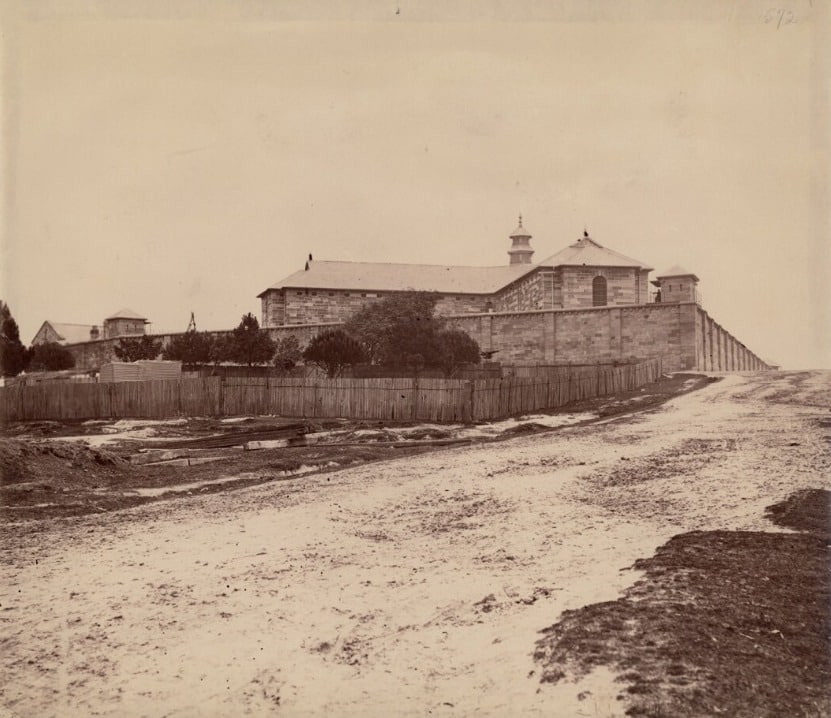
Darlinghurst Gaol northeast corner view from Burton Street 1870

⬅ See all events from 21 September

Spread the word on your favourite platform!

1811: No Reprieve: The Killers Confession Ignored as a Convicted Man Is Hanged Two Days Late

John Dunn was convicted at the Parramatta Court of Criminal Jurisdiction of murdering Mary Rowe, largely on the testimony of a sixteen year old accomplice, John Welch, whose evidence also saw Welch’s father, Thomas Welch, convicted as an accessory after the fact.

Dunn was due to hang at Parramatta two days beforehand, on Monday 16 September 1811, but as the execution was about to proceed the boy, John Welch, suddenly retracted everything he had sworn at trial. He declared Dunn innocent and claimed that he and his father were the true killers. The Acting Provost Marshal, unable to consult anyone and acting on what observers called motives of humanity, respited the hanging on the spot.

The reprieve lasted only two days. Dunn was finally executed at Parramatta on the Wednesday following, as near as possible to the site of the murder itself, amid what one witness described as far gloomier circumstances than the original sentence would have produced.

After he was cut down, Dunn’s body was delivered to the medical officer at Parramatta General Hospital, where it was dissected and anatomised before burial. The scaffold retraction left lingering public doubt over Dunn’s guilt, with contemporary accounts noting the boy’s claim that Dunn was innocent and that he and his father were the real perpetrators.

Lady Justice Themis statue on gallows with scales and sword

⬅ See all events from 18 September

Spread the word on your favourite platform!

1811: A Last-Minute Recantation at the Gallows Delays the Execution of John Dunn at Parramatta

John Dunn, Thomas Welch and Ann Wilson were charged before the Court of Criminal Jurisdiction at Parramatta with the murder of Mary Rowe. After a lengthy hearing, the court convicted Dunn of the murder largely on the evidence of an accomplice, John Welch, a boy of about sixteen.

Dunn was ordered hanged the following Monday, between eight and twelve. But as the execution was about to proceed, the teenage witness suddenly retracted his sworn testimony in front of the assembled spectators, declaring that Dunn was innocent and that he and his father, Thomas Welch, were the true killers. The Acting Provost Marshal, with no precedent to guide him, respited the hanging, which did not take place until the following Wednesday, under far gloomier circumstances than before.

Despite the boy’s dramatic gallows reversal accusing himself and his father of the killing, the original verdict against Dunn stood and his execution went ahead two days later than planned.

Lady Justice Themis statue on gallows with scales and sword

⬅ See all events from 16 September

Spread the word on your favourite platform!
On This Day in True Crime History

Subscribe to Dark Stories

True crime stories, dark history and tour news, straight to your inbox.