Robert Johnson, who travelled under the alias William Nugent, had three horses and an outstanding warrant for supplying liquor to Aboriginal people near Wellington when Trooper Harry Pearce caught up with him on the road to Kingston, South Australia, that May. The two rode off together on apparently friendly terms, but when Johnson dismounted to light his pipe and refused to go further, Pearce moved to handcuff him, and Johnson drew a knife, stabbing him again and again before unsaddling his horse and riding away.
Pearce lay in the roadside grass for hours before a passerby found him waving a handkerchief. Carried into Kingston, he lived four more days, long enough to identify his attacker from his sickbed: "That's the man that stabbed me, and that's the knife he did it with." Johnson was run down soon after, his knife still stained with blood, and at his trial that October a jury needed only fifteen minutes to convict him of wilful murder.
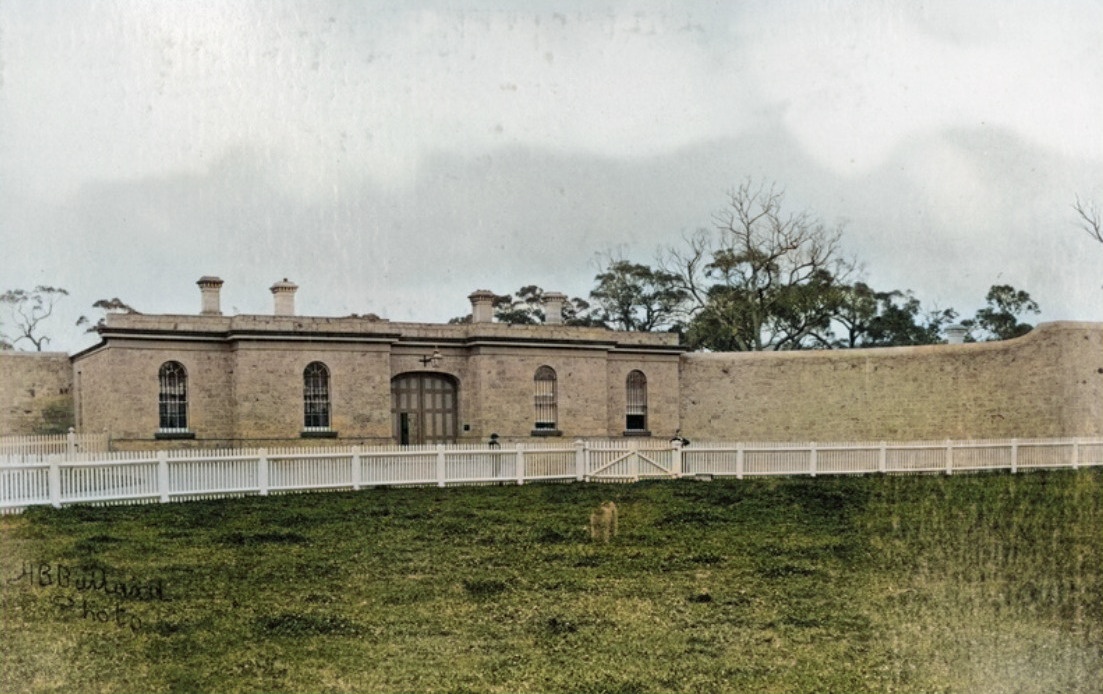
He petitioned the governor for mercy, arguing the trooper had provoked him by trying to handcuff him over the unlit pipe, but the plea was refused, and he was hanged at Mount Gambier on this day in 1881.
On the scaffold he made no statement beyond a final request to his priest: "See that my body is put in consecrated ground." The law required otherwise, and he was buried within the gaol walls.