1816: The Black Beau of London, Hanged in SydneyAustralia

Daniel Moowattin was raised from infancy by the colony's own flogger and hangman, grew up fluent in English manners, and became a trusted bush guide to the botanist George Caley. In 1810 Caley took him to London, where society was charmed by his polished English and the latest fashions; one newspaper called him, admiringly, "a black beau." He even sang his own songs at a London party before confessing he longed for home, telling a companion he found more pleasure under a gum tree with his own people than anywhere in England.

He returned to the colony in 1812 and drifted between farm labour and life in the bush. That August, a teenage girl named Hannah Russell was walking alone on a road near Parramatta when, she testified, Moowattin dragged her into the scrub, beat and assaulted her, robbed her of money, then beat her again before a passing stockman frightened him off.

Under the colony's rules, Aboriginal people could not ordinarily be tried in its courts, but the men who knew Moowattin argued he no longer counted as one of them: he dressed, worked and spoke like a settler. On that reasoning he became the first Aboriginal man ever tried before a court in New South Wales, and on this day in 1816 he was hanged in Sydney alongside two men convicted of highway robbery, the first Aboriginal person legally executed in colonial Australia.

Governor Lachlan Macquarie claimed in his records that all three "confessed their crimes... and died penitent."
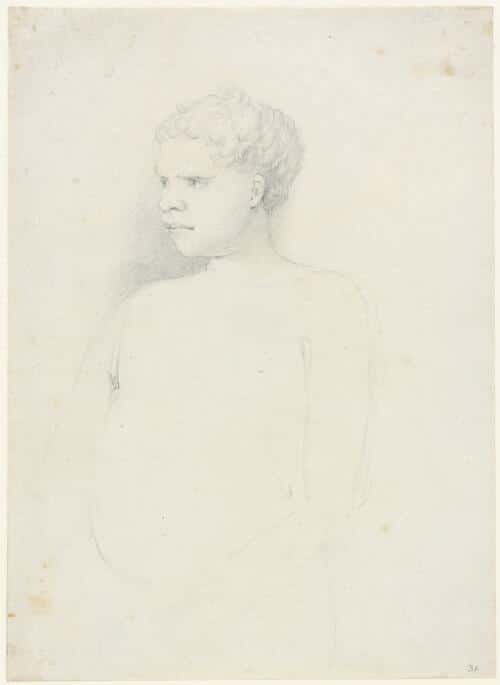
Port Jackson, a Native Boy; contemporary to Moowattin, William Westall, 1802. Courtesy of the National Library of Australia.

⬅ See all events from 1 November

1826: A Colonial Newspaper Pleaded for Mercy: Two Men Hanged at Hobart for the Murder of a Stock-Keeper

Thomas Colley, a stock-keeper at Oyster Bay in Van Diemen's Land, was speared to death in 1826. Contemporary reports said the elder of the two Aboriginal men accused had concealed himself behind a fence, waited for his opportunity, then speared Colley. Both men were also charged in connection with the wounding of Colley’s employer.

Before trial, the elder man was reported to be suffering from leprosy and was kept apart from the other prisoners. During the hearing, he reportedly attempted to show that he did not understand English, although evidence was given that he spoke the language with reasonable ease.

Both men were convicted. At sentencing, one denied killing Colley and said the other man had thrown the spear, while his co-accused made no statement. Sentence of death was passed on 2 September 1826, and both men were hanged at Hobart on 13 September.

A contemporary newspaper questioned whether Aboriginal Tasmanians, with little or no knowledge of British law or Britain’s claim to their land, should be subjected to a legal system imposed by colonists. It also argued that the executions would have little deterrent effect, since other Aboriginal people were unlikely to witness them or even hear of them, and appealed for the condemned men’s lives to be spared.

Antique silver pocket watch resting on a vintage newspaper

⬅ See all events from 13 September

On This Day in True Crime History

Subscribe to Dark Stories

True crime stories, dark history and tour news, straight to your inbox.