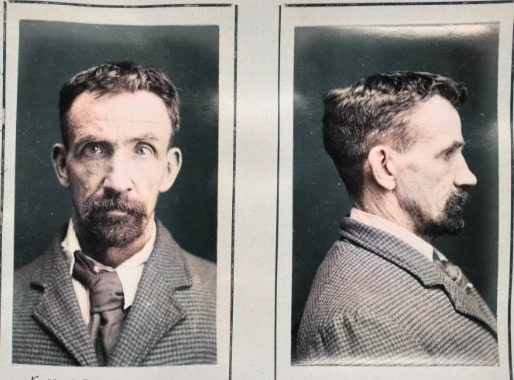
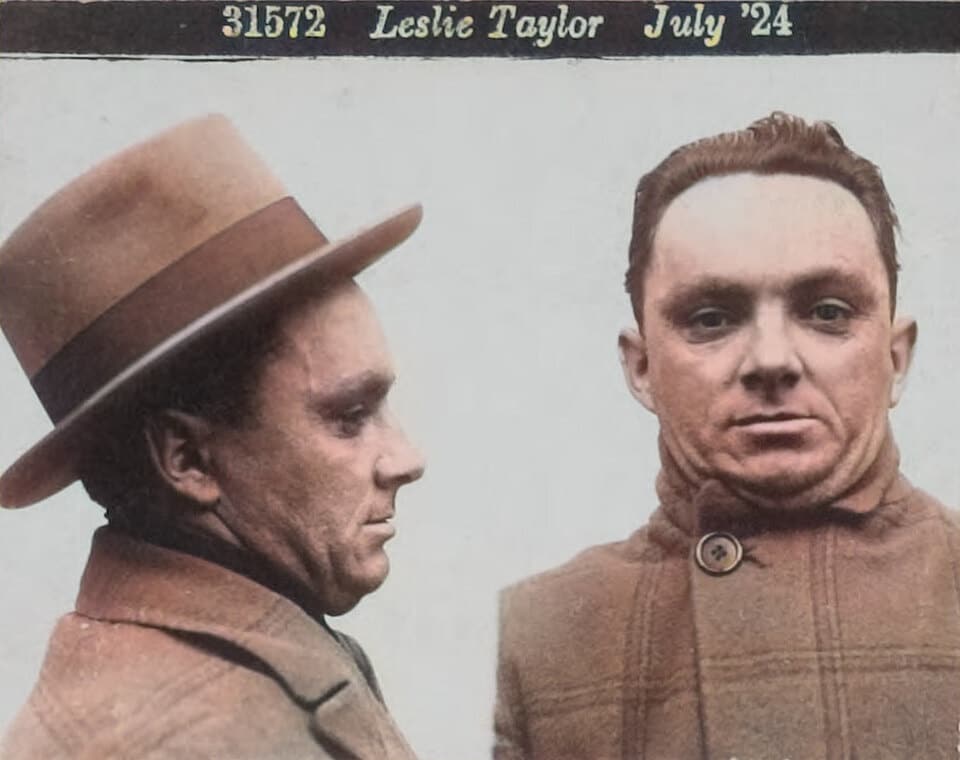
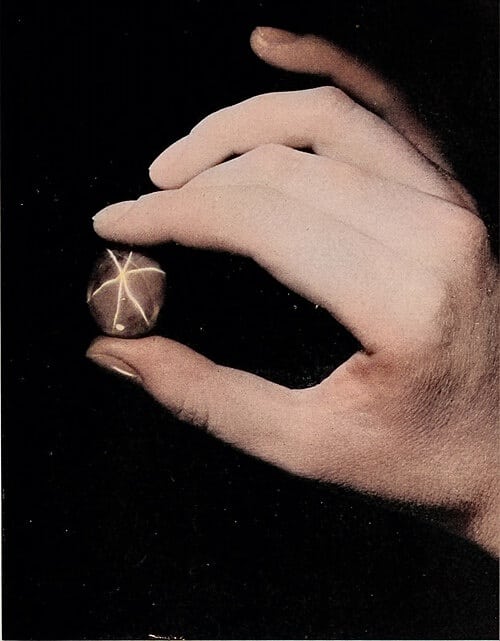
Henry Stock married Elizabeth Keats when she was nineteen and already raising another man’s child. The marriage soured, she took out a maintenance order against him, and when she vanished with her young son in April 1884, searchers found their badly decomposed remains in dense scrub near the Ouse district, both riddled with shot that matched Stock’s own gun. Witnesses recalled him muttering that he would “murder her yet” and would rather “swing” than live with her again.

His first trial ended in a deadlocked jury; a second, before Hobart’s Chief Justice Dobson, convicted him. On the morning of his execution at Campbell Street Gaol in Hobart, hangman Solomon Blay prepared to carry out his hundredth hanging. Before he was led to the scaffold, Stock scratched a message on his cell wall naming two sisters whose evidence had convicted him, hoping to see them “here before long,” and warning other young men to keep from woman. He walked to the gallows carrying a small bunch of flowers tied with a scripture text: “He shall speak peace unto the heathen.”

To the end he denied the killings, declaring on the drop, “I swear by Heaven that I am innocent.”
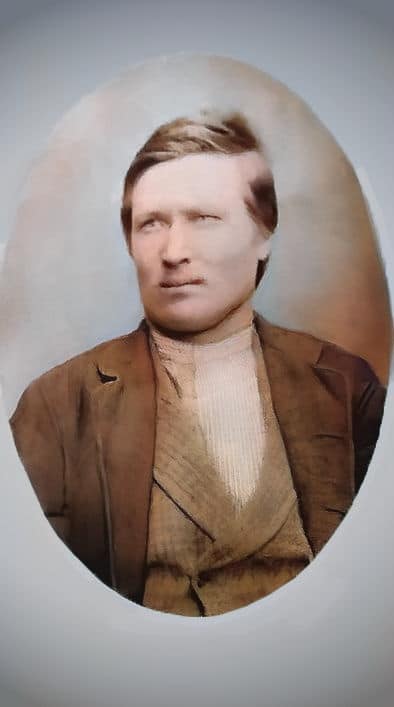

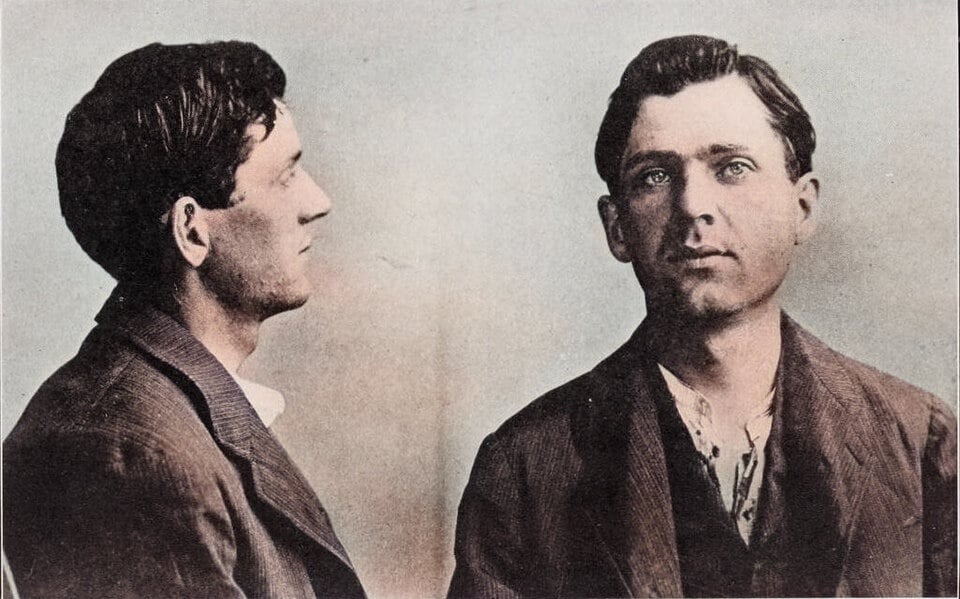
Henry Stock, c. 1883. Photograph attributed to T. J. Nevin. Tasmania Supreme Court, Death warrants and related papers, vol. 2, C 203. Mitchell Library, State Library of NSW.

⬅ See all events from 13 October

Spread the word on your favourite platform!

John Caldwell was a former British soldier, court martialled at Bangalore in India for stealing his own equipment and sentenced to seven years transportation. He arrived in Western Australia aboard the General Godwin, landing at Fremantle in 1854, and was granted a ticket of leave the following year. His sentence finally expired in July 1860, a free man again after years of convict servitude.

Within months he was convicted of assualt of a local person at Champion Bay. He was tried at the Supreme Court in Perth, sentenced to death, and hanged at the old Perth Gaol just nine days later on 13th Oct 1860, being buried at East Perth Cemetery.

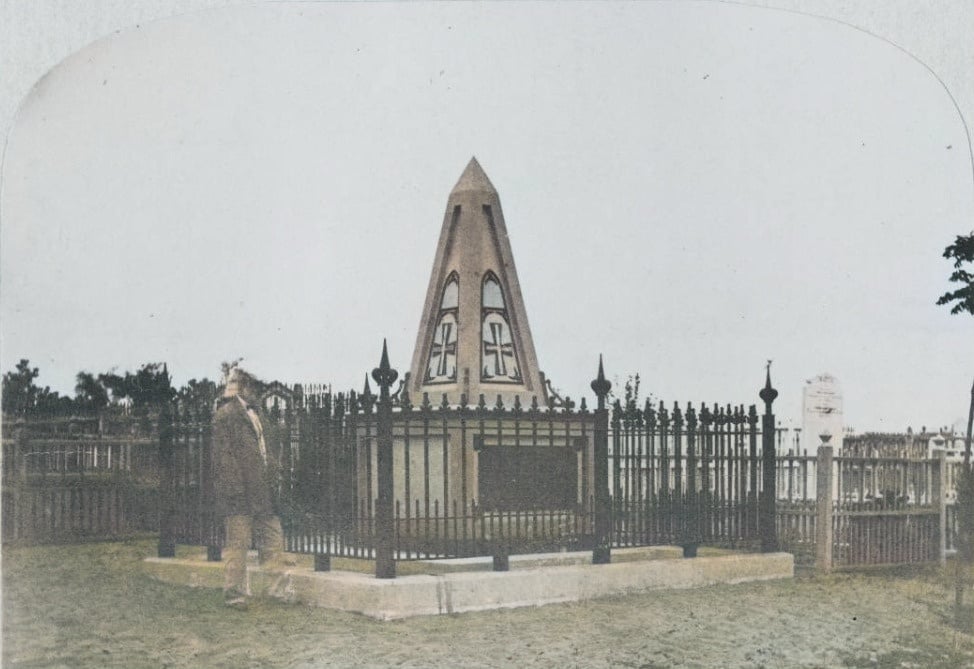
Panter Tomb at East Perth Cemetery burial place of John Caldwell 1860

⬅ See all events from 13 October

Spread the word on your favourite platform!

Peter McKean, alias William McDonald, bunked with William ‘Yorkie’ Marriott at a shepherd’s hut near Kojonup, both working for the same local farmer. Marriott was known for quietly saving his wages, and in June 1872 he vanished. His body was found slumped behind a cart more than a week later, the head so badly gnawed by dogs that he could only be identified by a missing finger on his right hand.

McKean was arrested on circumstantial evidence and convicted at the Albany Circuit Court of robbing and killing Marriott with an axe. After his arrest, McKean claimed Marriott had been killed by ‘a vicious horse’. He never offered proof, and the excuse died with him on the scaffold.

He was hanged at Albany on 12 October 1872, the rope worked by a fellow convict before a crowd that included schoolchildren.

Carpenters axe
Carpenters axe

⬅ See all events from 12 October

Spread the word on your favourite platform!

Ilich Ramirez Sanchez was born in Venezuela on 12 October 1949, the son of a Marxist lawyer who named him after Lenin. Raised between a devoutly Catholic mother and a father devoted to revolutionary politics, he would grow up to become one of the most notorious political terrorists of the twentieth century.

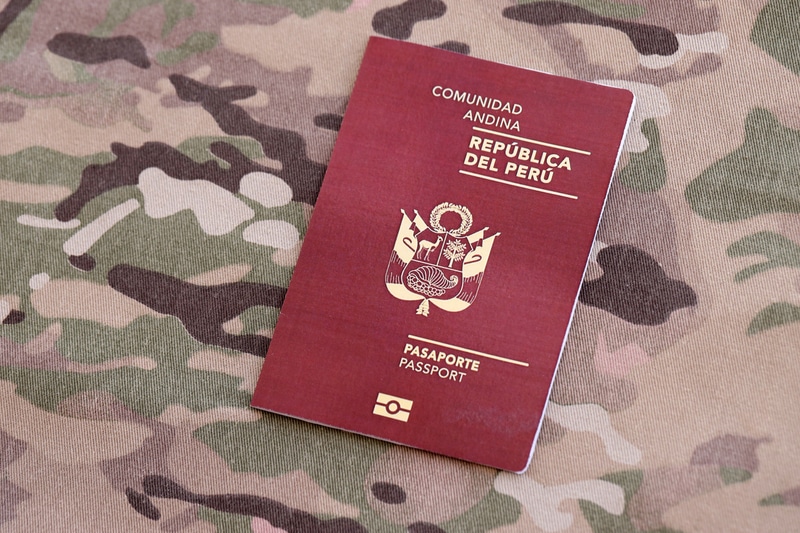
As Carlos the Jackal, he carried out assassinations, bombings and hostage takings across Europe through the 1970s and into the 1980s, including the infamous 1975 raid on the OPEC headquarters in Vienna. For years he evaded capture using a fake Peruvian passport bearing the alias Carlos Andres Martinez Torres, fitted with a deliberately poor photograph he later admitted was a likeness intentionally bad, designed to throw investigators off his trail. That very passport, seized by French police who did not yet know his real identity, is the reason the world came to know him only as Carlos.

Peruvian passport - real or fake?
Peruvian passport – real or fake?

⬅ See all events from 12 October

Spread the word on your favourite platform!
On This Day in True Crime History
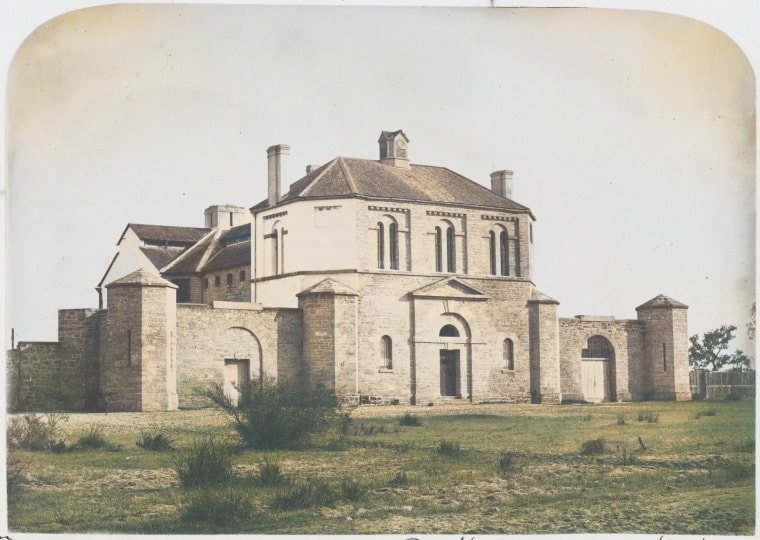
1841·First Blood on the Gallows: Two Men Hanged at the New Darlinghurst Gaol
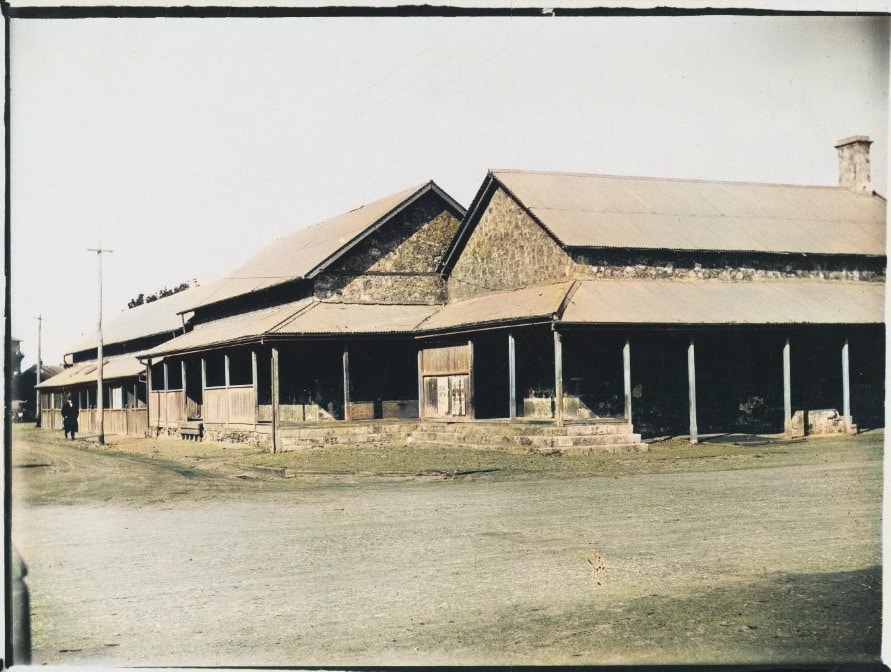
1857·Newly Freed, Then Shot by His Employer: A Convict Hanged in Perth for Attempted Murder
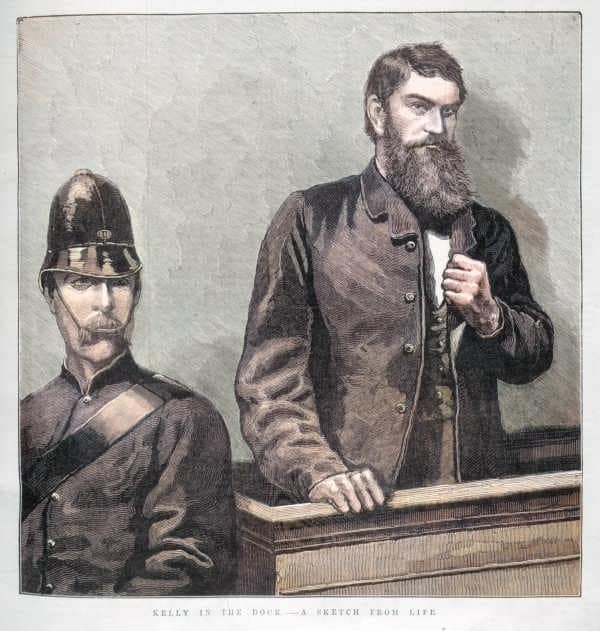
1880·Ned Kelly Sentenced to Hang in Melbourne
1907·He Knew Where She Kept Her Money, But Killed Her Instead: Hanged in Sydney for the Murder of a Widow
1927·Squizzy Taylor Buried in Melbourne as a Morbid Crowd Forces Police to Intervene
More Crime On This Day →

Subscribe to Dark Stories

True crime stories, dark history and tour news, straight to your inbox.