Archives: Dark Stories: On This Day In True Crime History - Page 3
Paul Avery had spent months covering the unidentified killer terrorising Northern California for the San Francisco Chronicle, turning his byline into the public face of the investigation. That attention made him a target of the very man he was writing about.
On 27 October 1970, the Zodiac Killer sent a letter addressed directly to Avery, taunting the journalist for the coverage that had made his name synonymous with the case. The killer was never identified, and the letter remains one of the eeriest pieces of correspondence in a case still unsolved more than half a century later.
Abraham Munday, a shepherd working the east coast of Tasmania near Swansea, laced a rival shepherd’s flour with arsenic, hoping to kill George White. White survived only because the dose was so large it made him vomit it back up. An old man named Hamilton, who happened to share a piece of the poisoned bread while visiting the hut, was not so fortunate: the arsenic settled in his joints and left him crippled for life.
Munday was convicted and sentenced to death. He was hanged within the gaol at Oatlands on this day in 1857, and went to the scaffold badly shaken, not only by his fate but because the clergyman who had attended him in his final days, the Reverend Mr Ison, refused to walk up to the drop with him.
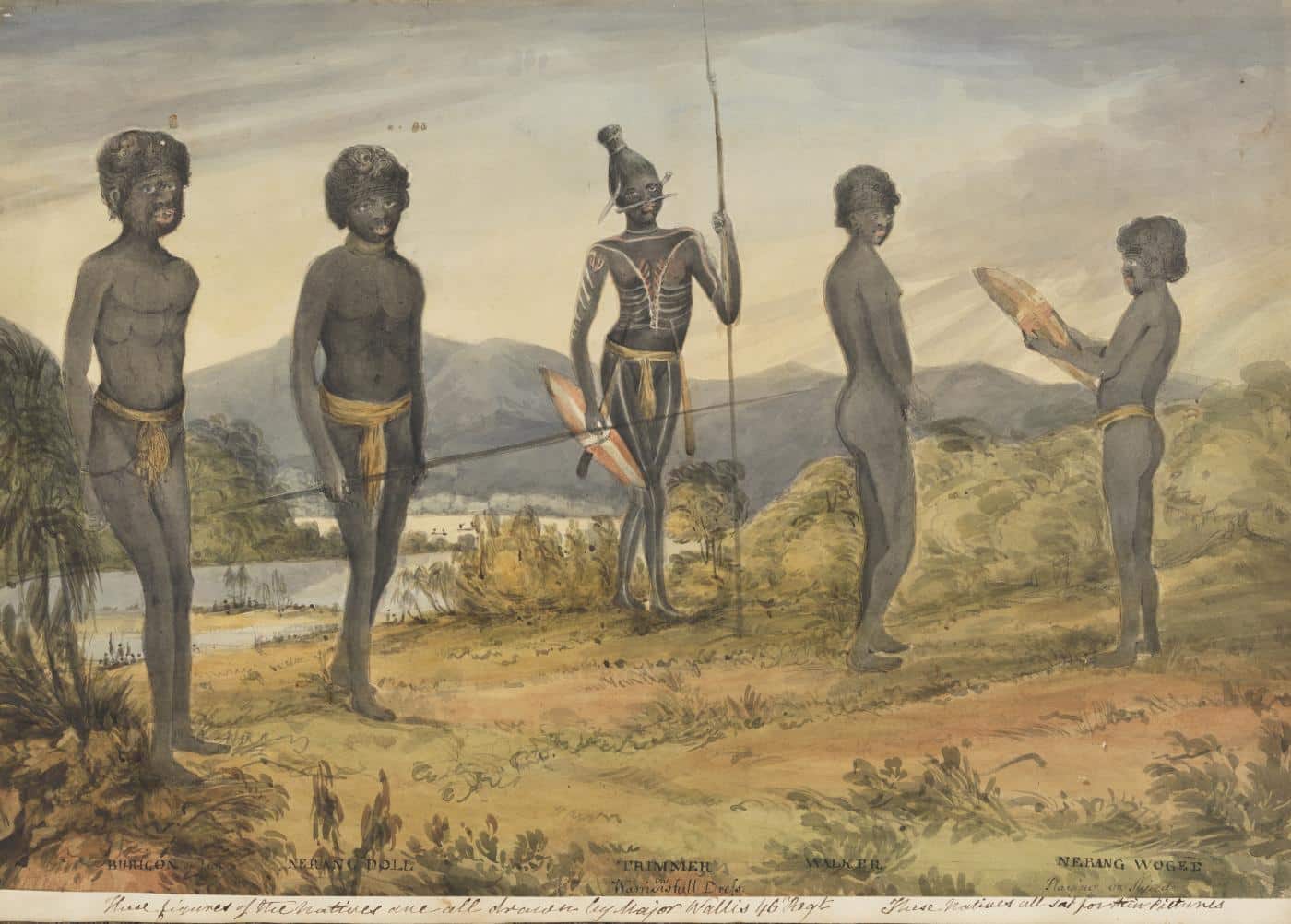
Burigon, a widely respected leader among the Aboriginal people near Newcastle, had helped track down an escaped convict named John Kirby and was escorting him back to the settlement when Kirby turned on him with a knife, driving the blade into his abdomen.
The wound proved fatal. Burigon lingered for eleven days before dying on 27 October 1820, a loss felt deeply in a district where relations between Aboriginal people and the colony had been better than elsewhere in NSW districts.
Aboriginal people of New South Wales(Burigon on left), c. 1817–1818. Artwork by Captain James Wallis and Joseph Lycett. Public domain. Source: State Library of New South Wales.
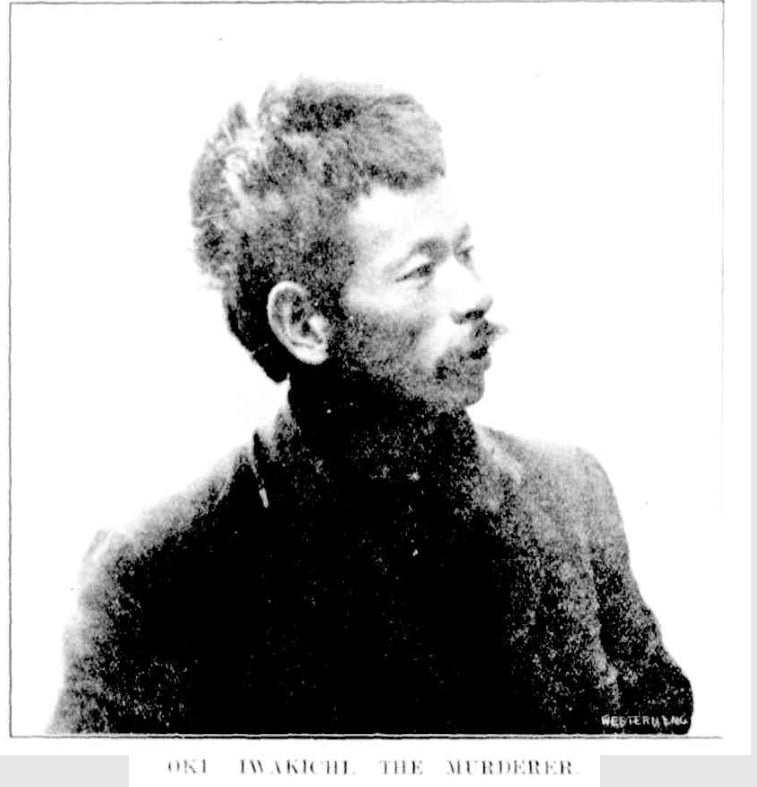
James Henry Shaw took a Japanese fisherman named Oki Iwakichi into partnership at a riverside camp near Pinjarra, letting him manage the household finances and sleep inside the family home while Shaw worked away for months at a time. When Shaw decided to abandon the failing venture and take a job in Fremantle, Oki begged him to stay, warned he would rather die than be left penniless, and took to sleeping with a loaded rifle. On 23 August 1908, as Mrs Shaw stepped outside for rope to tie him down and calm him, Oki shot Shaw through the neck, then fled into the bush, cutting loose every boat moored on the river to slow the alarm.
At his trial, love letters from Oki to his cousin surfaced, claiming he and Mrs Shaw had lived ‘like man and wife’ for over a year; she denied it outright from the stand. The jury convicted him of wilful murder, and when led away to the condemned cell he said he was resigned to his fate, ‘if they let me see Mrs Shaw first.’ He was hanged in Fremantle on this day in 1908.
Oki had denied the charge at trial, but when asked on the gallows if he wished to say anything, he only shook his head; his last words, muttered after the chaplain’s prayer, were ‘Jesus, mercy.’
Oki Iwakichi: West Murray Tragedy murder case 1908