1935: The Sydney Shark Arm Murder Case Collapses on Judge Orders

The case began in the most macabre way imaginable: on April 25, 1935, a captured shark on display at an Aquarium in Sydney vomited up a human arm. Tattoos identified the limb as belonging to James Smith, who had vanished after leaving home on April 8 with the stated intention of going on a fishing trip.

Police investigations focused on Patrick Brady, an associate of Smith who had been with him around the time of his disappearance. Another central figure was businessman Reginald Holmes, who was in a position to give direct evidence about Smith’s killing and Brady’s alleged involvement.

But before Holmes could give that evidence, the case took another extraordinary turn. In the early hours of June 12, just hours before he was due to appear at the inquest, Holmes was found shot dead in his car at Dawes Point. With the Crown’s key witness gone, the murder case against Brady was left largely dependent on circumstantial evidence.

Despite what Chief Justice Sir Frederick Jordan acknowledged was plenty of cause for suspicion, the prosecution now faced two fundamental problems: its key witness was dead, and there was no body to prove that Smith himself was dead. A person could, after all, survive the loss of an arm. On September 10, 1935, Jordan ruled that the evidence was insufficient to sustain a conviction and directed the jury to acquit Brady, bringing to an abrupt end what was described at the time as a case “without parallel in the annals of Australian criminal history.”

Brady’s freedom was short-lived. As soon as he stepped outside the court, detectives arrested him on an unrelated Tasmanian forgery charge. No one was ever convicted over Smith’s death or Holmes’s killing, and the infamous Shark Arm case remains unsolved.
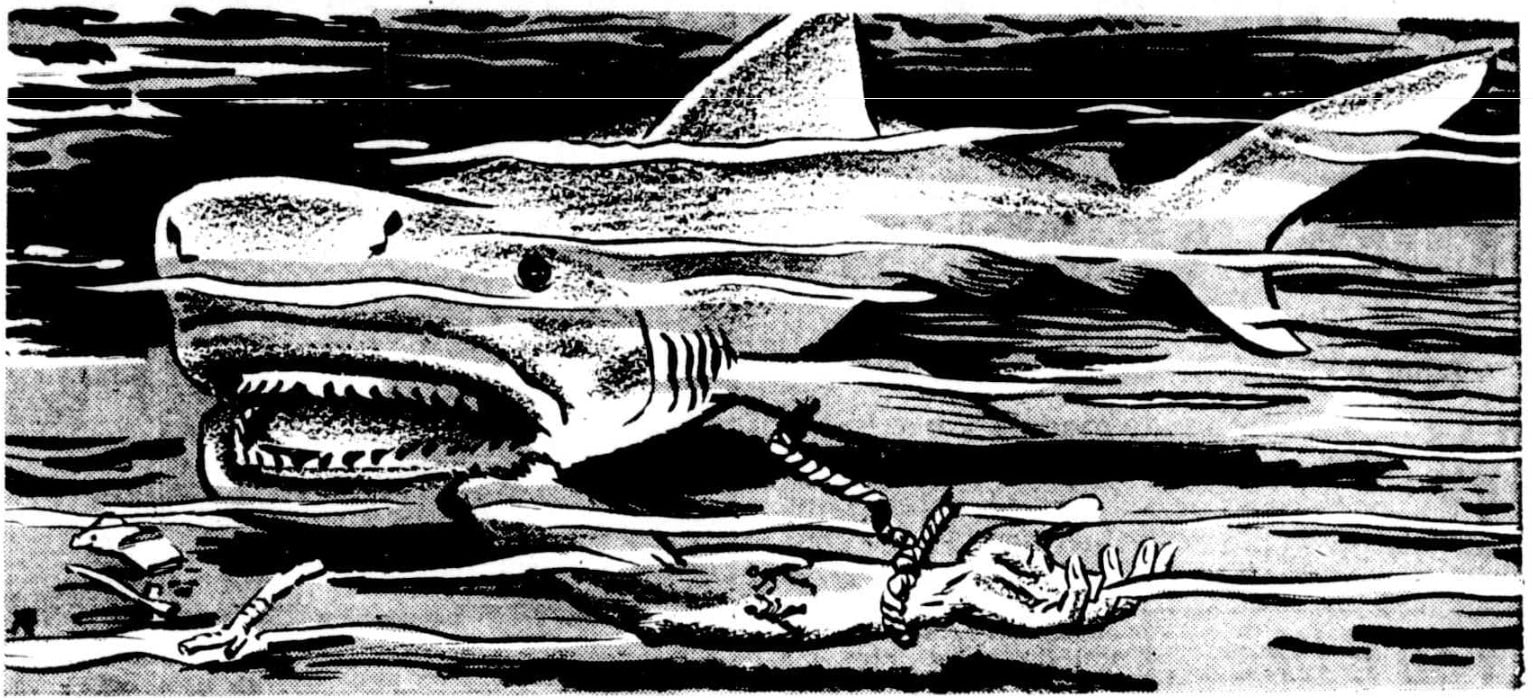

Shark Arm Murdery Mystery - Sydney
Shark Arm Murdery Mystery – Sydney

⬅ See all events from 10 September

Spread the word on your favourite platform!
True Crime Scene Tape

1996: The Menendez Brothers Split Up: Sent to Separate Maximum-Security Prisons

After their conviction for the 1989 shotgun murders of their parents, Jose and Kitty Menendez, in the family’s Beverly Hills home, the California Department of Corrections classified Lyle and Erik as maximum-security inmates and separated them, ending years of the brothers being held together. Lyle was sent to the California Correctional Institution near Tehachapi, while Erik was sent to California State Prison near Sacramento.

The brothers had initially told police that intruders, possibly connected to organised crime, were responsible for the killings. Suspicion grew after investigators noted their lavish spending in the months following the murders and discovered they had hired a computer expert to delete their father’s recently updated will. Erik ultimately confessed to the killings during sessions with his psychologist, describing a desire to escape a controlling father’s demanding expectations, a disclosure that led to both brothers’ arrests.

Beverly Hills sign in Hollywood, Los Angeles against a blue cloudy sky | ID 1216184 © Stephen Coburn | Dreamstime.com
ID 1216184 © Stephen Coburn | Dreamstime.com

⬅ See all events from 10 September

Spread the word on your favourite platform!
True Crime Scene Tape

1977: The Last Blade Falls: the Final Guillotine Execution in France

Hamida Djandoubi went to the guillotine in France on this day in 1977, the last person ever executed by the device and the last person executed in France at all. He had been convicted of the murder of 21-year-old Elisabeth Bousquet, a crime that closed out nearly two centuries of the guillotine’s use as the instrument of French justice.

His execution marked a quiet historical hinge: within a few years France would abolish capital punishment altogether, in 1981, making Djandoubi’s death the final chapter of a punishment first adopted during the French Revolution.

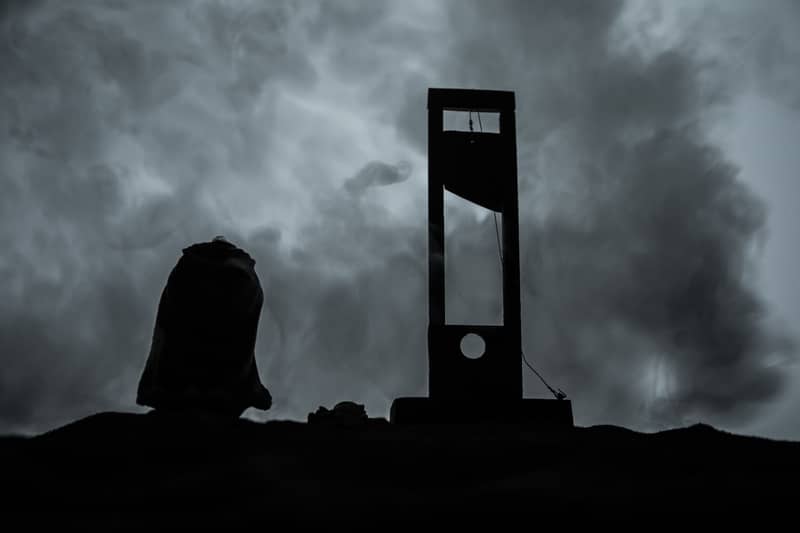
Close-up of a guillotine in dark foggy setting execution concept

⬅ See all events from 10 September

Spread the word on your favourite platform!
True Crime Scene Tape

2005: The Granny Killer Found Hanging in His Cell

John Wayne Glover, 72, was found hanging from a shower rail in his cell at Lithgow prison in New South Wales. He had been serving life without parole for the murder of six elderly women on Sydney‘s North Shore between 1989 and 1990. The mayor of Mosman described his death as the end of a terrible era.

No evidence has ever surfaced that Glover killed before 1989, when he was 56 and had already been married for 20 years with children; his wife had no idea of the violence in his past. He only admitted to the murders once confronted with the police evidence against him.

Glover denied responsibility for other crimes in which he was a prime suspect. Years after his conviction, he admitted he never worried about who his victims were or why he killed them; he said he wanted to stop but could not, and simply returned to his normal life after each murder.

Prison Cell
Prison Cell

⬅ See all events from 9 September

Spread the word on your favourite platform!
True Crime Scene Tape
On This Day in True Crime History
1853·A Hanged Bushranger's Corpse Put on Display in a Melbourne Shop Window
1960·Breathing for Seven Hours: The Forensic Test That Disproved a Kidnappers Alibi in the Graeme Thorne Murder
More Crime On This Day →

Subscribe to Dark Stories

True crime stories, dark history and tour news, straight to your inbox.