1825: John Riddel Hanged at Hobart for Murder, Confessing Two More Killings

A dispute over the butchering of a pig turned fatal in Hobart in 1825. John Read Riddel, a carpenter, had hired a butcher to cut up a slaughtered pig. Dissatisfied with the work, the two men came to blows, and Riddel drove a knife into the man during the struggle.

Standing on the gallows for his crime, on 31 August 1825, Riddel confessed to the gathered crowd to smothering two of his wives while they slept in a drunken stupor, to forging a letter with an English postmark to deceive a clergyman into marrying him, and to a failed attempt on the life of his Captain, where he had snatched a concealed sword and was about to strike when a bystander intervened.

Riddel himself requested that the full weight of his crimes be made public, before being launched into eternity.


Piggy bank hanging from a hangmans noose on a golden rope

⬅ See all events from 31 August

Spread the word on your favourite platform!

1825: Thomas Peacock Hanged at Hobart for the Murder of Constable Craggs

Thomas Peacock, transported from Macquarie Harbour to stand trial, was convicted in the Supreme Court of the murder of Constable Craggs. Craggs had apprehended Peacock in the bush; Peacock stabbed him deliberately in the left side, declaring at the time that he would die happy having caused the constable’s death.

Peacock was hanged on the new drop at Hobart Gaol on 31 August 1825. His loud sobbing on the scaffold suggested the happiness he had claimed was nowhere to be found in his final moments.

Young woman bows head over execution block crying

⬅ See all events from 31 August

Spread the word on your favourite platform!

1825: Three Men Hanged at Hobart for Bushranging and Robbery

On an evening in July 1825, a gang of armed bushrangers descended on the home of Samuel Haywood in the Macquarie district of Van Diemen’s Land. One of the men posed as a letter carrier, tricking Mrs Haywood into opening the door before the others rushed inside. When Haywood moved for his gun, a pistol was fired at him during the confrontation.

The gang ransacked the house and escaped with an immense quantity of property, including clothing. They were later traced to a house near the Hobart Penitentiary, where their brazenness helped betray them: several were still wearing clothes stolen from Haywood and were immediately recognised by their victim.

At the Supreme Court, John Everist, Joseph Broadhead, Charles Bradbury and William Buckley were tried for the robbery. The Attorney-General remarked that almost every crime short of murder had been committed during the raid.

Everist, Broadhead and Buckley were convicted and hanged at Hobart on 31 August 1825.

Three hanging noose ropes isolated on a white background

⬅ See all events from 31 August

Spread the word on your favourite platform!

1843: Bushranger Martin Cash Captured After Shooting a Constable Dead in Hobart

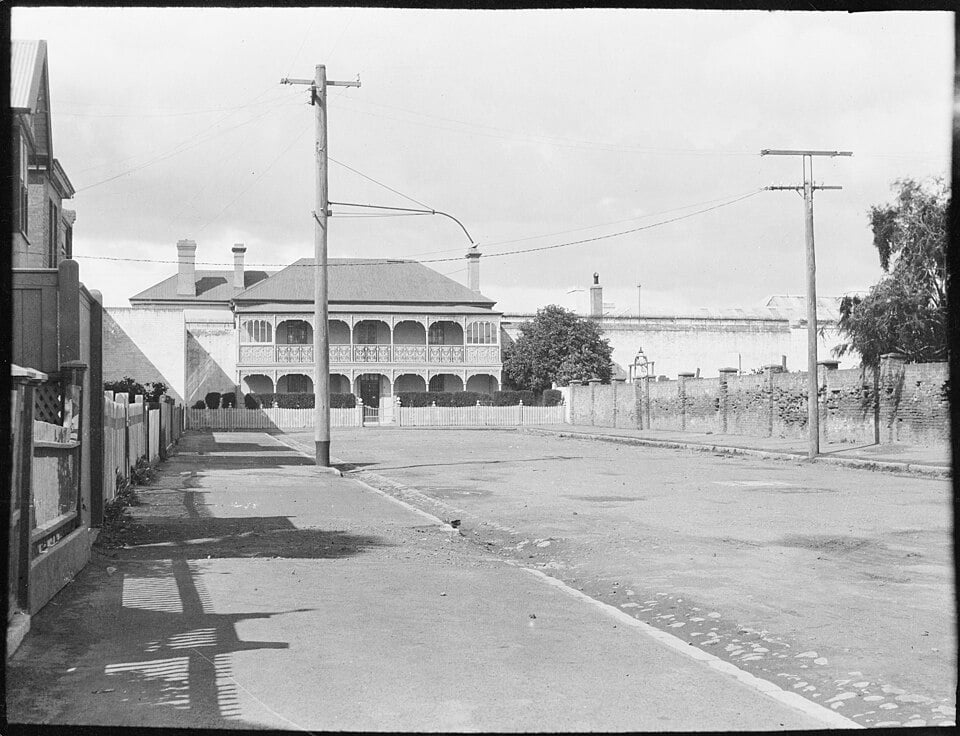
On 29 August 1843, notorious bushranger Martin Cash was captured in Hobart after venturing into the town in search of his former partner, Bessie, who had taken up with another man. Cash, a wanted escapee with a substantial government reward on his head, was spotted by two plain-clothes constables in Harrington Street, close to Bessie’s address and only about 100 yards from the watch-house. He fled through the streets, firing at his pursuers, and in attempting to reach the Domain mistakenly ran into a dead end near the Campbell Street Gaol. Forced to turn back, he lost ground; the spot later became known as Martin’s Mistake. Near the Old Commodore Inn, Constable Peter Winstanley tried to seize Cash and was shot at close range. Cash was eventually wrestled to the ground and captured after a violent struggle. Winstanley died two days later, on 31 August. Cash was convicted of his murder and sentenced to death, but received a last-minute reprieve and was transported for life to Norfolk Island. Cash ultimately survived his years as a bushranger and convict, dying in Tasmania in 1877. He also left behind his own account of his life, dictated to James Lester Burke and published in Hobart in 1870 as The Adventures of Martin Cash, one of the best-known first-person accounts of Australian bushranging and the convict era.

Residence of the Governor of the Hobart Gaol, at the end of Melville Street, known colloquially as Martin's Mistake.
Residence of the Governor of the Hobart Gaol, at the end of Melville Street, known colloquially as Martin’s Mistake.

⬅ See all events from 29 August

Spread the word on your favourite platform!
On This Day in True Crime History

Subscribe to Dark Stories

True crime stories, dark history and tour news, straight to your inbox.