1854: Anxious to Get Home for Their Dinner: the Killer Who Taunted His Jury, Hanged at Melbourne Gaol

John Hughes told the jurors who convicted him that they were “shopkeepers tired of waiting, and anxious to get home for their dinner”. They had taken ten minutes. Days later he was hanged behind Melbourne Gaol for the murder of Abraham Marcus, a traveller whose only mistake was chasing the men who stole his best horse.

In December 1852 Marcus was bound for the Ovens goldfields with his wife and nine-year-old son when their dray broke down at Yackandandah Creek. Four horsemen stopped, accepted a meal and even helped with the repairs. Hughes turned down four pounds for his tired horse and saddle, remarking that he would not go much further before he had another. When the riders had gone, so had the best of the Marcus horses, with the worn-out mount left in its place.

Marcus rode after them and seized the bridle. The gang kept him talking until a passing bullock dray was out of sight, then drew pistols, marched him into the bush and tied him to a tree, where he was later found dead. His whole party recognised the rope: it had hung around the neck of the horse Hughes rode. That same evening, by his own later account, the gang robbed a young Sydney man named Stone on his way home from the diggings; he broke free, was run down and killed, and his body was sunk in a creek, weighted with stones and a saddle.

A reward of 200 pounds was offered, but it was 1854 before the widow picked Hughes out of a line of 21 identically dressed prisoners in the yard of Darlinghurst Gaol. He made a long confession naming three accomplices, then asked to be sent to Melbourne quickly, since enough had been proved to hang him. At trial he called the jurors “new chums”, to laughter from the gallery. The judge replied that an innocent man would never have dared to browbeat a jury so, and that the clear evidence of the dead man’s young son had settled the matter.

From the dock Hughes withdrew his confession as false and swore the men he had named were innocent too: “I now say, and will on the day of my death, that I am an innocent man.” He went to the scaffold pale but composed, and made no further revelations.
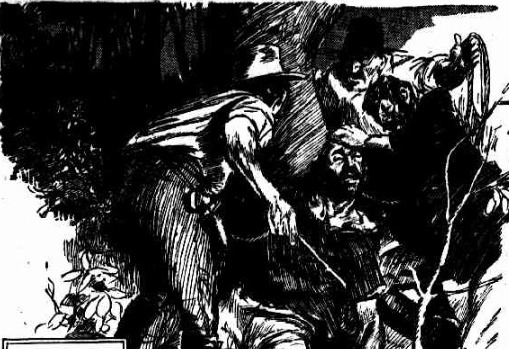

Killer hung by his own rope.

⬅ See all events from 25 September

Spread the word on your favourite platform!

1916: He Ruined My Life’: Antonio Picone Hanged at Melbourne Gaol for a Market Shooting

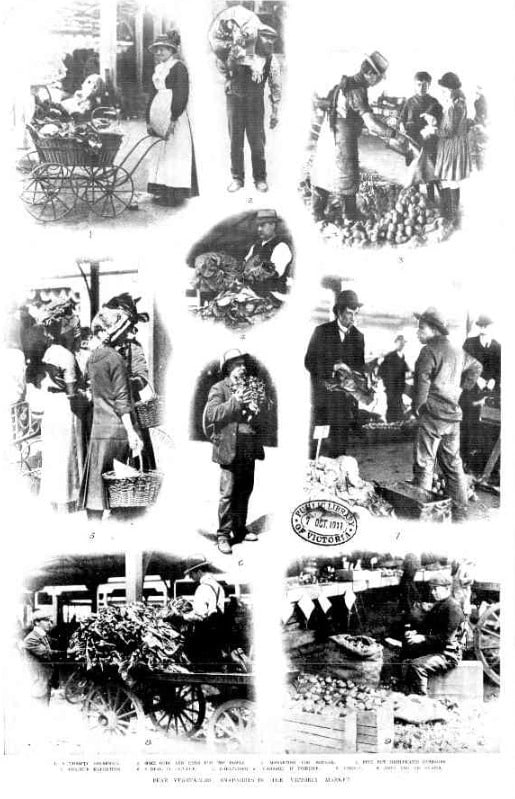
At 4 a.m. on 25 July 1916, three revolver shots rang out at the Queen Victoria Market in Melbourne. Joseph (Giuseppe) Lauricella, a 32 year old Carlton fruiterer buying tomatoes for his shop, fell dead with wounds to the head and neck. His killer, laborer Antonio Picone, fled through a market shed still clutching a smoking revolver before being tackled and held by a bystander, until police arrived.

Picone, wearing a military reject badge in his lapel, was hauled before the City Court that same day. When the charge was read he insisted, “I didn’t do it,” yet detectives testified he had already told them why he pulled the trigger: “He robbed me of my bread, disgraced me, ruined the whole of my life.”

Despite his courtroom denial, Picone had already given detectives his own account of the killing, telling them plainly it was revenge for the ruin of his livelihood and reputation. Picone was convicted of murder and hanged at Melbourne Gaol on 18 September 1916.

Victoria Market Melbourne 1911 Still In Operation Today

⬅ See all events from 18 September

Spread the word on your favourite platform!

1889: He Gave Away His Victim’s Wedding Ring: Hanged at Melbourne Gaol for the Carlton Murder

Annie Thornton, was murdered in her home at Carlton, a suburb of Melbourne, on the night of 10 July 1889. Piercing screams were heard coming from the house that night, but no neighbour intervened and nothing was reported to police until the inquest weeks later.

The man committed for trial, Filipe Castillo, showed almost total indifference to his fate. On the very night of the killing he was seen with another woman and showed her a bloodstained waistcoat, claiming it came from a cut to his arm. He then handed out jewellery stolen from the dead woman to several other women, including the wedding ring he had taken from her finger.

The murdered woman’s husband, Henry Thornton, had been living apart from his wife and was working in Ballarat at the time. On hearing of the killing he walked into the Ballarat watch-house himself, gave a detailed account of his movements and produced letters proving he had not seen his wife since parting from her on good terms months earlier; he was cleared of any involvement.

At the inquest a verdict of wilful murder was returned, and the accused was described as remarkably unconcerned throughout the proceedings. He was tried, convicted and hanged at Melbourne Gaol on 16 September 1889 for one of the most brutal and cold-blooded murders Melbourne had seen.

Bag of jewels spilled open with gems falling out

⬅ See all events from 16 September

Spread the word on your favourite platform!

1904: “She Was Always Kind and Good to Me”: Employee Hanged at Melbourne Gaol for Murdering His Employer’s Wife

On the morning of 10 July 1904, Mrs Veitch, wife of baker A. C. T. Veitch, was found dead in the passage of the family’s bakery on O’Grady Street, Clifton Hill, a suburb of Melbourne. She still clutched a buggy whip in her hand, and a deep gash on one hand suggested she had fought desperately for her life. Whoever attacked her had locked the back doors, the front gate and the shop door beforehand, and had even tried to silence the family’s terrier tied up in the yard, evidence of careful planning rather than a chance intrusion.

The body was discovered by James Coleman Augustus Williams, an employee of the bakery who had been out on his delivery round. He raised the alarm after a boy came to buy bread and got no answer. Williams was soon charged with the murder, and at trial evidence pointed to a robbery gone wrong at the nearby office, though nothing suggested any personal grievance against the victim.

Williams was hanged at Melbourne Gaol on 8 September 1904.

The night before his execution, Williams wrote out a formal confession, insisting the killing was not for gain or lust but committed “in a fit of passion”, and that Mrs Veitch “was always kind and good to me”. He asked that the public not judge his family for what he had done and thanked the gaol’s governor and chaplains for their kindness to him in his final days.

Vintage bakery storefront on a sunny day

⬅ See all events from 8 September

Spread the word on your favourite platform!
On This Day in True Crime History
1794·The First Free Settler Murdered in the Colony: Hanged at Sydney for a Parramatta Stabbing
1826·The Gun That Misfired Twice: Three Bushrangers Hanged Outside Sydney
1873·A Tearful Confession in Custody Cracked the Case: Two Men Hanged at Perth Gaol for Eating their Victim
1889·He Called It an Accident. The Jury Called It Murder: Robert Landells Hanged at Melbourne Gaol
1907·A Doctor Fooled Twice: Martha Rendell and the Second Child to Die of Diphtheria
2002·Shot Dead in His Own Bed: A Melbourne Gangland Killing Blamed on a Friend
More Crime On This Day →

Subscribe to Dark Stories

True crime stories, dark history and tour news, straight to your inbox.