1794: The Fall of Robespierre: The Architect of the Terror Meets the Guillotine

Maximilien Robespierre, the lawyer turned revolutionary who came to embody the ruthless machinery of the French Revolution, was executed by guillotine in Paris on 28 July 1794. As the dominant force on the Committee of Public Safety, he had overseen the Reign of Terror, a period in which thousands were sent to the blade in the name of republican virtue. His own arrest, the day before, had come swiftly after the National Convention turned against him.

The man who had signed so many death warrants met the same end he had prescribed for others. Wounded during his arrest, reportedly from a gunshot to the jaw, he was carried to the scaffold in agony. His execution marked the end of the Terror and the beginning of the Thermidorian Reaction, a conservative turn that dismantled much of what he had built.
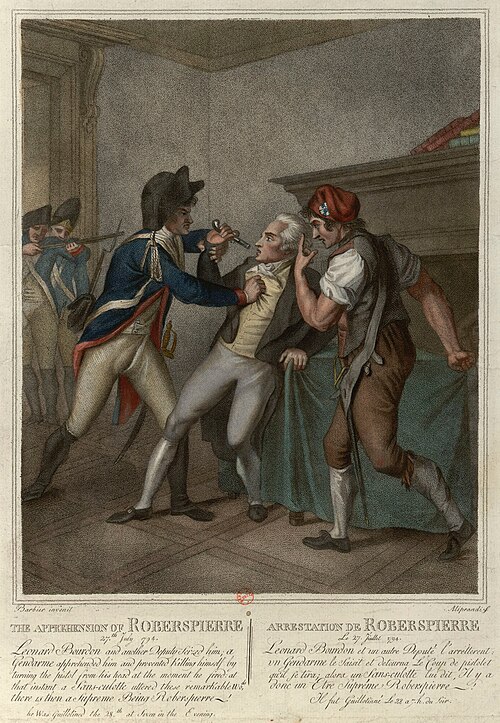

Arrest of Robespierre during revolutionary unrest

⬅ See all events from 28 July

Spread the word on your favourite platform!

1835: The Infernal Machine: Fieschi's 25-Barrel Assassination Attempt on King Louis Philippe I

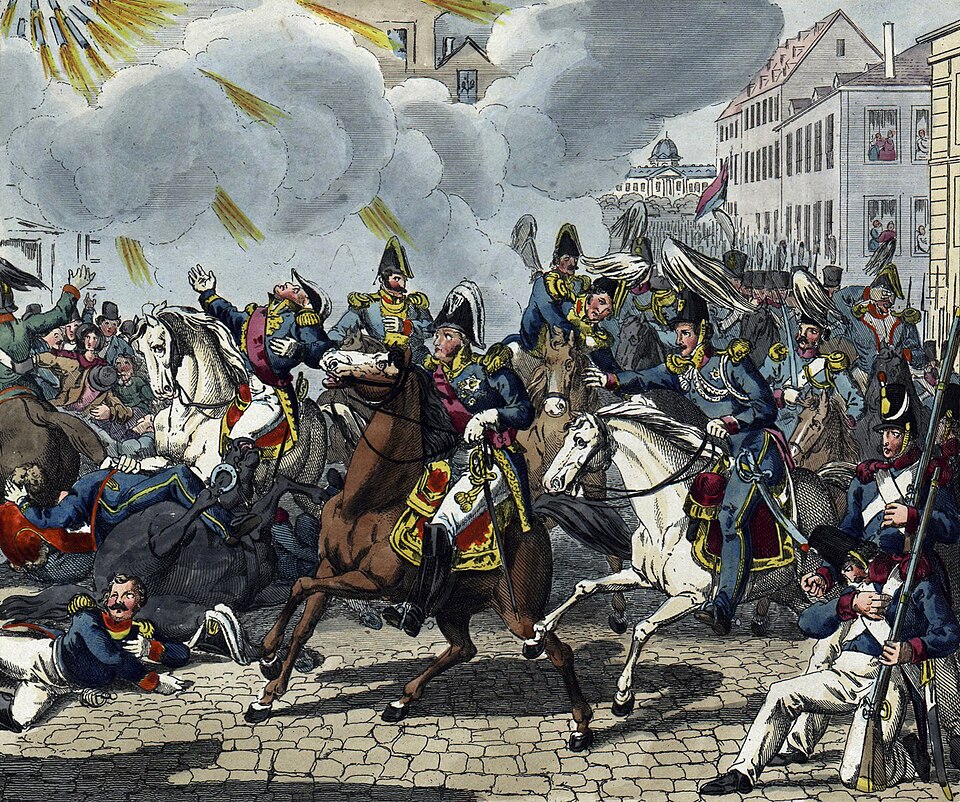
On 28 July 1835, Giuseppe Marco Fieschi fired a homemade 25-barrel volley gun, dubbed the 'infernal machine', from a third-floor window at 50 Boulevard du Temple in Paris, directly into the convoy of King Louis Philippe I of France. The weapon unleashed around 400 projectiles in a single volley; the king escaped with only a graze to the forehead, but 18 people were killed and 22 more wounded, at least four of whom had limbs amputated.

The gun's design proved its own undoing: French artillery officers later concluded that if Fieschi had understood ballistics well enough to angle the barrels so they diverged and crossed, he could have killed up to 200 additional people and destroyed the king entirely. Instead, the parallel configuration limited the carnage. Fieschi himself was badly wounded when several barrels burst; he fled but was tracked by a trail of blood and captured shortly after.

Illustration of an assassination attempt on a king

⬅ See all events from 28 July

Spread the word on your favourite platform!

1793: Robespierre Joins the Committee of Public Safety

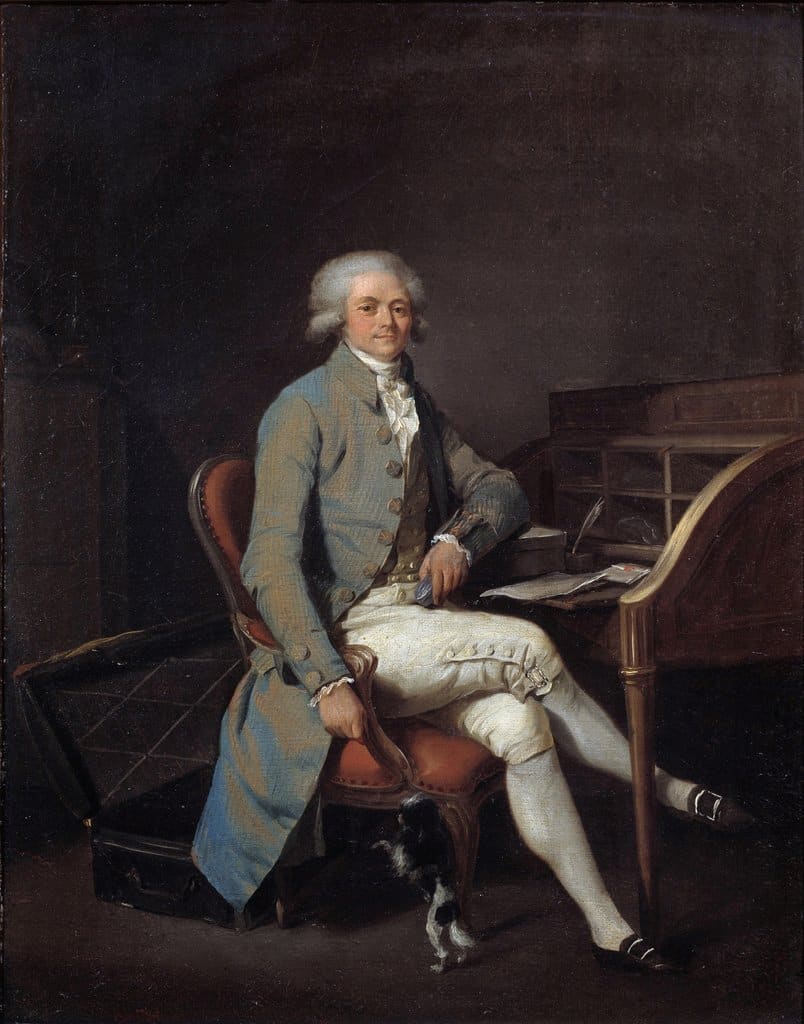
On 27 July 1793, Maximilien Robespierre was elected to the Committee of Public Safety, the twelve-man body that effectively governed France during the most turbulent phase of the Revolution. His appointment marked a turning point: within months, the Committee would become the engine of the Terror, overseeing the execution of thousands deemed enemies of the Republic.

Robespierre's influence on the Committee was profound and lethal. Under his direction, the Revolutionary Tribunal accelerated its work, sending nobles, clergy, political rivals, and ordinary citizens to the guillotine. His own end came almost exactly a year later, when the Thermidorian Reaction turned the machinery of the Terror against its architect.

Portrait of Robespierre by Louis Boilly

⬅ See all events from 27 July

Spread the word on your favourite platform!

1890: Van Gogh Falls to a Self-Inflicted Wound in a French Wheat Field

On 27 July 1890, Vincent van Gogh walked into the wheat fields near Auvers-sur-Oise, France, and shot himself in the chest with a revolver. The wound was not immediately fatal; he staggered back to his lodgings at the Auberge Ravoux, where a doctor attended to him.

Van Gogh died two days later, on 29 July 1890, aged 37, with his brother Theo at his side. He had produced more than 2,000 works in a decade of furious creativity, yet sold only one painting during his lifetime.

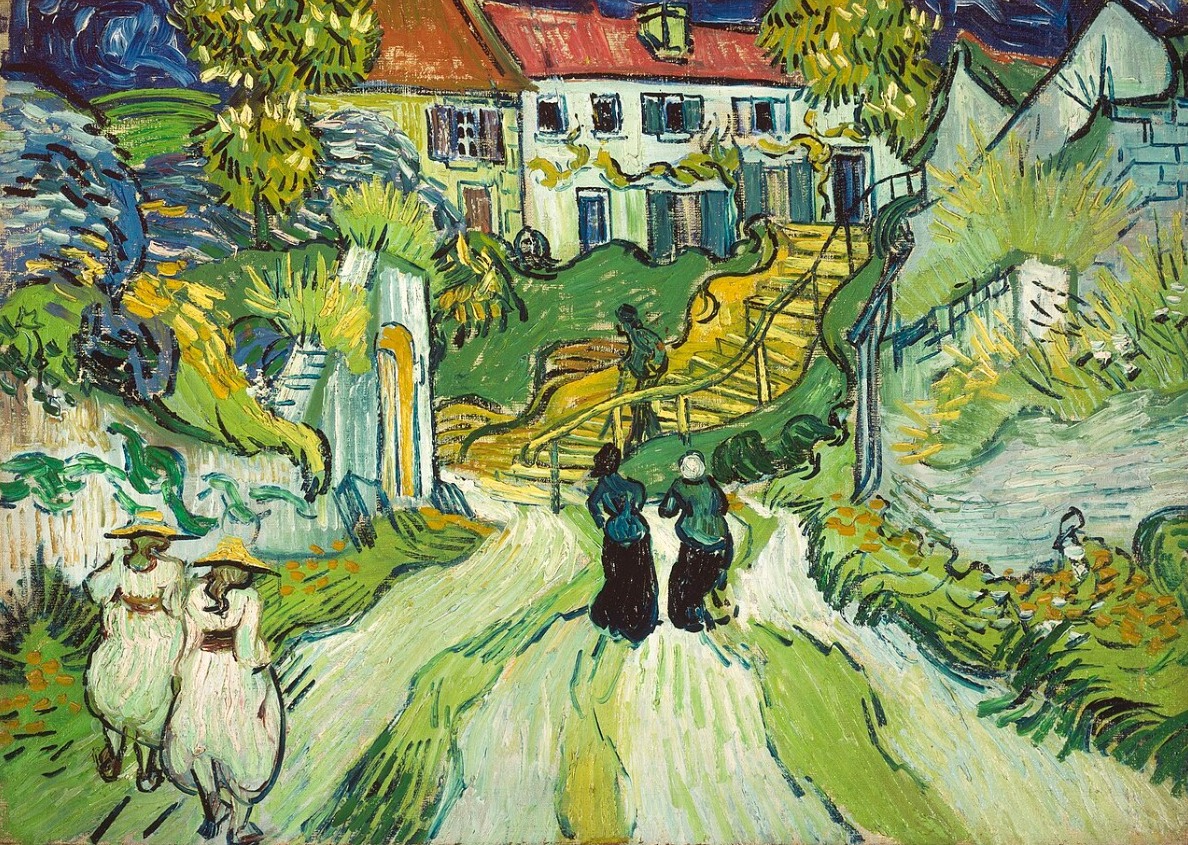
Vincent van Gogh - Stairway at Auvers

⬅ See all events from 27 July

Spread the word on your favourite platform!
On This Day in True Crime History

Subscribe to Dark Stories

True crime stories, dark history and tour news, straight to your inbox.