1971: The Stanford Prison Experiment: When a Simulation Turned Brutal

In August 1971, Stanford University psychology professor Philip Zimbardo launched a two-week simulation of prison life using 24 male college students, randomly assigned as either guards or prisoners. Recruited through a newspaper advertisement, participants were paid $15 a day. Within days, the guards, given uniforms designed to strip individual identity, began psychologically abusing the prisoners with escalating cruelty.

The experiment collapsed on the sixth day after psychologist Christina Maslach visited the site and confronted Zimbardo over the conditions she witnessed. He shut it down, later admitting he had become too absorbed in his own role as superintendent. The study became a landmark case in research ethics, prompting American universities to strengthen institutional review processes for human experimentation. Later critics, including researcher Thibault Le Texier, argued the guards had been coached to behave aggressively, and that Zimbardo’s conclusions were largely written before the experiment began.

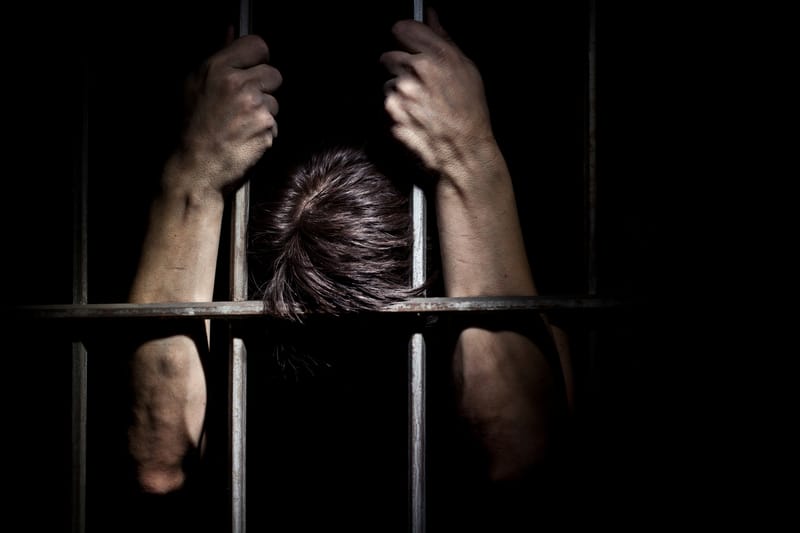
Prisoner hands gripping steel lattice close up

⬅ See all events from 14 August

Spread the word on your favourite platform!

1974: Nixon Resigns: The President Who Fell on the Watergate Scandal

On August 9, 1974, Richard Nixon became the first United States president to resign from office, undone by a scandal that began with a bungled burglary. On June 17, 1972, operatives linked to his re-election campaign were caught breaking into the Democratic National Committee headquarters at Washington D.C.’s Watergate complex, planting listening devices and stealing documents. Reporters Bob Woodward and Carl Bernstein, guided by the anonymous source ‘Deep Throat’, exposed a vast White House political espionage program illegally funded by campaign donations.

Nixon’s administration destroyed evidence, obstructed investigators, and paid hush money to the burglars. The release of the ‘Smoking Gun’ tape proved Nixon had ordered the CIA to block the FBI’s investigation. Facing near-certain impeachment for obstruction of justice, abuse of power, and contempt of Congress, Nixon resigned rather than face removal. He was later pardoned by his successor, Gerald Ford. In total, 69 people were charged over Watergate; most pleaded guilty or were convicted.

Ontario, Canada - December 22 2017: Vintage Open Reel-to-Reel Ta. Vintage Open Reel-to-Reel Tape Deck Stereo Recorder with VU meters and knobs | ID 113751494 © Viktorus | Dreamstime.com
ID 113751494 © Viktorus | Dreamstime.com

⬅ See all events from 9 August

Spread the word on your favourite platform!

1991: Sir Terence Lewis, Queensland Police Commissioner, Convicted of Corruption

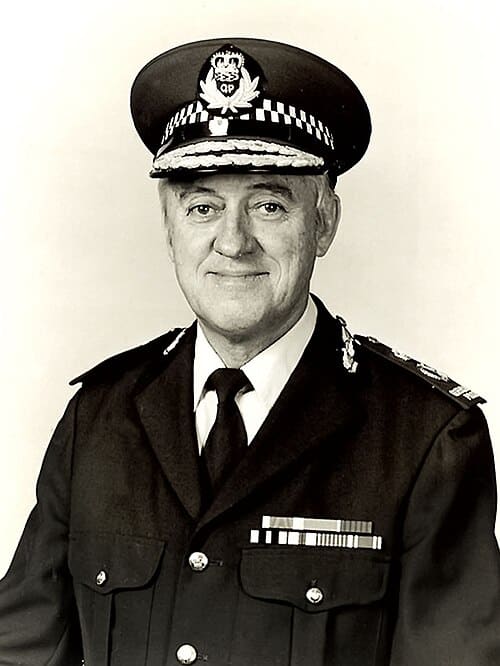
Sir Terence Lewis, Commissioner of the Queensland Police Service from 1976 to 1987, was found guilty on 5 August 1991 of 15 counts of corruption and one of forgery, following the explosive Fitzgerald Inquiry into police misconduct. A District Court jury determined that Lewis had accepted bribes totalling $700,000 to protect brothels, SP bookmakers, illegal casinos, and gaming machine operators. He had been handpicked for the commissioner’s role in 1976 by Premier Joh Bjelke-Petersen, bypassing 122 more senior officers.

Judge Healy sentenced Lewis to the maximum term available: 14 years for corruption and 10 years for forgery, to be served concurrently. Lewis was stripped of his knighthood and two other awards. He continued to protest his innocence and pursued appeals until the last one failed in August 2005.

Terence Murray Lewis, Queensland Police Commissioner. © State of Queensland (Queensland Police Service); original photographer unknown. Retouched by Georgfotoart. Wikimedia Commons, CC BY 4.0.

⬅ See all events from 5 August

Spread the word on your favourite platform!

Queensland’s Sliding Doors Moment: Wiretap City

In the 1970s, a gripping arm wrestle was unfolding behind closed doors. Would corruption prevail, or could the anti-corruption forces reclaim the heart and soul of Queensland policing?

The fightback took shape in the early 1970s with the formation of the Whitrod-led CIU (Criminal Intelligence Unit). Their weapon of choice: the wiretap.

The years that followed would prove to be an incredible lost opportunity—what we might now call a sliding doors era. For a time, the anti-corruption forces had successfully neutralised key members of the infamous Rat Pack who were running the Vice Squad’s corruption rackets—either forcing them into retirement or banishing them to remote Queensland country outposts where they could do no harm.

Wiretapping had proven to be a valuable weapon. But despite having what seemed like unlosable, ironclad, open-and-shut cases—backed by wiretap evidence—several high-profile prosecutions were lost.

Wiretapping in Vice City Fortitude Valley

By 1976, the relationship between Commissioner Whitrod and Premier Sir Joh Bjelke-Petersen had completely broken down. The Premier was increasingly interfering in police affairs, demanding the use of the police force as a bulwark against critics and political opponents. Then came the tipping point: Joh recalled one of the rats from the wilderness of country QLD and appointed him Assistant Police Commissioner—directly under Whitrod.

It was intolerable. Whitrod resigned in protest. The end result? The Premier promoted head rat Terry Lewis one more rung to take on the newly vacated top policing job in the state—appointing Terry Lewis as the new Police Commissioner. Like a pied piper, Lewis played his tune—and the rats returned en masse.

The sliding doors moment wasn’t just missed; it was slammed shut. Political corruption was now entrenched at every level, fusing police, underworld, and cabinet interests to a scale never before achieved. Fortitude Valley became further entrenched as the vice capital of Queensland.

But as history would record, the corruption of this era would eventually come crashing down—almost by accident—a decade later. It wouldn’t fall in a single blow—but once the first domino tipped, the downfall of Vice City was unstoppable.

Discuss On Substack

To uncover more Brisbane Crime History, please consider booking tickets to Vice City Fortitude Valley’s True Crime Tour here @ https://darkstories.com.au/vice-city-fortitude-valley-true-crime-tour/.

Spread the word on your favourite platform!
On This Day in True Crime History
1794·The First Free Settler Murdered in the Colony: Hanged at Sydney for a Parramatta Stabbing
1826·The Gun That Misfired Twice: Three Bushrangers Hanged Outside Sydney
1873·A Tearful Confession in Custody Cracked the Case: Two Men Hanged at Perth Gaol for Eating their Victim
1889·He Called It an Accident. The Jury Called It Murder: Robert Landells Hanged at Melbourne Gaol
1907·A Doctor Fooled Twice: Martha Rendell and the Second Child to Die of Diphtheria
2002·Shot Dead in His Own Bed: A Melbourne Gangland Killing Blamed on a Friend
More Crime On This Day →

Subscribe to Dark Stories

True crime stories, dark history and tour news, straight to your inbox.