1826: Nine Hanged in a Single Day at Hobart, All for Sheep Stealing and Burglary

On September 18, 1826, nine convicts went to the gallows together in Hobart under Lieutenant-Governor George Arthur's ruthless enforcement of Britain's Bloody Code, the doctrine that made property crime a capital offence equal to murder. Not one of the nine had killed anyone: George Farquharson, Robert Cable, Thomas Savell, John Davis and John Cruitt were hanged for sheep stealing, John Penson, Timothy Swinscow and William Wickens for burglary, and James Rowles for theft.

The hangings were part of the largest cluster of executions recorded in Van Diemen's Land that year, twenty three people put to death over a single fortnight in mid September 1826. Earlier hangings that month, on September 13, had targeted actual killers; those on September 15 and 18 were reserved entirely for non-violent property offenders, a deliberate signal from Arthur to a colony economically dependent on settler flocks and stores.

Sheep stealing in particular was treated by the colonial administration as an existential threat to the fledgling economy of the penal settlement, and the September 18 executions were designed as a public deterrent to convicts tempted to raid the herds and homes of free settlers.

1826 in the Hobart Colony

⬅ See all events from 18 September

Spread the word on your favourite platform!

1811: A Last-Minute Recantation at the Gallows Delays the Execution of John Dunn at Parramatta

John Dunn, Thomas Welch and Ann Wilson were charged before the Court of Criminal Jurisdiction at Parramatta with the murder of Mary Rowe. After a lengthy hearing, the court convicted Dunn of the murder largely on the evidence of an accomplice, John Welch, a boy of about sixteen.

Dunn was ordered hanged the following Monday, between eight and twelve. But as the execution was about to proceed, the teenage witness suddenly retracted his sworn testimony in front of the assembled spectators, declaring that Dunn was innocent and that he and his father, Thomas Welch, were the true killers. The Acting Provost Marshal, with no precedent to guide him, respited the hanging, which did not take place until the following Wednesday, under far gloomier circumstances than before.

Despite the boy's dramatic gallows reversal accusing himself and his father of the killing, the original verdict against Dunn stood and his execution went ahead two days later than planned.

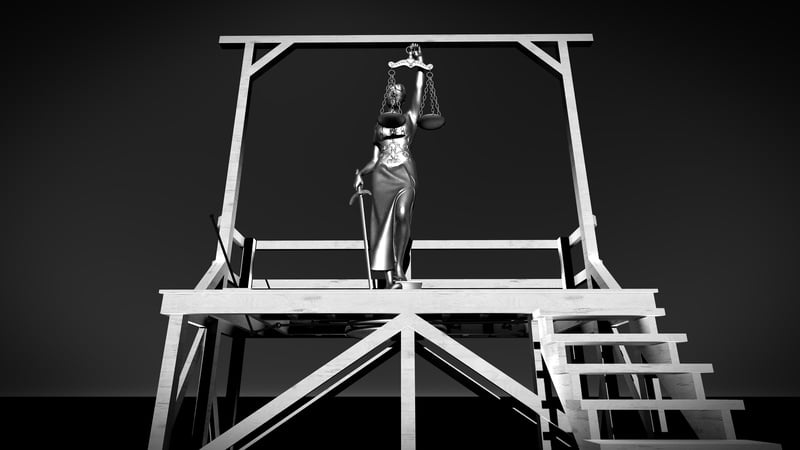
Lady Justice Themis statue on gallows with scales and sword

⬅ See all events from 16 September

Spread the word on your favourite platform!

1826: Property Crimes, Not Murder: Seven Men Hanged in Hobart in a Single Morning

On 15 September 1826, seven convicts, George Brace, John McFarlane, James Edwards, Thomas Balfour, John Dadd, John Clark and Patrick Brown, were hanged together in Hobart, the second of three mass executions carried out that month under Chief Justice John Pedder.

Unlike the seven hanged just two days earlier for murder, not one of this group had killed anyone. Balfour, McFarlane and Edwards went to the gallows for absconding into the bush and robbing settler William Holdship; Brace was hanged for robbery, Dadd and Clark for burglary in Ross, and Brown for stealing sheep, a crime that under Britain's Bloody Code carried the same legal weight as taking a human life.

The scale of the executions reflected both the severity of imported English law and Governor George Arthur's determined push to impose discipline on the penal colony. Rather than hang prisoners as they were convicted, the Supreme Court held sentences over and carried them out in batches: seven men on 13 September, seven more on the 15th, and a further nine on the 18th, accounting for nearly half of the 53 executions recorded in Van Diemen's Land that year.

1826 in the Hobart Colony

⬅ See all events from 15 September

Spread the word on your favourite platform!

1828: The Tunnel Under Sydney: Australia’s First Great Bank Robbery

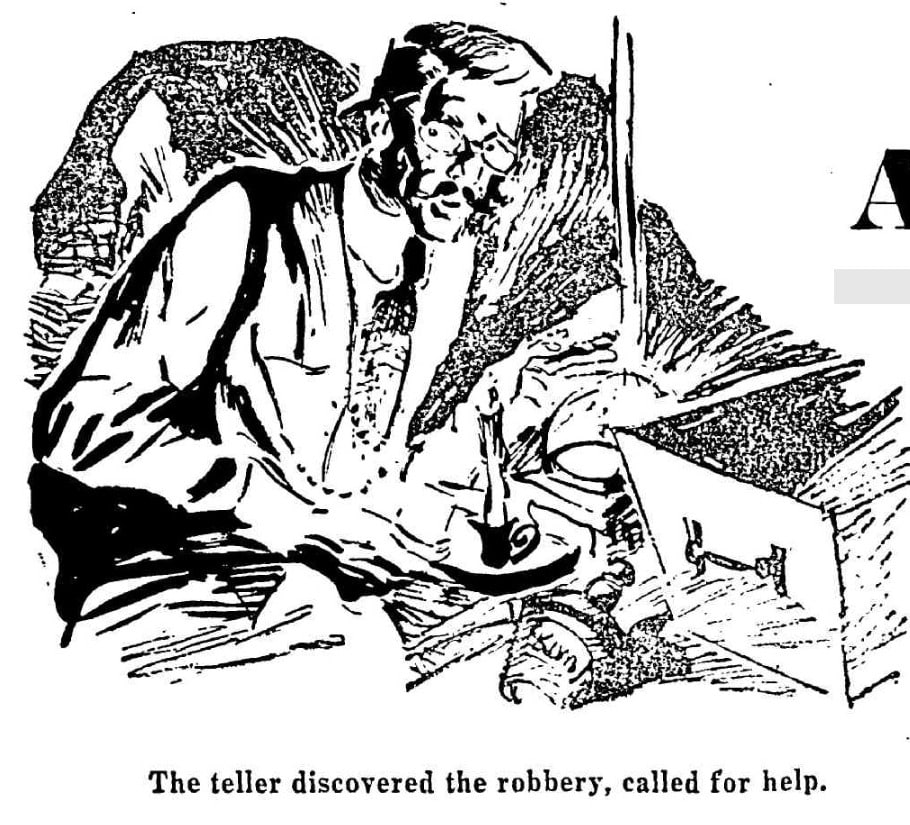
On the night of 14 September 1828, thieves broke into the Bank of Australia in Sydney. A teller arriving the next morning found the strongroom breached.

Thieves had tunnelled through a drain on the opposite side of the street, burrowed underground, and cut through a foundation wall between five and nine feet thick, work that would have taken at least three to four weeks to complete. They made off with 12,000 to 14,000 pounds in cash and property, a sum worth a small fortune today.

For two and a half years the robbers evaded capture, even as some of the stolen notes began surfacing in circulation and officials issued repeated warnings against using them. The case only broke when one of the gang was sentenced to 14 years on Norfolk Island for an unrelated highway robbery in 1829. Nearly a year into that sentence, he accepted the Governor's offer of a pardon and confessed, naming his accomplices: one of whom had fled to Ireland, another who had since died, and three more who joined him on Norfolk Island.

Not all the stolen money was recovered. Rumour has long held that boxes of coins from the robbery remain buried near the water’s edge on Sydney’s North Shore.

Discovering the robbery.

⬅ See all events from 14 September

Spread the word on your favourite platform!
On This Day in True Crime History

Subscribe to Dark Stories

True crime stories, dark history and tour news, straight to your inbox.