In August 1963, Perth police discovered a rifle hidden in bushes, linked to the murder of Shirley McLeod. Rather than remove it, they set a trap: replacing the weapon with an inoperable replica tied with fishing line, then waited.
On 1 September 1963, Eric Edgar Cooke returned to retrieve the rifle and was arrested on the spot. Under questioning, he confessed to 22 violent crimes, including eight murders, making him one of the deadliest serial killers in Australian history.
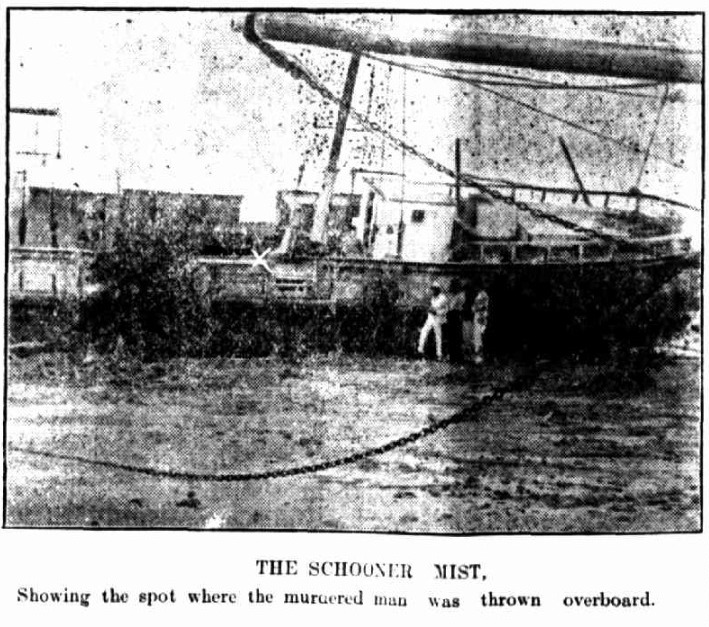
Mark Liebglid, a commercial traveller who bought and sold pearls in Perth-region waters for Freedman and Co. and Falk and Co., was lured aboard the abandoned schooner Mist in Broome harbour on 30 August 1905 under the pretence of viewing a stolen pearl. Known for flashing a large money clip, a gold signet ring, and a willingness to buy pearls of questionable provenance, Liebglid was beaten with a slingshot and oars by Charles Hagen, Pablo Marquez, and Simeon Espada, then drowned. His body was found floating near the vessel the following morning.
The stolen pearl at the centre of the plot was believed to have been hidden by a crew member in a coil of rope with its whereabouts never conclusively confirmed.
Schooner Mist showing where Mark Leibglid was thrown overboard
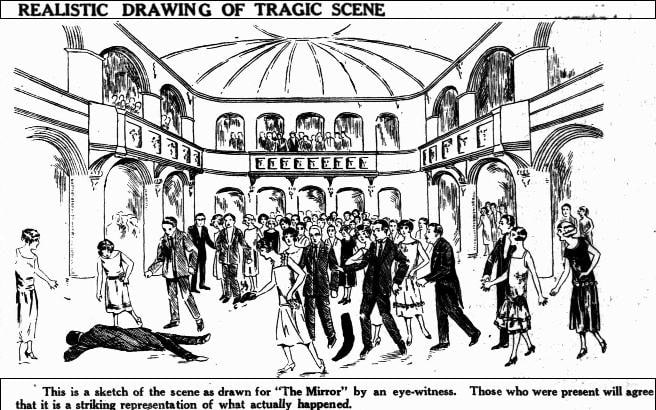
At a charity ball in the Government House Ballroom in Perth on the night of 26 August 1925, Audrey Jacob, a 20-year-old art student, shot her former fiance Cyril Gidley through the heart in front of hundreds of revellers.
Gidley, a 25-year-old ship’s engineer, had ended their engagement months earlier, dramatically throwing the engagement ring into the sea. Audrey had attended the ball in costume as Pierrette, a lovesick clown; when Gidley ignored her all evening, she slipped away, changed into a striking blue evening gown, and returned. As the orchestra struck up an encore dance number, she approached him on the floor. A single shot rang out and Gidley collapsed without a word.
Audrey stood over the body, smoking gun in hand, and declared to the stunned crowd: ‘I did it. Take me away. It’s all right. I know what I’ve done.’ She claimed the gun discharged accidentally during a confrontation. The case became a media sensation and led to a landmark trial in which she was found not guilty.
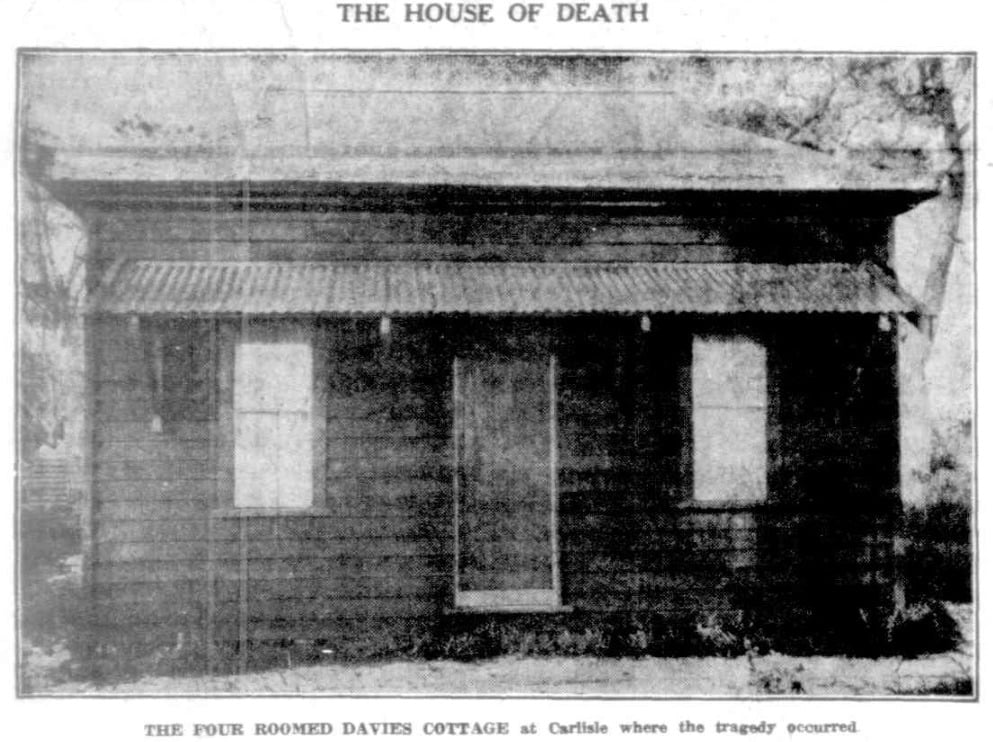
In the suburb of Carlisle, near Perth, Roderick Davies and family ended their days, leaving behind six farewell letters that described the killings as a spiritual calling. The family had become consumed by a belief in life after death, with Dorothy writing to her mother in Victoria that she had been ‘writing under spiritual control for months’ and had long known they would all be ‘going on soon.’
The coroner, Mr T. Y. A. Lang, described the motive bluntly: a desire for ‘a short road to an attractive hereafter.’ In his letter to police, Davies wrote that he had taken the lives of his wife and children ‘for reasons it would be impossible for me to explain.’ Dorothy’s final words to her mother were: ‘Life holds nothing; Death promises everything.’
Death pact newspaper clipping from Trove 1931 Mirror Perth