1920: The Wagon That Vanished: New York’s Unsolved Wall Street Bombing

At 12:01 pm on September 16, 1920, a horse-drawn wagon parked across from the J.P. Morgan & Co. headquarters at 23 Wall Street exploded, packed with 100 pounds of dynamite and 500 pounds of cast-iron sash weights turned into shrapnel. Thirty people died instantly and eight more later succumbed to their wounds, with 143 seriously injured and hundreds hurt in total. Witnesses saw the driver step down and vanish down a side street moments before the blast; he was never identified.

Within a minute, the New York Stock Exchange president suspended trading to head off panic. A 17-year-old messenger, commandeered a parked car and used it to ferry 30 wounded victims to hospital as police seized nearby vehicles for the same purpose. Crews worked through the night to clear the wreckage so the Exchange could reopen the next morning, but in doing so destroyed evidence that might have identified the bomber.

Investigators from the Bureau of Investigation, forerunner of the FBI, suspected the attack was the work of Galleanist anarchists responsible for a string of bombings the previous year, but no one was ever charged. More than a century on, the Wall Street bombing remains unsolved, its perpetrator and motive still unknown.
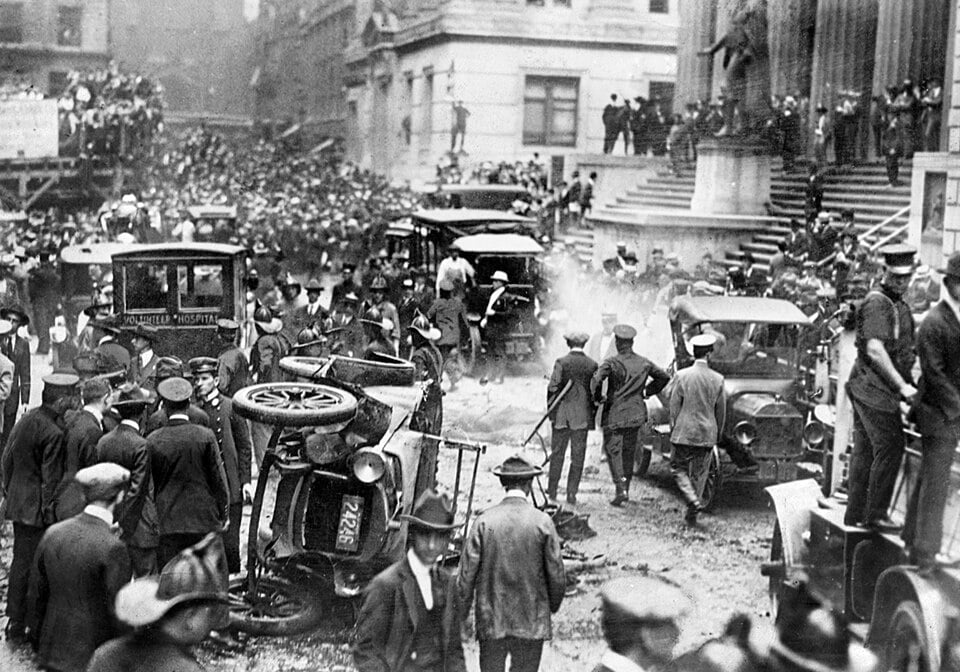

Historic photo of bombing aftermath on Wall Street

⬅ See all events from 16 September

Spread the word on your favourite platform!

1940: Screaming in Terror: Murder Inc. Gunman Arrested Hiding in a Manhattan Church

Vito ‘Socko’ Gurino, a trigger man for the Brooklyn-based crime syndicate Murder Inc., was finally cornered on September 12, 1940, not in some underworld hideout but inside the Church of the Guardian Angel in Manhattan, where he had been hiding out from New Jersey. Detectives found him screaming hysterically, convinced his own associates were coming to silence him for good.

The fear was not unfounded. Gurino had spent weeks in fear of his life, aware that Murder Inc. dealt with liabilities by killing them before they could talk to police.

Once in custody, Gurino broke quickly, confessing to three murders carried out on the syndicate’s orders and implicating himself in four more killings, opening a window into the machine-like efficiency of contract killing that had terrorised the New York underworld for years.

Vito Gurino: Murder Inc

⬅ See all events from 12 September

Spread the word on your favourite platform!

1931: Stabbed Like His Hero Julius Caesar: the Assassination of a Mafia Boss

Salvatore Maranzano, nicknamed Little Caesar for his fascination with Julius Caesar and the Roman Empire, had built a criminal empire in Brooklyn behind the front of a real estate brokerage, running bootlegging, prostitution and narcotics rackets. Born in Castellammare del Golfo, Sicily, and married to Elisabetta Minore, he was sent to New York to seize control of Mafia operations for his Sicilian backers.

In 1930, he went to war with rival boss Joe Masseria, sparking the Castellammarese War. Maranzano secretly convinced Masseria’s own lieutenant, Lucky Luciano, to betray him, and after a lunch at a Coney Island restaurant on April 15, 1931, Masseria was gunned down.

Maranzano emerged as capo di tutti capi, the boss of all bosses, and reorganised New York’s underworld into the Five Families. His triumph lasted only five months. After plotting to have Luciano killed, Maranzano discovered too late that Luciano had moved first. On September 10, 1931, four gunmen posing as government agents entered Maranzano’s Manhattan office and shot and stabbed him to death, dying in a manner fittingly similar to the fate of his idol, Julius Caesar.

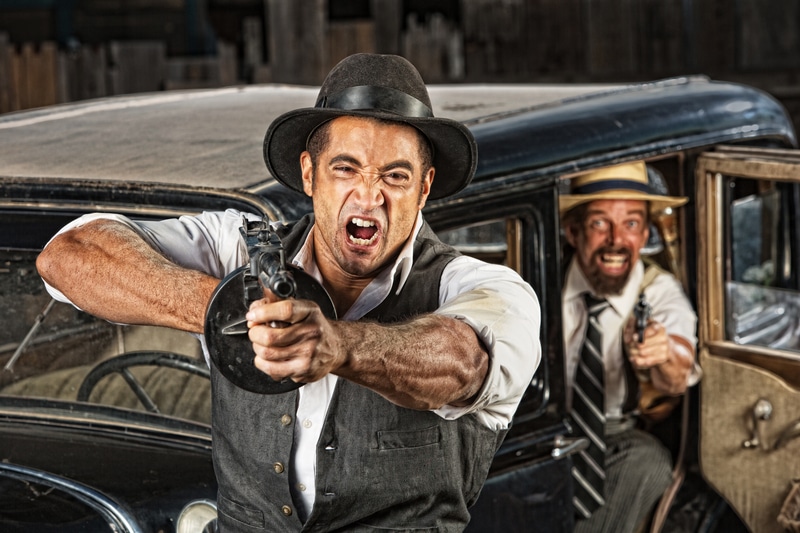
Angry mobsters firing a submachine gun near an antique car

⬅ See all events from 10 September

Spread the word on your favourite platform!

1971: Four Days of Rebellion: the Attica Prison Riot Leaves 39 Dead

On September 9, 1971, inmates at Attica Correctional Facility in New York seized control of the prison, taking dozens of guards and staff hostage in protest over brutal conditions, overcrowding, and demands for basic political and civil rights. For four days the prisoners held the yard, negotiating with officials and issuing a list of demands broadcast to the watching public.

On September 13, on the order of Governor Nelson Rockefeller, state troopers and police stormed the facility, opening fire on inmates and hostages alike. By the time the smoke cleared, 39 people were dead, including ten hostages, most killed not by prisoners but by the retaking force’s own gunfire.

The riot remains one of the deadliest prison uprisings in American history and exposed the brutal conditions inside Attica, triggering decades of lawsuits, investigations, and a landmark settlement for survivors and victims’ families.

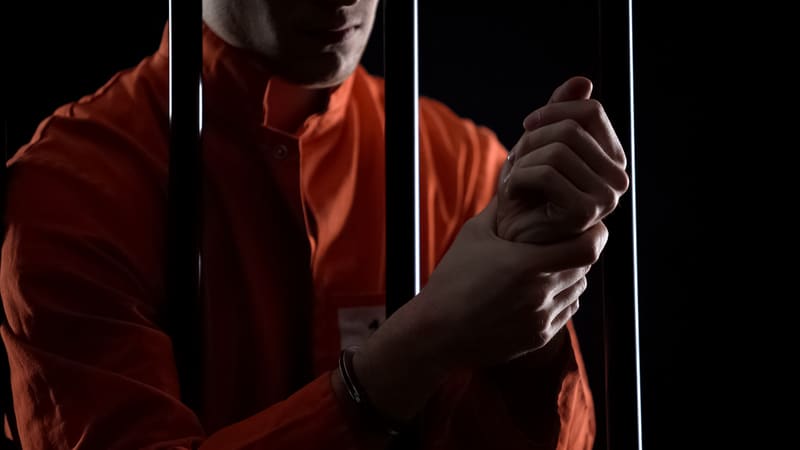
Prison Inmate
Prison Inmate

⬅ See all events from 9 September

Spread the word on your favourite platform!
On This Day in True Crime History

Subscribe to Dark Stories

True crime stories, dark history and tour news, straight to your inbox.