James Carrick is the youngest son of an Irish gentleman, a boy handed an officer's commission before he is old enough to truly understand it. He is beautiful, well-shaped, and something more than ordinarily genteel: exactly the kind of young man old England loves to watch destroy himself.
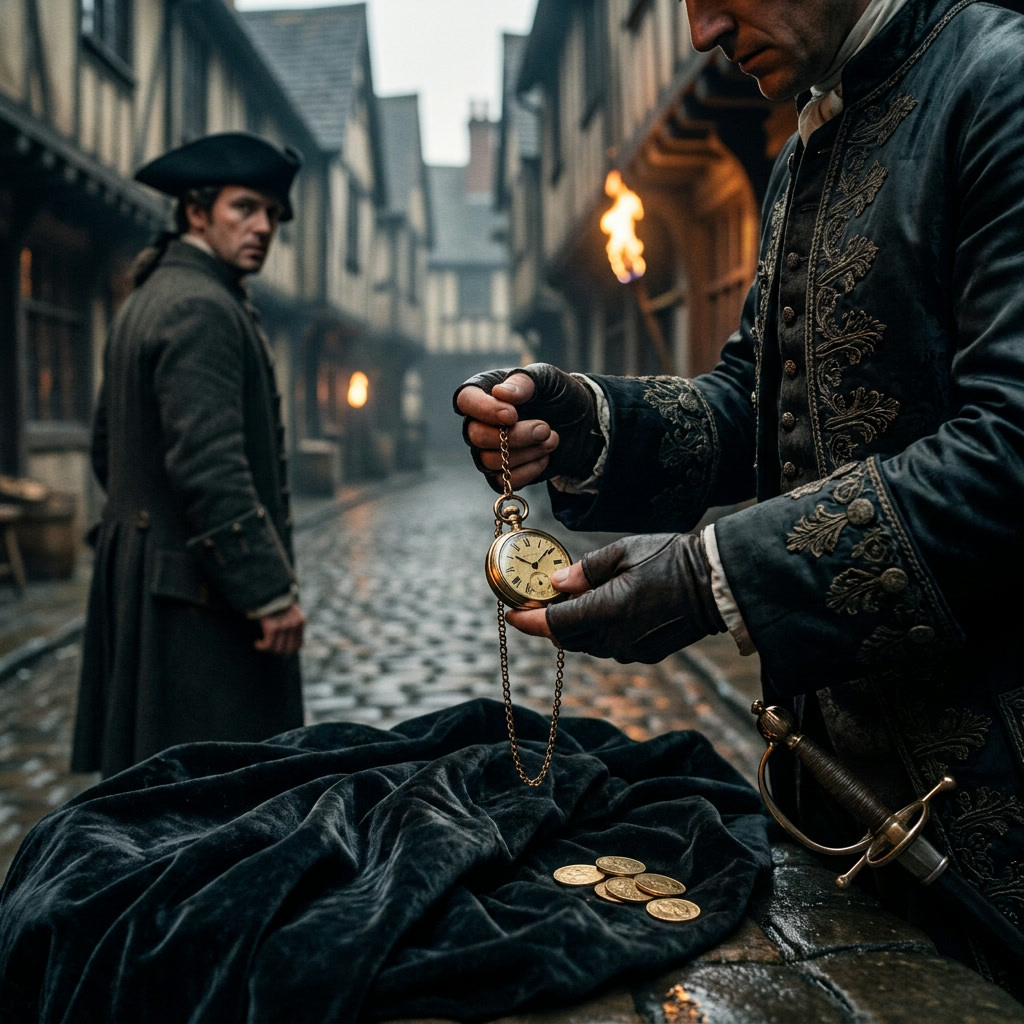
After soldiering in Spain and losing his commission, Carrick drifts into London with empty pockets and expensive habits. Rather than accept his brother's plea to come home to Dublin, he chooses the road: a life of highway robbery fuelled by gambling, women and fine clothes, the kind of true crime story where charm is the most dangerous weapon of all.
Step into the world of James Carrick, from the streets of Barcelona to the heaths of old England, and hear how a gentleman became a robber.
Follow the podcast so you never miss an episode:
FROM THE 1735 TEXT
If you had suspended your curiosity till I went to Tyburn, you might have seen me for nothing.
Dark Lexicon: Old words. Dark meaning.
The past speaks its own dialect; here is what to listen for in this episode.
Duenna: not a lover but her opposite: an older woman appointed to chaperone a younger one. In old England and across Catholic Europe, a duenna was the gatekeeper between a young woman and any man who wanted to reach her; in this story, she is the bait in a trap.
Pieces-of-eight: Spanish silver dollars, the universal currency of empire. In old England, these coins circulated freely and carried real weight; two hundred of them was a handsome sum, enough to make a young officer feel whole again after a humiliating robbery.
Taking a purse: the polite way of saying highway robbery in old England. The phrase sounds almost genteel, as if the money simply changed hands of its own accord; the pistol or blade that made it happen went unmentioned.
Ordinary: today an ordinary is just an adjective, but in old England it meant a fixed-price eating house or tavern where men dined, drank and gambled together. A 'gaming ordinary' was essentially an illegal casino disguised as a dining room.
Chair: not furniture but transport: a sedan chair, a small enclosed box carried on poles by two men through the streets. In old England, stopping a chair at night was a favourite method of street robbery; the passenger was trapped, visible and usually wealthy.
Sparks: young men of fashion, lively and a little reckless. The word carried a note of admiration and a note of warning; in old England, a spark was someone who might set a fire he could not put out.
The cart drove away: at Tyburn, the condemned stood in a horse-drawn cart with the noose already around their neck. When the cart was driven forward, there was nothing left beneath their feet; the phrase is plain, but what it describes is the final second of a life.
About This Series
Lives of the Most Remarkable Criminals (1735) is one of the earliest works of true crime in the English language. Each week this podcast retells one of its stories for today's listener, keeping the old book's most striking lines.