1888: Jack the Ripper Claims His First Victim in Whitechapel

Mary Ann Nichols, known as Polly, was 43 years old, a divorced mother of five, and homeless on the night she died. In the early hours of 31 August 1888, she went to the streets of Whitechapel, London, to earn money for a bed. Her body was found before 4 a.m., her throat slashed with a long-bladed knife and her abdomen deeply cut. There were no witnesses.

Nichols became the first of at least five women murdered in and around Whitechapel between late August and early November 1888 by the killer who would become known as Jack the Ripper. Her death ignited intense press and public interest in both the murders and the desperate living conditions of London’s East End.

Despite countless theories, the killer Jack The Ripper, has never been identified.
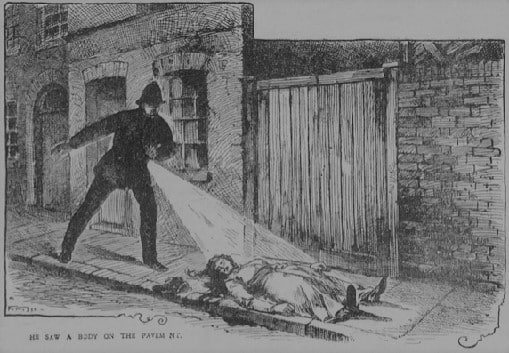
Illustration of PC Neil discovering the body of Mary Ann Nichols with his lantern. Unknown artist, 1888. Published in Famous Crimes Past and Present, c.1903. Public domain.

⬅ See all events from 31 August

Spread the word on your favourite platform!

2006: The Scream Recovered Two Years After Brazen Oslo Museum Theft

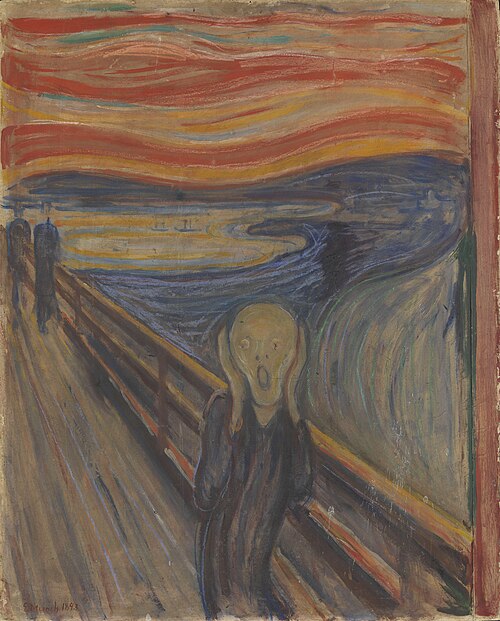
Edvard Munch’s iconic painting The Scream, stolen from the Munch Museum in Oslo on 22 August 2004, was recovered by Norwegian police on 31 August 2006. The theft had been carried out in broad daylight by masked gunmen who forced staff to the ground before fleeing with the painting and another Munch work, Madonna.

The recovery came after a lengthy investigation involving multiple arrests. The paintings were found hidden and showed some damage, but were ultimately restored and returned to public display.

Edvard Munch, The Scream (1893). Photo: Børre Høstland/National Museum of Norway. CC BY 4.0, via Wikimedia Commons.

⬅ See all events from 31 August

Spread the word on your favourite platform!

1825: John Riddel Hanged at Hobart for Murder, Confessing Two More Killings

A dispute over the butchering of a pig turned fatal in Hobart in 1825. John Read Riddel, a carpenter, had hired a butcher to cut up a slaughtered pig. Dissatisfied with the work, the two men came to blows, and Riddel drove a knife into the man during the struggle.

Standing on the gallows for his crime, on 31 August 1825, Riddel confessed to the gathered crowd to smothering two of his wives while they slept in a drunken stupor, to forging a letter with an English postmark to deceive a clergyman into marrying him, and to a failed attempt on the life of his Captain, where he had snatched a concealed sword and was about to strike when a bystander intervened.

Riddel himself requested that the full weight of his crimes be made public, before being launched into eternity.

Piggy bank hanging from a hangmans noose on a golden rope

⬅ See all events from 31 August

Spread the word on your favourite platform!

1830: A Daring Escape and a Public Hanging in Colonial New South Wales

In February 1829, a man from the Shoalhaven region of New South Wales killed English sawyer John Rivett in the Kangaroo Valley, claiming self-defence after a dispute over a trade and a personal grievance. He and his accomplice evaded capture for months, using their knowledge of the densely forested hilly terrain to outrun colonial authorities.

Arrested in May 1829, the accused made a bold escape aboard a ship bound for Sydney, stealing the keys to his chains from a sleeping guard before jumping overboard with his companion. Recaptured and tried, he was found guilty of wilful murder and publicly executed by infamous hangman Alexander Green on 30 August 1830.

White bark gumtrees by Shoalhaven River under storm clouds

⬅ See all events from 30 August

Spread the word on your favourite platform!
On This Day in True Crime History

Subscribe to Dark Stories

True crime stories, dark history and tour news, straight to your inbox.