1843: Bushranger Martin Cash Captured After Shooting a Constable Dead in Hobart

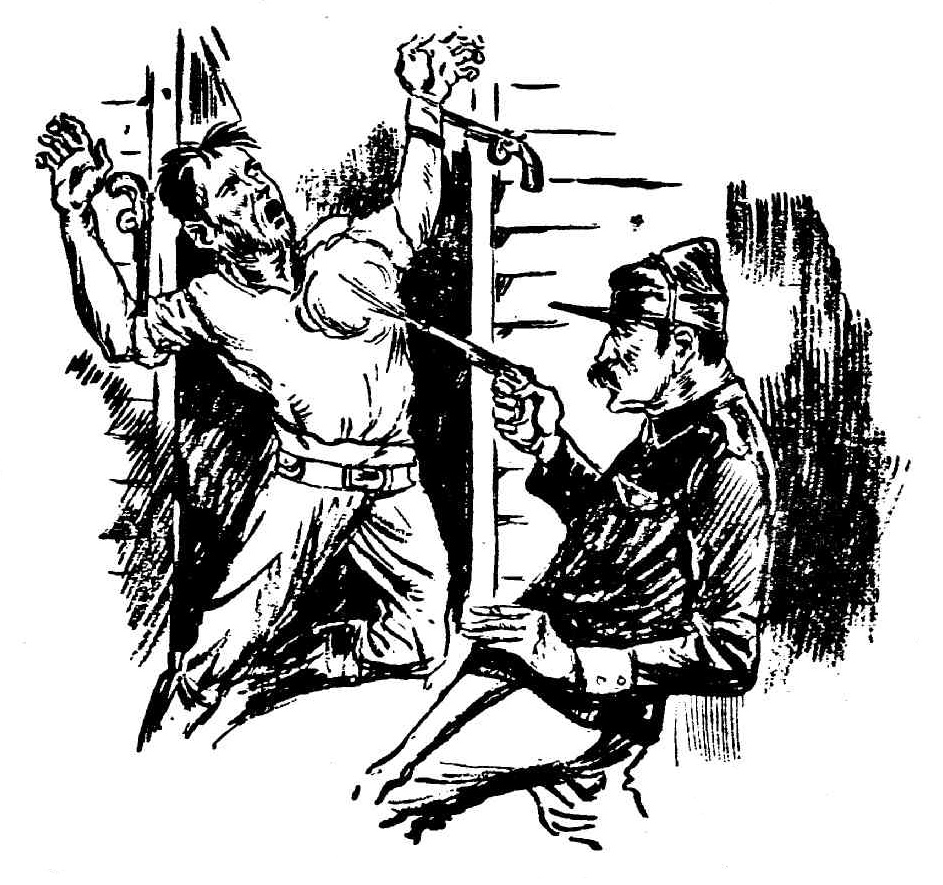
On 29 August 1843, notorious bushranger Martin Cash was captured in Hobart after venturing into the town in search of his former partner, Bessie, who had taken up with another man. Cash, a wanted escapee with a substantial government reward on his head, was spotted by two plain-clothes constables in Harrington Street, close to Bessie’s address and only about 100 yards from the watch-house. He fled through the streets, firing at his pursuers, and in attempting to reach the Domain mistakenly ran into a dead end near the Campbell Street Gaol. Forced to turn back, he lost ground; the spot later became known as Martin’s Mistake. Near the Old Commodore Inn, Constable Peter Winstanley tried to seize Cash and was shot at close range. Cash was eventually wrestled to the ground and captured after a violent struggle. Winstanley died two days later, on 31 August. Cash was convicted of his murder and sentenced to death, but received a last-minute reprieve and was transported for life to Norfolk Island. Cash ultimately survived his years as a bushranger and convict, dying in Tasmania in 1877. He also left behind his own account of his life, dictated to James Lester Burke and published in Hobart in 1870 as The Adventures of Martin Cash, one of the best-known first-person accounts of Australian bushranging and the convict era.
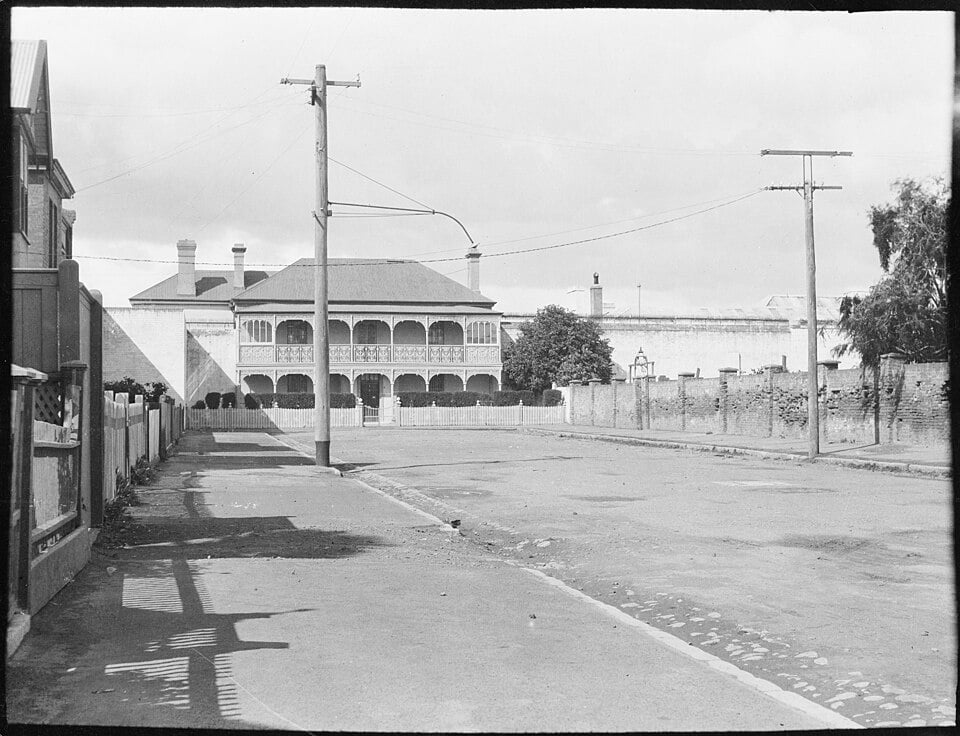

Residence of the Governor of the Hobart Gaol, at the end of Melville Street, known colloquially as Martin's Mistake.

⬅ See all events from 29 August

Spread the word on your favourite platform!

1870: William Brown Hanged at Toowoomba Gaol for Robbery Under Arms

William Brown, also known as Bertram, was hanged at Toowoomba Gaol on 29 August 1870 for robbery under arms at Mangalore. A German-born drifter who claimed to have left home at the age of twelve and reached Australia as a cabin boy, Brown was linked to a string of robberies in New South Wales and was reported to have spent several years with Gardiner’s gang in the Barrier Ranges. His identity was confirmed by the loss of his left eye, an injury sustained during an earlier term of imprisonment.

Throughout his final days, he refused to reveal his true name or identify his associates, remarking that his friends would probably never learn what had become of him. Brown was only twenty-one when he was executed.

Toowoomba Garden City welcome sign for Carnival of Flowers

⬅ See all events from 29 August

Spread the word on your favourite platform!

1863: Fred Lowry Shot at Cook's Vale Creek: The Bushranger Who Died Game

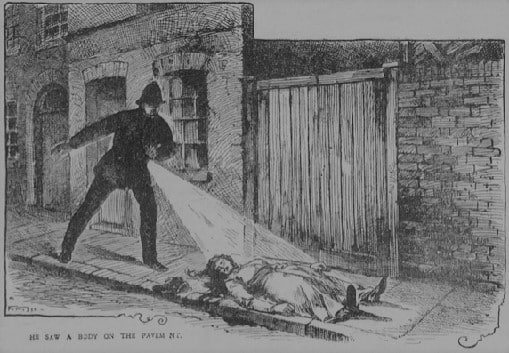
Police raided a public house at Cook’s Vale Creek, New South Wales, on 29 August 1863, where bushranger Fred Lowry emerged armed with two revolvers and exchanged gunfire with Senior-Sergeant Stephenson. Lowry, a gaunt six-foot man born in Windsor around 1836 to former convicts, had built a career of horse theft, mail-coach robbery, and prison escape, briefly riding with the Gardiner-Hall gang before forming his own bushranger outfit. Shot in the throat during the exchange, Lowry was captured along with accomplice Larry Cummins, who was found in bed with a loaded revolver. Stolen banknotes from the Mudgee mail were recovered at the scene. Lowry died from his wound the following day. His purported last words, ‘Tell ’em I died game’, cemented his place as the archetypal Australian bushranger.

Captured and shot.

⬅ See all events from 29 August

Spread the word on your favourite platform!

1973: The Stockholm Bank Siege That Gave Psychology a New Term

On 28 August 1973, Swedish police ended a six-day hostage crisis at Sveriges Kreditbanken in Stockholm by pumping tear gas into the vault where captors and hostages had been confined since 23 August. The standoff concluded not with gratitude but with something far stranger: the hostages insisted on leaving alongside their captors, fearing police would open fire, and then embraced them warmly as the ordeal ended.

The behaviour baffled investigators and onlookers alike. A psychiatrist advising Swedish police coined the term ‘Stockholm syndrome’ to describe the paradoxical emotional bonds that had formed between the captives and the people holding them at gunpoint. The phrase entered the psychological lexicon and has since been applied to hostage situations around the world.

Stockholm Syndrome

⬅ See all events from 28 August

Spread the word on your favourite platform!
On This Day in True Crime History

Subscribe to Dark Stories

True crime stories, dark history and tour news, straight to your inbox.