1974: Spared the Gallows, Paroled from Alcatraz, Caught at Last: the Arrest of the Want-Ad Killer

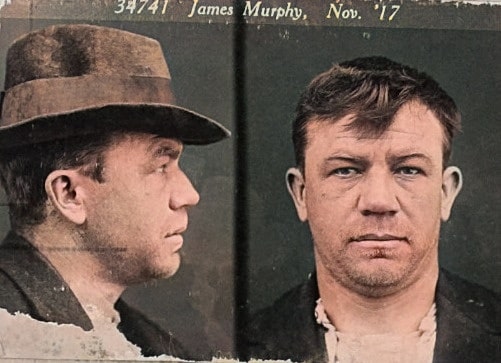
The Want Ad Killer,Harvey Carignan, was arrested in Minnesota on 24 September 1974, at the end of a ten-day rampage. A woman he had left for dead in a field survived and raised the alarm, two others escaped when he stopped for petrol, and an 18-year-old was found dead in a cornfield just four days before police caught up with him.

He should have been hanged in 1949. A soldier stationed in Alaska, he was sentenced to death for murdering a woman, but the conviction collapsed because an officer had promised he would not be executed if he confessed. With the confession thrown out, the murder charge was dismissed. He served time for a separate assault instead, part of it in Alcatraz, and was paroled in 1960.

By the early 1970s he was the prime suspect in two killings in Washington state, one of them a teenager who had answered his "help wanted" ad for a job at his service station. He was never charged, and moved on to Minnesota. After his arrest, his plea that God had ordered him to kill failed; he was convicted of two murders and died in prison in 2023, aged 95.


Help wanted classified ad printed in a newspaper

⬅ See all events from 24 September

Spread the word on your favourite platform!

2009: Manson Family Cult Member Dies in Prison

Susan Atkins, one of the most notorious members of Charles Manson's cult and a participant in the infamous 1969 Tate-LaBianca murders, died in custody at California's Central California Women's Facility while serving a life sentence.

Atkins had spent nearly four decades behind bars, repeatedly denied parole despite being terminally ill with brain cancer in her final years. Her role in the killing of actress Sharon Tate and others made her one of the most infamous figures to emerge from the Manson Family's 1969 murder spree.

Evil glare
Evil glare

⬅ See all events from 24 September

Spread the word on your favourite platform!

2020: The Claremont Serial Killer Convicted of Two Murders in Perth

After 24 years, the case that haunted Perth came down to a single judge and a 619-page verdict. Bradley Edwards, a 51-year-old former Telstra technician, was found guilty of two of the three Claremont murders and not guilty of the third.

All three women vanished after nights out in Claremont, then one of the busiest nightspots in the city. Sarah Spiers, 18, called a taxi from a phone booth at 2.06 am in January 1996; when it arrived three minutes later, she was gone. Her remains have never been found, and although Edwards was acquitted of her murder, the judge found it more likely than not that he was involved in her disappearance. Jane Rimmer, a 23-year-old childcare worker, was last seen on security footage that June and was found 55 days later in bushland by a family picking wildflowers. Ciara Glennon, a 27-year-old lawyer, disappeared in March 1997 and was found 19 days later in scrub north of the city.

The hunt became the biggest, longest and most expensive investigation in Western Australian history. Thousands of taxi drivers were fingerprinted and DNA tested, 110 "persons of interest" were sent a questionnaire asking "Are you the killer?", and a public servant was pursued as the prime suspect for a decade before being cleared.

Edwards had no known link to the case until his arrest in December 2016. DNA found under the fingernails of his final victim matched a kimono dropped by an intruder fleeing a suburban house in 1988, and fibres on both bodies matched the Telstra-issue station wagon he drove at the time. Tried without a jury over seven months and more than 200 witnesses, he was sentenced to life with a 40-year minimum, the judge noting a "high likelihood" that he would die in prison.

Telephone booth at night with interior lights

⬅ See all events from 24 September

Spread the word on your favourite platform!

1889: Was Jack a Jill? Rumours of a Female Ripper Emerge in London

Jack the Ripper was a woman. That was the possibility London newspapers began to report: that the killer who had horrified the world for months was a woman disguised as a man, living and working unnoticed in Whitechapel. By the time the story spread, she had reportedly vanished. Police were confidently believed to be "at last on the track" of the murderer, and there was suddenly talk of "his or her crimes".

Who, it was asked, could walk the streets at night without suspicion, possess the anatomical knowledge the mutilations suggested, and risk being found beside a body? One answer: a woman who was, or had been, a midwife. Discovered bending over a victim, she need only say she had been passing by and thought the woman required her medical attention. Though largely discounted, the Jill the Ripper theory has never completely gone away.

Victorian woman in London street with man in background

⬅ See all events from 21 September

Spread the word on your favourite platform!
On This Day in True Crime History

Subscribe to Dark Stories

True crime stories, dark history and tour news, straight to your inbox.