1975: Ted Bundy Caught by a Wrong Turn: The Traffic Stop That Unmasked a Serial Killer

At 3 a.m. on 16 August 1975, Utah Highway Patrol Trooper Bob Hayward took a wrong turn leaving a subdivision and stumbled onto a tan Volkswagen Beetle parked outside a neighbour’s home. When his headlights hit the car, it fled, running dark through stop signs. When Hayward finally pulled the driver over, a search of the vehicle turned up handcuffs, an ice pick, a crowbar, and pantyhose with eye holes cut out. The missing front passenger seat only deepened suspicion. The driver was Ted Bundy, law school student, and by then already responsible for the deaths of at least 25 young women across four states.

Bundy was initially arrested for burglary. The items found matched restraints used in the kidnapping of Carol DaRonch, who later identified Bundy in a lineup. He was convicted of her attempted kidnapping. Separately, detectives linked him to the February 1975 murder of Caryn Campbell, a 23-year-old nurse killed in Colorado. Charged with Campbell’s murder, Bundy was transferred to a jail in Aspen, Colorado, to stand trial. His girlfriend, Elizabeth Kloepfer, had reported her suspicions to police multiple times in 1974. Nobody had acted. A wrong turn finally changed that.
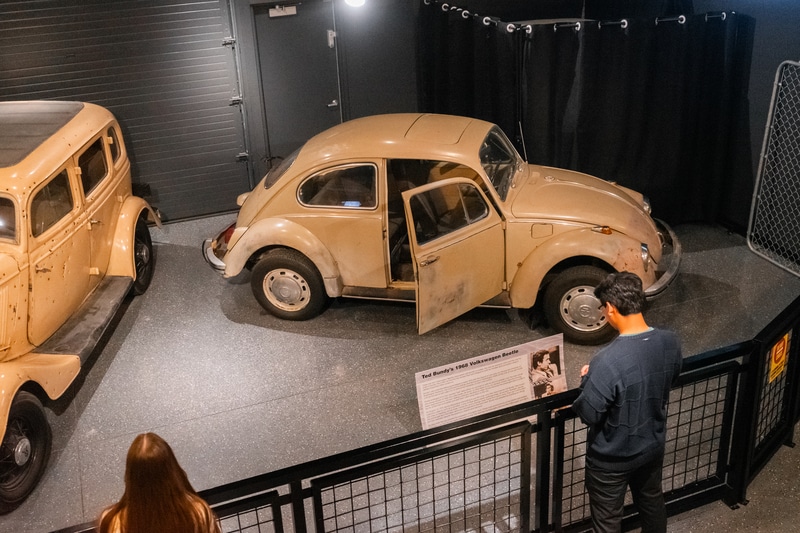

Exhibit with the Volkswagen of serial killer Ted Bundy. Pigeon Forge, Tennessee, USA - December 18 2025: The Volkswagen of serial killer Ted Bundy in an exhibit the Alcatraz East Crime Museum | ID 426074004 © Raisamacouze | Dreamstime.com
ID 426074004 © Raisamacouze | Dreamstime.com

⬅ See all events from 16 August

Spread the word on your favourite platform!

1992: The First Victim of the Snowtown Bodies in Barrels Killers

In August 1992, John Justin Bunting bashed the first of what would become twelve murder victims to death with a hammer at his home in Salisbury North, north of Adelaide. Bunting, a former abattoir worker filled with deep hatred, led a cell of killers that included Robert Joe Wagner and James Vlassakis, operating across South Australia between 1992 and 1999.

The murders became known as the Snowtown or Bodies in Barrels case after eight of the twelve victims were found sealed in acid-filled barrels inside an abandoned bank vault in Snowtown, 140 kilometres north of Adelaide. The trial was among the longest and most publicised in Australian legal history, ending with Bunting and Wagner convicted of multiple murders and Vlassakis, who confessed to four killings and testified for the Crown, receiving a lesser sentence.

Rusty metal barrels
Rusty metal barrels

⬅ See all events from 16 August

Spread the word on your favourite platform!

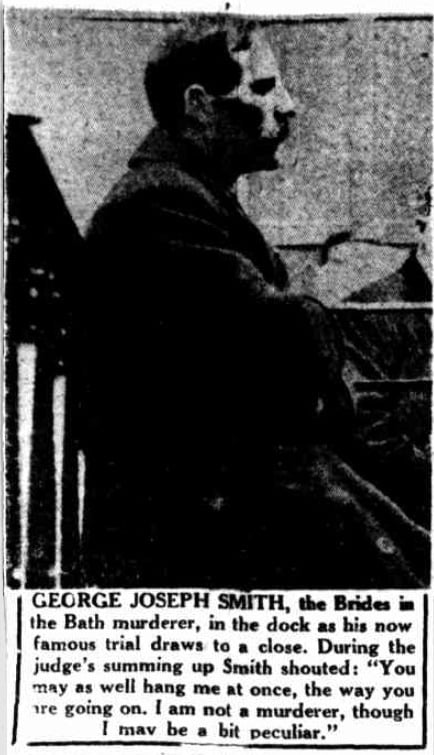
1915: Brides in the Bath Killer Hanged at Maidstone Prison

George Joseph Smith, operating under aliases including Henry Williams and John Lloyd, was convicted of drowning three women in their baths after marrying them bigamously and insuring their lives. His victims were Bessie Mundy, found dead at Herne Bay in 1912; Alice Burnham, drowned at Blackpool in December 1913; and Margaret Lofty, found dead in her bath at Highgate in December 1914. Each death was initially recorded as accidental, but Divisional Detective Inspector Neil and pathologist Dr Bernard Spilsbury determined that accidental drowning in any of those baths was effectively impossible.

Smith was tried in 1915, convicted of all three murders, and hanged at Maidstone Prison by executioner John Ellis on 13 August 1915.

Smith protested his innocence to the end.

George Joseph Smith Brides in the Bath murderer in the dock

⬅ See all events from 13 August

Spread the word on your favourite platform!

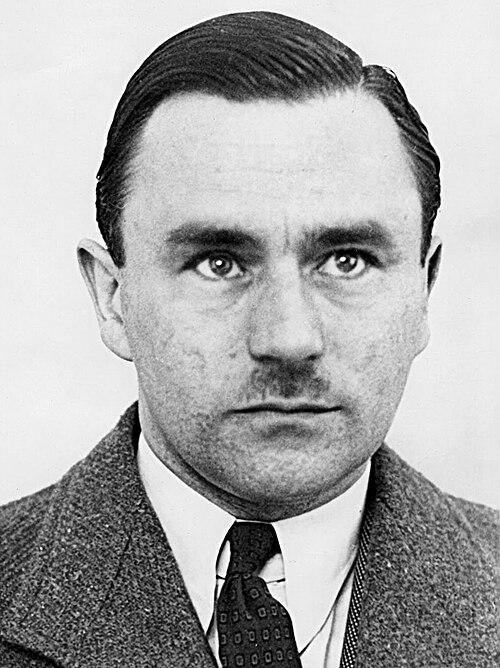
1949: The Acid Bath Murderer: John Haigh Hanged for Six Killings

John George Haigh was an English serial killer who battered or shot his victims, then dissolved their bodies in sulphuric acid to erase all evidence. He forged his victims’ signatures to sell their possessions and collect large sums of money, a scheme he had refined through years of fraud and multiple prison terms. Though convicted of six murders, Haigh claimed to have killed nine.

Born in Stamford, Lincolnshire, and raised in Yorkshire by strict Plymouth Brethren parents, Haigh drifted from fraud into murder after becoming fascinated by French killer Georges-Alexandre Sarret, who had used acid to dispose of bodies. He was arrested in 1949 after police connected him to the disappearance of a widow whose remains, including gallstones and false teeth, survived the acid and were found at his workshop in Crawley, Sussex. Haigh was convicted at Lewes Assizes and hanged at Wandsworth Prison on 10 August 1949.

Portrait of john george haigh

⬅ See all events from 10 August

Spread the word on your favourite platform!
On This Day in True Crime History
1794·The First Free Settler Murdered in the Colony: Hanged at Sydney for a Parramatta Stabbing
1826·The Gun That Misfired Twice: Three Bushrangers Hanged Outside Sydney
1873·A Tearful Confession in Custody Cracked the Case: Two Men Hanged at Perth Gaol for Eating their Victim
1889·He Called It an Accident. The Jury Called It Murder: Robert Landells Hanged at Melbourne Gaol
1907·A Doctor Fooled Twice: Martha Rendell and the Second Child to Die of Diphtheria
2002·Shot Dead in His Own Bed: A Melbourne Gangland Killing Blamed on a Friend
More Crime On This Day →

Subscribe to Dark Stories

True crime stories, dark history and tour news, straight to your inbox.