Dark Stories Tours and Theatre productions often touch on the crime of murder. Dark Stories blog articles will contain stories of murder from all around the world.
Serial killer Donald Gaskins, already condemned to die at Central Correctional Institution, murdered fellow death row inmate Rudolph Tyner using a homemade bomb built from C4 plastic explosive concealed inside a device disguised as a portable radio speaker. The device was passed to Tyner and detonated, killing him instantly.
Gaskins carried out the killing as a paid hit, hired for 2,000 dollars by Tony Cimo, the son of a couple Tyner had murdered years earlier. Cimo wanted revenge on his parents’ killer and used Gaskins, already notorious as one of South Carolina’s most prolific murderers, to get it from inside the prison itself.
Mobster planting a time bomb in a car engine compartment
Aileen Wuornos had already established a deadly pattern along Florida’s highways, targeting men she encountered while working as a sex worker and hitchhiking around the state. Her fifth known victim was a 56-year-old retired police chief. After disappearing, his body was found on September 12 in an isolated area of Marion County. He had been shot seven times in the head and torso with Wuornos’s .22-calibre revolver.
By this stage, Wuornos’s killings had moved well beyond the disputed circumstances surrounding her first victim, Richard Mallory, whose death she maintained had been in self-defence. This latest killing formed part of an escalating pattern that would claim one more victim before police arrested her in January 1991, bringing to an end one of America’s most notorious female serial killing sprees.
Prisoner handcuffed during lethal injection with syringe and vial
Salvatore Maranzano, nicknamed Little Caesar for his fascination with Julius Caesar and the Roman Empire, had built a criminal empire in Brooklyn behind the front of a real estate brokerage, running bootlegging, prostitution and narcotics rackets. Born in Castellammare del Golfo, Sicily, and married to Elisabetta Minore, he was sent to New York to seize control of Mafia operations for his Sicilian backers.
In 1930, he went to war with rival boss Joe Masseria, sparking the Castellammarese War. Maranzano secretly convinced Masseria’s own lieutenant, Lucky Luciano, to betray him, and after a lunch at a Coney Island restaurant on April 15, 1931, Masseria was gunned down.
Maranzano emerged as capo di tutti capi, the boss of all bosses, and reorganised New York’s underworld into the Five Families. His triumph lasted only five months. After plotting to have Luciano killed, Maranzano discovered too late that Luciano had moved first. On September 10, 1931, four gunmen posing as government agents entered Maranzano’s Manhattan office and shot and stabbed him to death, dying in a manner fittingly similar to the fate of his idol, Julius Caesar.
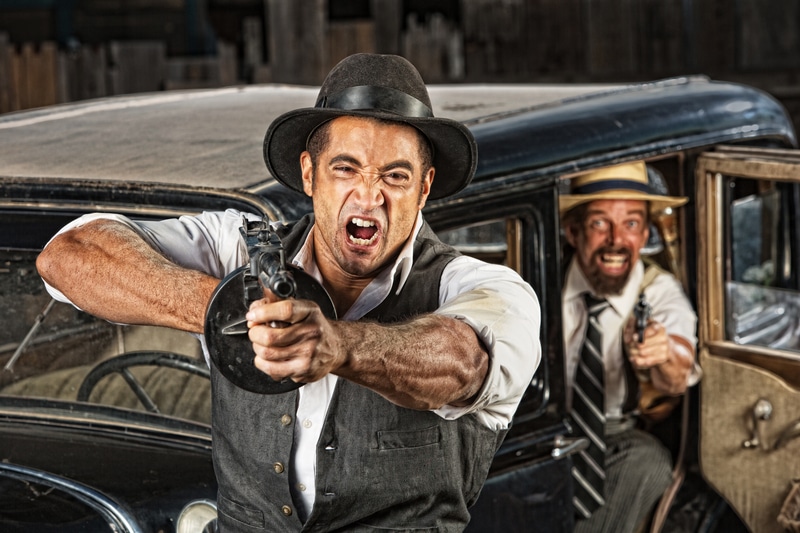
Angry mobsters firing a submachine gun near an antique car
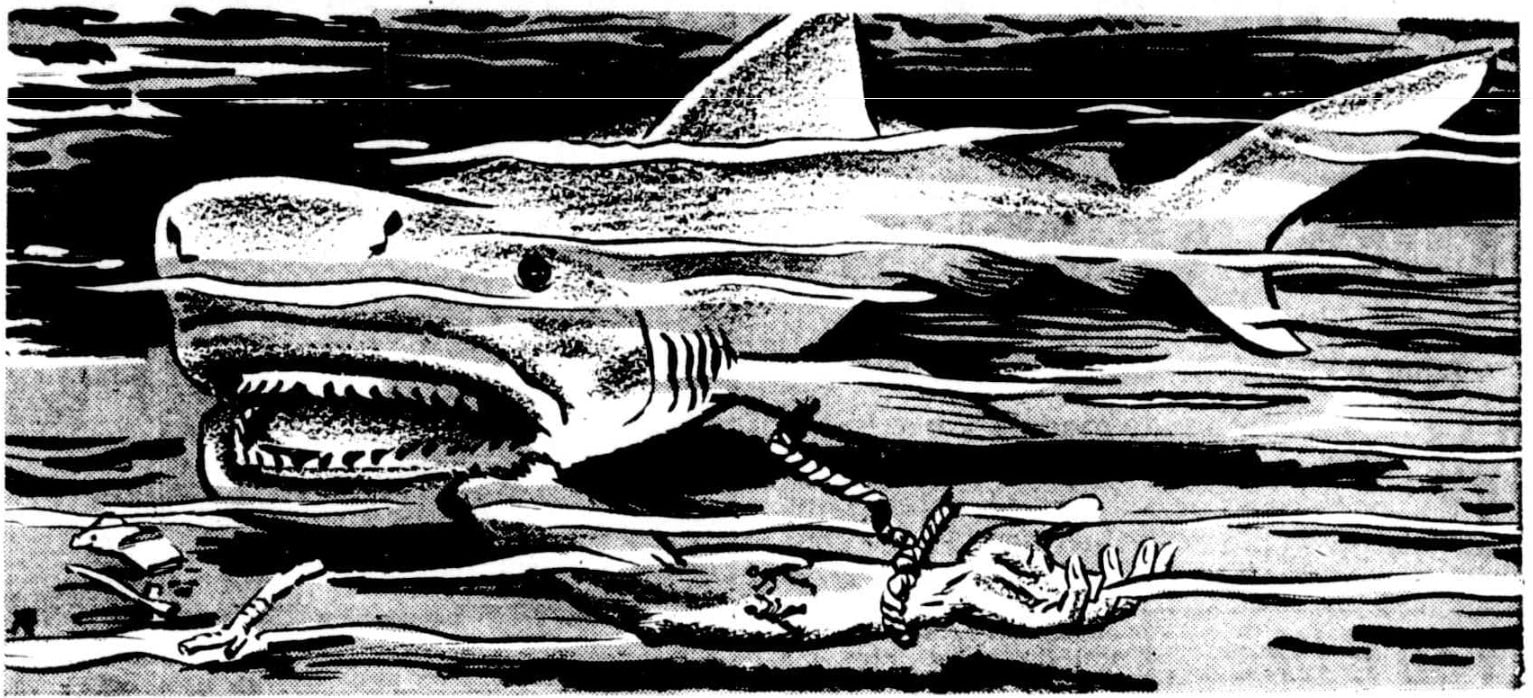
The case began in the most macabre way imaginable: on April 25, 1935, a captured shark on display at an Aquarium in Sydney vomited up a human arm. Tattoos identified the limb as belonging to James Smith, who had vanished after leaving home on April 8 with the stated intention of going on a fishing trip.
Police investigations focused on Patrick Brady, an associate of Smith who had been with him around the time of his disappearance. Another central figure was businessman Reginald Holmes, who was in a position to give direct evidence about Smith’s killing and Brady’s alleged involvement.
But before Holmes could give that evidence, the case took another extraordinary turn. In the early hours of June 12, just hours before he was due to appear at the inquest, Holmes was found shot dead in his car at Dawes Point. With the Crown’s key witness gone, the murder case against Brady was left largely dependent on circumstantial evidence.
Despite what Chief Justice Sir Frederick Jordan acknowledged was plenty of cause for suspicion, the prosecution now faced two fundamental problems: its key witness was dead, and there was no body to prove that Smith himself was dead. A person could, after all, survive the loss of an arm. On September 10, 1935, Jordan ruled that the evidence was insufficient to sustain a conviction and directed the jury to acquit Brady, bringing to an abrupt end what was described at the time as a case “without parallel in the annals of Australian criminal history.”
Brady’s freedom was short-lived. As soon as he stepped outside the court, detectives arrested him on an unrelated Tasmanian forgery charge. No one was ever convicted over Smith’s death or Holmes’s killing, and the infamous Shark Arm case remains unsolved.