1984: The Fine Cotton Ring-In That Shook Australian Racing

On 18 August 1984, a carefully orchestrated betting scam unfolded at Eagle Farm Racecourse in Brisbane. A syndicate headed by former bloodstock agent John Gillespie entered a horse under the name Fine Cotton, a poor performer racing at 33-1, then sent out Bold Personality, an open-class horse several grades above, crudely disguised with Clairol hair dye and white paint to mimic the brown gelding’s markings. The plunge was unmistakable: Fine Cotton’s odds crashed to 7-2 as money flooded in at tracks and TABs across the country.

Stewards grew suspicious at the dramatic form reversal and disqualified the horse. The botched disguise, paint flaking, colouring mismatched, made the fraud obvious. Trainer Hayden Haitana was disqualified and prominent Sydney bookmaker Robbie Waterhouse lost his licence for 17 years. The Fine Cotton scandal remains one of the most shambolic and notorious frauds in the history of Australian thoroughbred racing.

Horse racing
Horse racing

⬅ See all events from 18 August

Spread the word on your favourite platform!

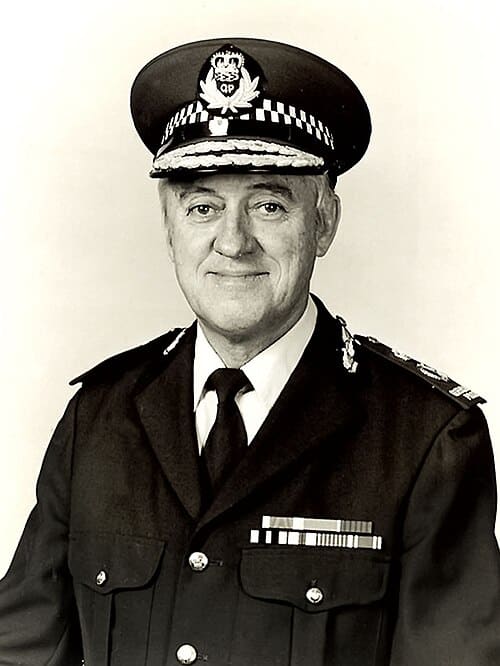
1991: Sir Terence Lewis, Queensland Police Commissioner, Convicted of Corruption

Sir Terence Lewis, Commissioner of the Queensland Police Service from 1976 to 1987, was found guilty on 5 August 1991 of 15 counts of corruption and one of forgery, following the explosive Fitzgerald Inquiry into police misconduct. A District Court jury determined that Lewis had accepted bribes totalling $700,000 to protect brothels, SP bookmakers, illegal casinos, and gaming machine operators. He had been handpicked for the commissioner’s role in 1976 by Premier Joh Bjelke-Petersen, bypassing 122 more senior officers.

Judge Healy sentenced Lewis to the maximum term available: 14 years for corruption and 10 years for forgery, to be served concurrently. Lewis was stripped of his knighthood and two other awards. He continued to protest his innocence and pursued appeals until the last one failed in August 2005.

Terence Murray Lewis, Queensland Police Commissioner. © State of Queensland (Queensland Police Service); original photographer unknown. Retouched by Georgfotoart. Wikimedia Commons, CC BY 4.0.

⬅ See all events from 5 August

Spread the word on your favourite platform!

Queensland’s Sliding Doors Moment: Wiretap City

In the 1970s, a gripping arm wrestle was unfolding behind closed doors. Would corruption prevail, or could the anti-corruption forces reclaim the heart and soul of Queensland policing?

The fightback took shape in the early 1970s with the formation of the Whitrod-led CIU (Criminal Intelligence Unit). Their weapon of choice: the wiretap.

The years that followed would prove to be an incredible lost opportunity—what we might now call a sliding doors era. For a time, the anti-corruption forces had successfully neutralised key members of the infamous Rat Pack who were running the Vice Squad’s corruption rackets—either forcing them into retirement or banishing them to remote Queensland country outposts where they could do no harm.

Wiretapping had proven to be a valuable weapon. But despite having what seemed like unlosable, ironclad, open-and-shut cases—backed by wiretap evidence—several high-profile prosecutions were lost.

Wiretapping in Vice City Fortitude Valley

By 1976, the relationship between Commissioner Whitrod and Premier Sir Joh Bjelke-Petersen had completely broken down. The Premier was increasingly interfering in police affairs, demanding the use of the police force as a bulwark against critics and political opponents. Then came the tipping point: Joh recalled one of the rats from the wilderness of country QLD and appointed him Assistant Police Commissioner—directly under Whitrod.

It was intolerable. Whitrod resigned in protest. The end result? The Premier promoted head rat Terry Lewis one more rung to take on the newly vacated top policing job in the state—appointing Terry Lewis as the new Police Commissioner. Like a pied piper, Lewis played his tune—and the rats returned en masse.

The sliding doors moment wasn’t just missed; it was slammed shut. Political corruption was now entrenched at every level, fusing police, underworld, and cabinet interests to a scale never before achieved. Fortitude Valley became further entrenched as the vice capital of Queensland.

But as history would record, the corruption of this era would eventually come crashing down—almost by accident—a decade later. It wouldn’t fall in a single blow—but once the first domino tipped, the downfall of Vice City was unstoppable.

Discuss On Substack

To uncover more Brisbane Crime History, please consider booking tickets to Vice City Fortitude Valley’s True Crime Tour here @ https://darkstories.com.au/vice-city-fortitude-valley-true-crime-tour/.

Spread the word on your favourite platform!

On This Day in True Crime History – 7th December

On this day in True Crime History, December 7th has witnessed a series of startling and somber events throughout history, marking it as a day of infamy in the annals of true crime. From notorious bank heists by legendary outlaws to chilling abductions that captivated nations, let us delve into the next batch of dark and complex tales from criminal history.

0043 BC: 📜 The Famous Roman Orator Cicero Assassinated

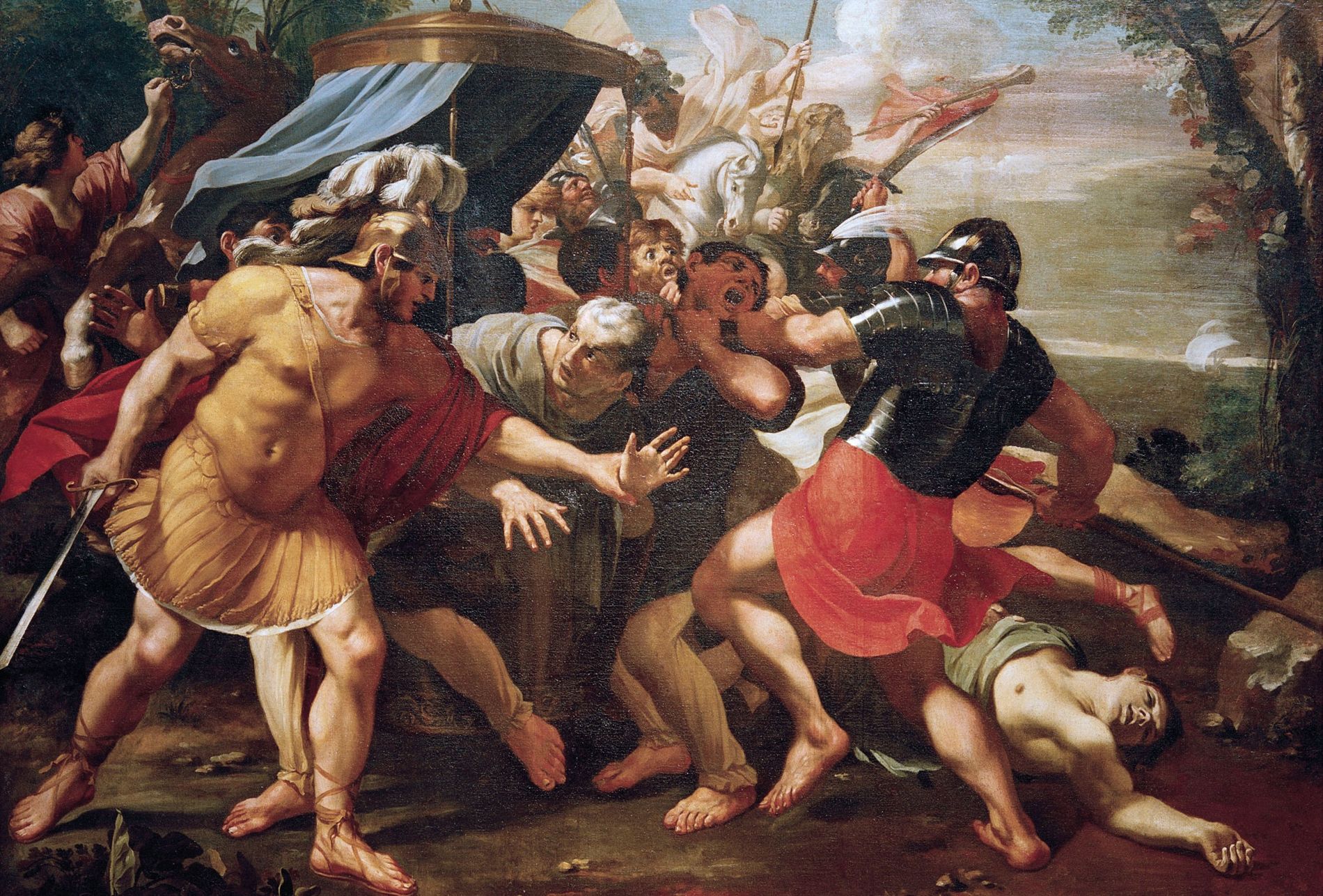
On this day in 43 BC, Cicero, one of the most celebrated figures in Roman history and renowned for his eloquence and oratory skills, met a tragic end. He was assassinated on the orders of Marcus Antonius, marking the conclusion of a turbulent chapter in Rome’s political landscape.

Cicero’s last months were marked by his reentry into politics, advocating for a general amnesty and attempting to use Octavian (the future emperor Augustus) as a political tool. He vehemently opposed Mark Antony’s control over Rome following Julius Caesar’s assassination.

Octavian learned of one of Cicero’s unfortunate remarks that “the young man should be given praise, distinctions—and then be disposed of.” The formation of the Second Triumvirate in October sealed Cicero’s fate. He was captured and killed near Caieta on December 7, 43 BC, with his head and hands displayed on the speakers platform at the Forum in Rome. 🌟🗡️🏛️
This Day in True Crime History

1869: 🤠 Jesse James Infamous Bank Robbery and Revenge Killing

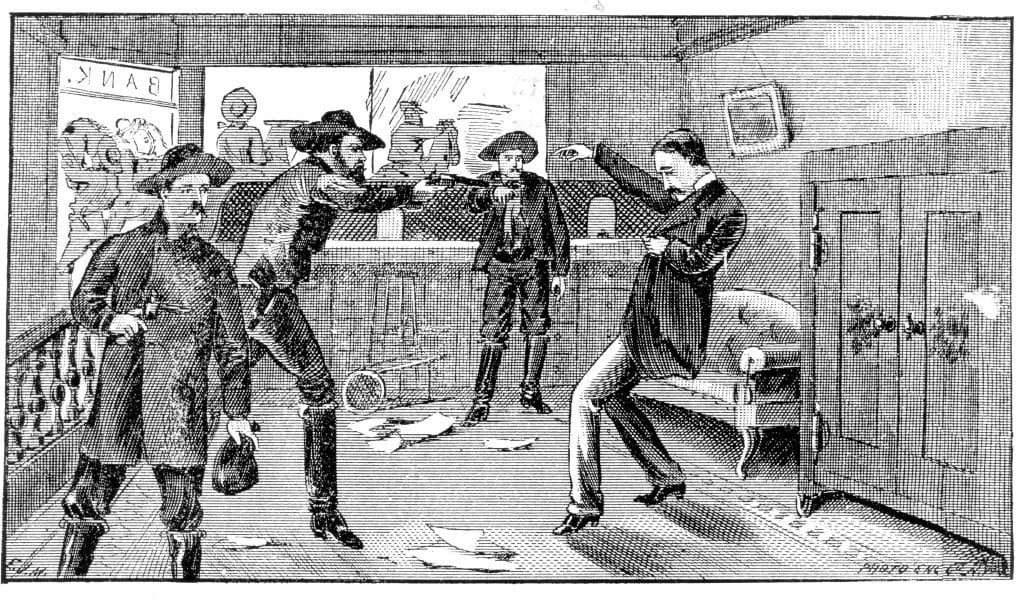
On this day in 1869, Jesse James, and very likely his brother Frank, perpetrated a notorious bank robbery at the Daviess County Savings Association in Gallatin, Missouri.

The target of their heist yielded only a modest sum of money. However, the robbery took a violent turn as Jesse James fatally shot the cashier, Captain John Sheets, in a case of mistaken identity.

Jesse believed Sheets to be Samuel P Cox, a militia officer responsible for the death of Bloody Bill Anderson, one of the most fearsome leaders of Confederate guerrillas in Civil War Missouri, who Jesse strove to emulate.

This bank robbery and daring ride out of town from a chasing posse catapulted Jesse James into notoriety, making him one of the most infamous outlaws of the Wild West. 🤠💰🔫
This Day in True Crime History

1972: 👠 Philippine First Lady Survives Bold Assassination Attempt

On this day in 1972, a brazen assassination attempt was made on Imelda Marcos, the First Lady of the Philippines 🌺.

An assailant, concealing a bolo knife in his left coat sleeve, made a sudden and violent lunge at Mrs Marcos, striking her twice. The attacker then went on a rampage, hacking at bystanders until he was fatally shot by security 🗡️🚑.

Imelda Marcos would go on to become better known for her extraordinary collection of 3000 thousand pairs of shoes, a stark contrast to her nation’s turmoil and an enduring symbol of her lavish lifestyle. 🥿👠

Imelda Marcos

1982: 📅 The December Murders in Suriname

On this day in 1982, in Dutch-speaking Suriname, fifteen prominent young Surinamese men who had voiced criticism against the military dictatorship then ruling the country became victims of the event known as The December murders.

Thirteen individuals were forcibly taken from their homes during the early hours between 2 am and 5 am, according to accounts provided by their families. The remaining two victims already in detention due to their involvement in an attempted countercoup in March 1982.

Soldiers loyal to Dési Bouterse, who held dictatorial power in Suriname at the time, transported these individuals to a sham “trial” presided over by sergeants who had assumed the roles of judges. Following these dubious “hearings,” the victims endured brutal torture and were ultimately shot dead. The exact circumstances surrounding their deaths remain shrouded in ambiguity.

A few days later the country’s dictactor Bouterse made a national television announcement asserting that all detainees had been shot dead while purportedly attempting to flee.

The December Murders sparked international outrage, and many Surinamese civilians fled their homeland for the Netherlands in fear for their safety. 🕯️🌍

In November 2019, President Bouterse was sentenced to 20 years in prison by a military court. Bouterse, sentenced in absentia, filed an appeal which, in August 2021, which concluded in the sentence being upheld.

Suriname

1982: 💉 First Lethal Injection Execution in the U.S

On this day in 1982, Charles Brooks Jr made history by becoming the first person in the United States to be executed by lethal injection 💉.

This execution in Texas marked a shift in the methods of capital punishment, introducing lethal injection as a supposedly more humane alternative.

The condemned man’s final meal before his execution included a t-bone steak, french fries with ketchup, Worcestershire sauce, biscuits, peach cobbler, and iced tea 🥩🍟🍑🍹.

Lethal Injection

2003: 🚍 Tragic Abduction in Queensland

On this day in 2003, a heartbreaking incident shook Australia when Daniel Morcombe was abducted from under an overpass on the Sunshine Coast, Queensland while waiting for a bus. This case remained a mystery for many years, casting a shadow over the region and capturing national attention.

An extensive undercover operation led to the arrest of Brett Peter Cowan, who had been previously interviewed by police in 2006. He was charged after leading undercover detectives to Daniel’s remains in 2012, bringing a somber closure to the case. 🕵️‍♂️🔍

This Day in True Crime History

As we close the chapter on December 7th’s true crime history, let these historical events serve as solemn reminders of the past, guiding lights for the present, and cautionary tales for the future. Hope to see you on a Dark Stories True Crime Tour soon!

Spread the word on your favourite platform!

On This Day in True Crime History
1794·The First Free Settler Murdered in the Colony: Hanged at Sydney for a Parramatta Stabbing
1826·The Gun That Misfired Twice: Three Bushrangers Hanged Outside Sydney
1873·A Tearful Confession in Custody Cracked the Case: Two Men Hanged at Perth Gaol for Eating their Victim
1889·He Called It an Accident. The Jury Called It Murder: Robert Landells Hanged at Melbourne Gaol
1907·A Doctor Fooled Twice: Martha Rendell and the Second Child to Die of Diphtheria
2002·Shot Dead in His Own Bed: A Melbourne Gangland Killing Blamed on a Friend
More Crime On This Day →

Subscribe to Dark Stories

True crime stories, dark history and tour news, straight to your inbox.