1960: Live on Air: the Televised Assassination of a Japanese Political Leader

Inejiro Asanuma, leader of the Japan Socialist Party, was mid speech at a political debate in Tokyo on 12 October 1960 when a seventeen year old ultranationalist named Otoya Yamaguchi sprinted across the stage and drove a short samurai sword into his chest, twice. Cameras were rolling for a live broadcast, and the killing was captured in full, shown and reshown to a horrified nation.

Yamaguchi was no stranger to the far right; he had trained with militant nationalist groups and viewed Asanuma, who had made friendly overtures toward Communist China, as a traitor to Japan. Arrested at the scene, he spent weeks in juvenile detention before hanging himself in his cell with a bedsheet, leaving behind a message of loyalty to the emperor.

His death meant he was never tried, and the killing remains one of the most notorious political murders of postwar Japan, preserved on film as it happened.
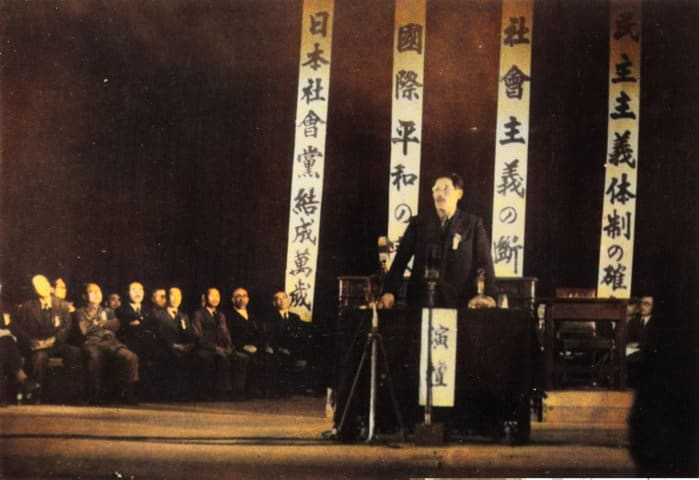

Inejiro Asanuma founds a new political party in 1945

⬅ See all events from 12 October

Spread the word on your favourite platform!

2002: Timed to Kill the Survivors: the Bali Nightclub Bombings

On 12 October 2002, a suicide bomber walked into Paddy’s Pub in Bali’s Kuta district and detonated an explosive vest on the crowded dance floor. Twenty seconds later, as survivors fled into the street to see what had happened, a second bomb hidden in a van outside the Sari Club tore through the crowd gathered there, killing many who had just escaped the first blast. The attack claimed 202 lives, including 88 Australians, the deadliest act of terrorism in Indonesia’s history. Three men were convicted of orchestrating the bombings and sentenced to death. They were executed by firing squad on Nusakambangan island in November 2008. In their final moments, the three men showed no remorse, shouting loudly, rather than any word of apology.

Kuta carnival 2010. Paddle for peace. Bali. Annual Kuta beach carnival celebration. Initially organized as a response to the Bali terrorist attack of October 2002, the event has now become a regular fixture on Bali's busy calendar of yearly events. October 2010. Among majority of events - every year all surfers padles to the mid of the ocean to make the circle, unite the hands, put flowers into the water and pray for victims of terrorist attack. The name of this part is Paddle for piece | ID 16538257 © Evgeniya Bolyukh | Dreamstime.com
ID 16538257 © Evgeniya Bolyukh | Dreamstime.com

⬅ See all events from 12 October

Spread the word on your favourite platform!

1898: Executed as Reform Martyrs, But Were They Assassins? The Beheading of Six Gentlemen in Beijing

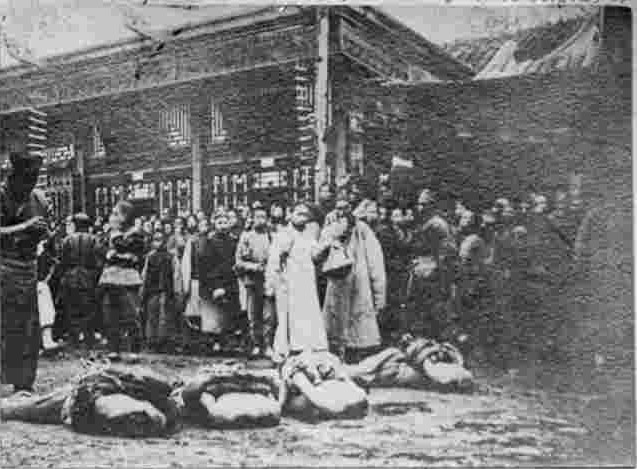
When Empress Dowager Cixi crushed the Hundred Days’ Reform with a palace coup in September 1898, she moved fast. Six officials and intellectuals who had championed the Guangxu Emperor’s modernisation drive, among them Tan Sitong and Kang Youwei’s younger brother Kang Guangren, were arrested, denied any trial, and beheaded the same day at the Caishikou execution ground in Beijing. For decades they were remembered simply as reform martyrs cut down by a reactionary court.

That story only cracked in the 1980s, when testimony surfaced in Japanese archives from a man who had been ordered to assassinate Cixi and fled before he could act. His account implicated four of the six in a genuine plot to kill the Empress Dowager, suggesting at least one of the condemned, Yang Rui, may have been entirely innocent, executed alongside men who really had been plotting murder.

Historic photo of beheaded bodies after execution: Laneway of Caishikou crossroad, Beijing, China.

⬅ See all events from 28 September

Spread the word on your favourite platform!

2016: The Chinese Jack The Ripper Serial Killer Caught After 28 Years Through a Relative’s DNA

Gao Chengyong was arrested at his grocery store in Baiyin, Gansu, in August 2016 after a DNA test on his uncle flagged a close familial match to an unidentified serial killer. The breakthrough closed a case that had haunted investigators for nearly three decades. Gao confessed to all eleven murders, committed between 1988 and 2002 across Inner Mongolia.

Known in Chinese media as the ‘Chinese Jack the Ripper’, Gao had followed victims to their homes, typically striking in daylight hours. He mutilated their bodies in a pattern that drew comparisons to the 1888 Whitechapel killings. Sentenced to death and stripped of all assets, he was executed on 3 January 2019.

Chinese death character with skull texture 3D illustration

⬅ See all events from 26 August

Spread the word on your favourite platform!
On This Day in True Crime History
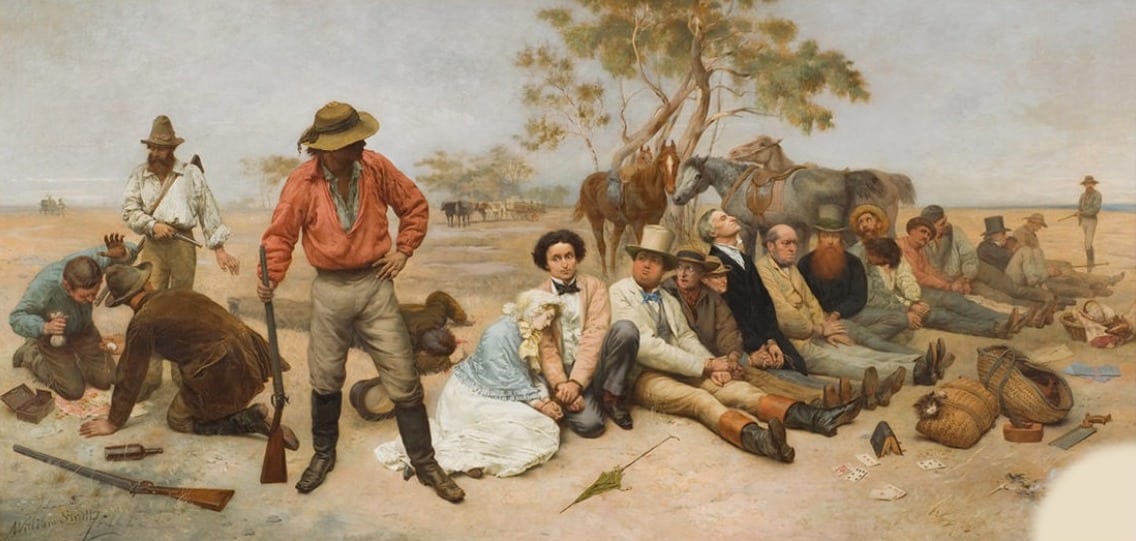
1853·"Thank You, My Lord, I Am Very Glad of That Sentence": Bushrangers Hanged in Melbourne
1884·He Swore to Shoot Whoever Bought His Farm, and Kept His Word: Hanged in Melbourne
1892·"The Only Man on the Station That I Liked": Hanged in Brisbane for a Torres Strait Murder
1892·A Mutilated Body in a Trunk: Sailor Hanged in Brisbane for Murder at Sea
1895·George Dean, Pardoned for Poisoning His Wife, Convicted of Perjury in Sydney
More Crime On This Day →

Subscribe to Dark Stories

True crime stories, dark history and tour news, straight to your inbox.