Bridget Hurford had grown to despise her older, wealthy husband John Hurford long before she decided to have him killed. She paid a ticket-of-leave man named Dodd with cash and the promise of her husband’s own horse to strangle him in his bed at Vasse, first arranging for the man who usually guarded him at night to be sent away, and had another convict quietly forge a will in her favour beforehand.

Tried and convicted alongside Dodd, Hurford was hanged first at the new Perth Gaol on 15 October 1855, attended to the last by her confessors. Witnesses who expected a dramatic collapse instead described her as quiet and subdued as she went to the gallows, even as crowds, among them women carrying infants, gathered to watch.

She fully confessed her guilt before her death, corroborating the evidence given against her at trial.


Bloody zombie woman screaming at camera on black background

⬅ See all events from 15 October

Spread the word on your favourite platform!

William Dodd, a ticket-of-leave man, struck the bargain that would hang him: ten pounds and a horse named Turk, promised by the wealthy settler’s own wife in exchange for her husband’s death. At the Vasse, Dodd lost his nerve at the bedroom door and had to be plied with more drink before he went back in, seized John Hurford by the throat, and strangled him as the old man cried out.

Convicted at Perth on circumstantial evidence and a damning account from a fellow ticket-of-leave man he had bragged to, Dodd was hanged within the walls of the new gaol on 15 October 1855, alongside the wife who had hired him.

On the scaffold, Dodd tried to shift the blame, insisting that another man had actually struck the fatal blow while he merely stood by, a story that flatly contradicted the confession he himself had made days after the murder.

Angry muscular man pointing at camera in confrontation

⬅ See all events from 15 October

Spread the word on your favourite platform!

On 15 October 1769, during his first voyage along the coast of New Zealand, Lieutenant James Cook watched a group of Maori men attempt to seize a servant from his landing party and haul him away in a canoe. The attempt failed and the servant was recovered, but Cook marked the spot on his chart with a name that stuck: Kidnappers Bay.

According to the Maori version of events recorded at the time, the men believed they were not abducting a stranger at all, but rescuing a Maori boy they thought was being held captive aboard the English ship. The misunderstanding, born of two cultures reading the same scene in entirely different ways, turned a rescue attempt into what the English recorded as a kidnapping.

Cape Kidnappers View

⬅ See all events from 15 October

Spread the word on your favourite platform!

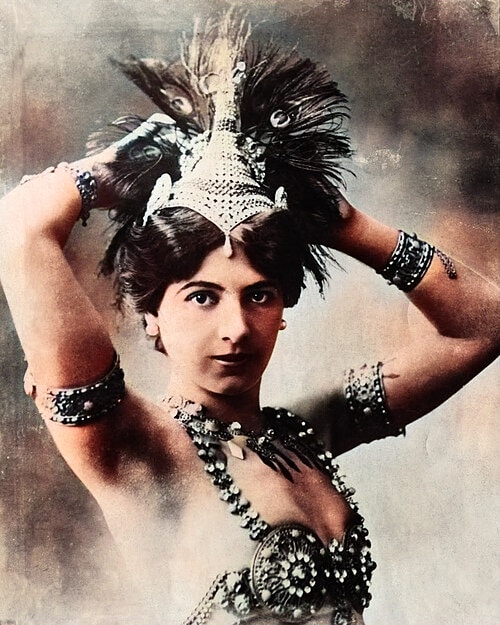
She was born Margaretha Zelle in the Netherlands and reinvented herself in Paris as Mata Hari, an exotic dancer whose stage act and string of wealthy, often military, lovers made her a sensation across Europe. When war came, French intelligence suspected she was selling pillow talk to Germany.

The evidence against her was thin and largely circumstantial, built on intercepted telegrams and a reputation for scandal rather than proof. A French military tribunal convicted her of espionage anyway, and she was executed by firing squad outside Paris on 15 October 1917.

She refused a blindfold and reportedly blew a kiss to the soldiers before they fired, going to her death still insisting she had never betrayed France.

Mata Hari - 1910
Mata Hari – 1910

⬅ See all events from 15 October

Spread the word on your favourite platform!
On This Day in True Crime History

Subscribe to Dark Stories

True crime stories, dark history and tour news, straight to your inbox.