1888: Jack the Ripper Claims His First Victim in Whitechapel

Mary Ann Nichols, known as Polly, was 43 years old, a divorced mother of five, and homeless on the night she died. In the early hours of 31 August 1888, she went to the streets of Whitechapel, London, to earn money for a bed. Her body was found before 4 a.m., her throat slashed with a long-bladed knife and her abdomen deeply cut. There were no witnesses.

Nichols became the first of at least five women murdered in and around Whitechapel between late August and early November 1888 by the killer who would become known as Jack the Ripper. Her death ignited intense press and public interest in both the murders and the desperate living conditions of London’s East End.

Despite countless theories, the killer Jack The Ripper, has never been identified.
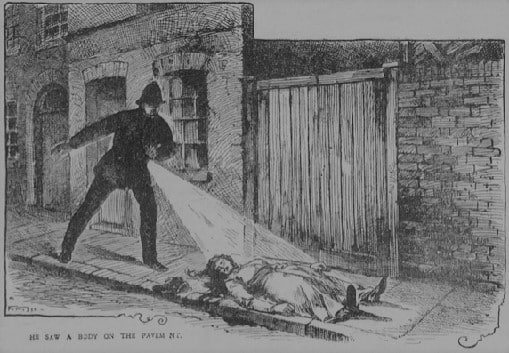
Illustration of PC Neil discovering the body of Mary Ann Nichols with his lantern. Unknown artist, 1888. Published in Famous Crimes Past and Present, c.1903. Public domain.

⬅ See all events from 31 August

Spread the word on your favourite platform!

1997: Princess Diana Killed in Paris Tunnel Crash

In the early hours of 31 August 1997, Diana, Princess of Wales, died after a high-speed car crash in the Pont de l’Alma tunnel beside the River Seine in Paris. The Mercedes carrying her struck a concrete pillar while being pursued by press photographers. Diana was 36. Dodi Fayed and driver Henri Paul were also killed; bodyguard Trevor Rees-Jones was the sole survivor.

French investigators concluded that Paul had been driving at excessive speed while affected by alcohol and prescription drugs. The crash nevertheless became the subject of numerous conspiracy theories, including claims that Diana and Dodi were deliberately killed, that British intelligence or members of the Royal Family were involved, and that the collision had been engineered to prevent an alleged marriage or pregnancy.

These allegations were examined in detail by Britain’s Operation Paget investigation, which found no evidence of a conspiracy to murder Diana. A subsequent British inquest, concluded in 2008, returned a verdict of unlawful killing caused by the grossly negligent driving of Henri Paul and the pursuing paparazzi.

Princess Diana smile, circa 1997. vintage post stamp,. LIBERIA - CIRCA 1997: canceled stamp printed in Liberia dedicated to the memory of princess Diana, circa 1997. vintage post stamp isolated on black background. princess Diana with silver crown | ID 98306680 © Fmua | Dreamstime.com
ID 98306680 © Fmua | Dreamstime.com

⬅ See all events from 31 August

Spread the word on your favourite platform!

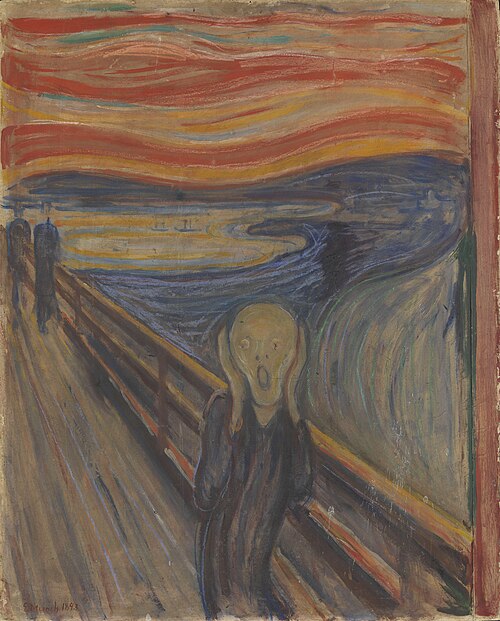
2006: The Scream Recovered Two Years After Brazen Oslo Museum Theft

Edvard Munch’s iconic painting The Scream, stolen from the Munch Museum in Oslo on 22 August 2004, was recovered by Norwegian police on 31 August 2006. The theft had been carried out in broad daylight by masked gunmen who forced staff to the ground before fleeing with the painting and another Munch work, Madonna.

The recovery came after a lengthy investigation involving multiple arrests. The paintings were found hidden and showed some damage, but were ultimately restored and returned to public display.

Edvard Munch, The Scream (1893). Photo: Børre Høstland/National Museum of Norway. CC BY 4.0, via Wikimedia Commons.

⬅ See all events from 31 August

Spread the word on your favourite platform!

1973: The Stockholm Bank Siege That Gave Psychology a New Term

On 28 August 1973, Swedish police ended a six-day hostage crisis at Sveriges Kreditbanken in Stockholm by pumping tear gas into the vault where captors and hostages had been confined since 23 August. The standoff concluded not with gratitude but with something far stranger: the hostages insisted on leaving alongside their captors, fearing police would open fire, and then embraced them warmly as the ordeal ended.

The behaviour baffled investigators and onlookers alike. A psychiatrist advising Swedish police coined the term ‘Stockholm syndrome’ to describe the paradoxical emotional bonds that had formed between the captives and the people holding them at gunpoint. The phrase entered the psychological lexicon and has since been applied to hostage situations around the world.

Stockholm Syndrome
Stockholm Syndrome

⬅ See all events from 28 August

Spread the word on your favourite platform!
On This Day in True Crime History
1794·The First Free Settler Murdered in the Colony: Hanged at Sydney for a Parramatta Stabbing
1826·The Gun That Misfired Twice: Three Bushrangers Hanged Outside Sydney
1873·A Tearful Confession in Custody Cracked the Case: Two Men Hanged at Perth Gaol for Eating their Victim
1889·He Called It an Accident. The Jury Called It Murder: Robert Landells Hanged at Melbourne Gaol
1907·A Doctor Fooled Twice: Martha Rendell and the Second Child to Die of Diphtheria
2002·Shot Dead in His Own Bed: A Melbourne Gangland Killing Blamed on a Friend
More Crime On This Day →

Subscribe to Dark Stories

True crime stories, dark history and tour news, straight to your inbox.