Nathaniel Hawes is barely out of boyhood when he starts stealing from his master's cash box, a young apprentice upholsterer drawn into expensive company that drains every penny he has. In old England, where the line between reckless youth and hardened criminal is razor thin, Hawes crosses it early and never looks back.
He builds a reputation among thieves for sheer nerve: robbing coaches single-handedly, holding up travellers on the Oxford Road, daring anything for the thrill and the applause of his gang. His story is one of the most striking true crime tales to come out of old England: a boy who mistook recklessness for heroism and dared the law to break him.
Listen now and follow Nathaniel Hawes from prison escapes and midnight heists to a reckoning he cannot bluster his way out of.
Follow the podcast so you never miss an episode:
FROM THE 1735 TEXT
It was nothing for Hawes singly to rob a coach full of gentlemen, to stop two or three persons on the highway at a time.
Dark Lexicon: Old words. Dark meaning.
The past speaks its own dialect; here is what to listen for in this episode.
Grazier: a farmer who raises and fattens cattle or sheep for market. In old England a rich grazier could leave a comfortable estate; losing that inheritance, as Hawes claimed happened to him, meant falling from prosperity into nothing.
Put him out apprentice: to be 'put out' was to be placed by guardians or parish into a binding contract with a tradesman. The master fed and housed you, you worked for years without wages; running foul of this arrangement, as Hawes did, left a young man with no trade and no safety net.
New Prison: not just any gaol, but a specific lockup in Clerkenwell, London, used for holding suspects before trial. It was grimmer and less famous than Newgate but no less feared by those crammed inside its walls.
Runners of the prison: low-ranking servants or turnkeys who fetched supplies and carried messages for inmates; in old England, prisoners who could pay could send these runners out for food, drink and firewood, which is exactly the favour the shoplifting woman exploited.
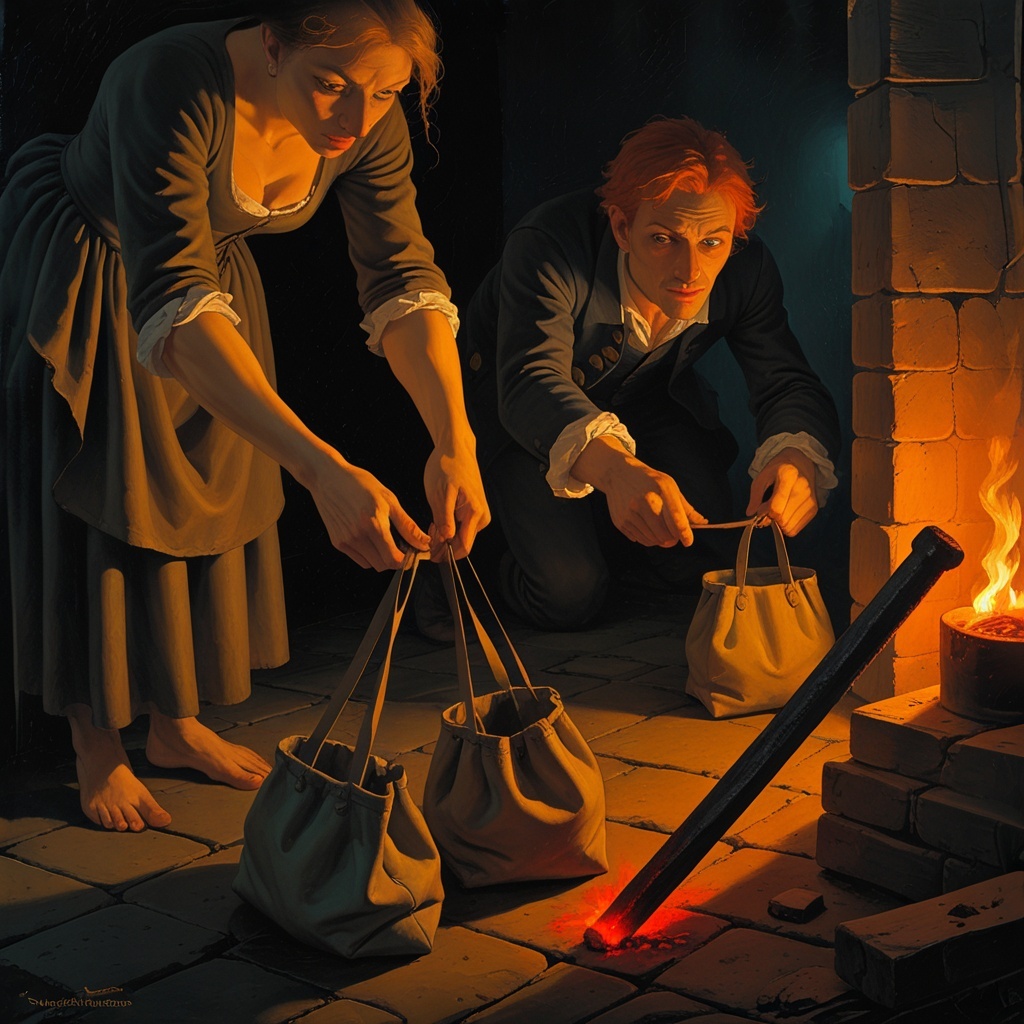
Crow: today we would say crowbar. In old England the word 'crow' alone meant the same iron lever used to pry stones, boards or bars loose; the woman heated one red hot and used it to wrench masonry from the prison wall.
Mute: to 'remain mute' in old England meant refusing to enter a plea of guilty or not guilty. This was not mere silence: it was a legal crisis, because a trial could not proceed without a plea, and the court had a terrible remedy for it.
Sentence of the press: the punishment known as peine forte et dure. Heavy stones or iron weights were piled on the prisoner's chest until he either agreed to plead or was slowly crushed to death. Hawes endured 250 pounds for over seven minutes before he gave in.
Levity: today the word means light-heartedness, but in old England, used of a condemned prisoner, it carried a darker edge: a reckless, almost manic refusal to take one's own death seriously, treating the scaffold like a stage.
About This Series
Lives of the Most Remarkable Criminals (1735) is one of the earliest works of true crime in the English language. Each week this podcast retells one of its stories for today's listener, keeping the old book's most striking lines.