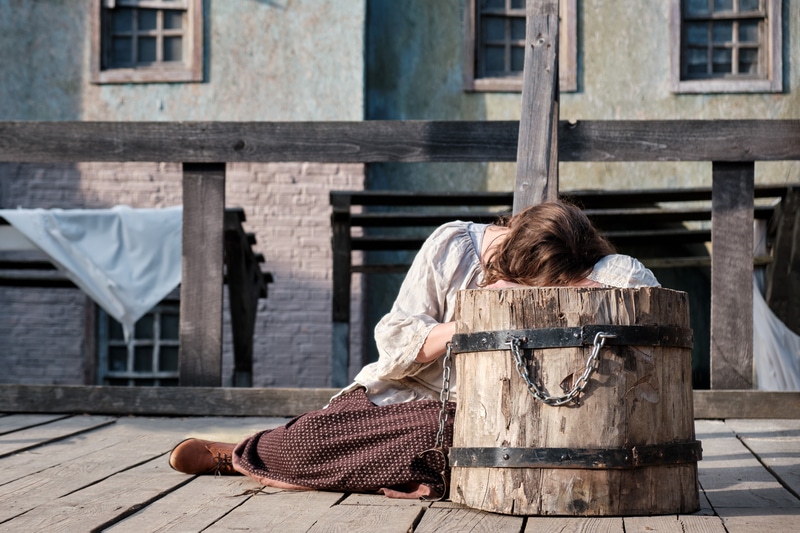
1825: Convicted of Sheep Stealing on Saturday: Hanged for Murder by Wednesday

John Godliman had already lived one hard sentence before he faced the gallows. Transported to Van Dieman’s Land for life from Middlesex in 1821 aboard the Malabar, he was assigned to a road gang before absconding on 2 January 1825 with a reward of five pounds on his head. He turned to bushranging, one of a loose band of runaways working the island’s interior.

His final days moved with startling speed. Godliman was convicted of sheep stealing on a Saturday and, only two days later on the Monday, convicted again, this time for the murder of a man named Samuel Hart. By Wednesday morning he was dead, hanged at the usual place of execution within Hobart Gaol.

Friendly sheep looking through a fence

⬅ See all events from 7 September

Spread the word on your favourite platform!

1936: Neglect and Extinction: the Last Tasmanian Tiger Dies Alone at Hobart Zoo

The last known thylacine, a carnivorous marsupial, died in captivity at Hobart Zoo in Tasmania. The animal is believed to have perished from neglect, left exposed to extreme temperatures after keepers failed to provide adequate shelter.

Thylacines once ranged across mainland Australia and New Guinea before vanishing there thousands of years earlier, surviving only in Tasmania. Relentless hunting, driven by bounties paid to farmers who blamed the species for livestock losses, combined with the introduction of invasive predators, drove the population to collapse. Benjamin’s death marked the extinction of the species, a loss that went largely unnoticed at the time and was only recognised in hindsight as the end of a unique Australian predator.

Thylacine mother with joey in pouch in Australian outback

⬅ See all events from 7 September

Spread the word on your favourite platform!

1825: John Riddel Hanged at Hobart for Murder, Confessing Two More Killings

A dispute over the butchering of a pig turned fatal in Hobart in 1825. John Read Riddel, a carpenter, had hired a butcher to cut up a slaughtered pig. Dissatisfied with the work, the two men came to blows, and Riddel drove a knife into the man during the struggle.

Standing on the gallows for his crime, on 31 August 1825, Riddel confessed to the gathered crowd to smothering two of his wives while they slept in a drunken stupor, to forging a letter with an English postmark to deceive a clergyman into marrying him, and to a failed attempt on the life of his Captain, where he had snatched a concealed sword and was about to strike when a bystander intervened.

Riddel himself requested that the full weight of his crimes be made public, before being launched into eternity.

Piggy bank hanging from a hangmans noose on a golden rope

⬅ See all events from 31 August

Spread the word on your favourite platform!

1825: Thomas Peacock Hanged at Hobart for the Murder of Constable Craggs

Thomas Peacock, transported from Macquarie Harbour to stand trial, was convicted in the Supreme Court of the murder of Constable Craggs. Craggs had apprehended Peacock in the bush; Peacock stabbed him deliberately in the left side, declaring at the time that he would die happy having caused the constable’s death.

Peacock was hanged on the new drop at Hobart Gaol on 31 August 1825. His loud sobbing on the scaffold suggested the happiness he had claimed was nowhere to be found in his final moments.

Young woman bows head over execution block crying

⬅ See all events from 31 August

Spread the word on your favourite platform!
On This Day in True Crime History

Subscribe to Dark Stories

True crime stories, dark history and tour news, straight to your inbox.