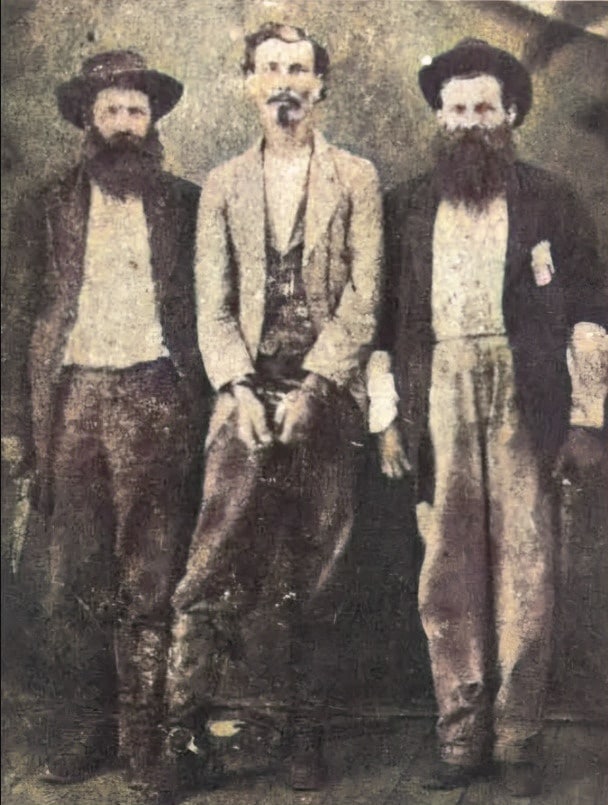
Thomas Bushell, an Imperial convict working in the bake-house at the Convict Establishment in Fremantle, took a 12-inch dough-knife from the bake-house on Sunday 9 July 1865. During the muster of prisoners for church service on C and D landing, he struck warder George Hollis on the head, then stabbed him in the back as Hollis passed, prompting Hollis to cry out, “Secure Bushell, for he has stabbed me.”
At his trial before Chief Justice Burt on 6 September 1865, the wounded warder himself testified that he did not believe Bushell had meant to kill him. The jury convicted him anyway of maliciously wounding with intent to murder, and he was sentenced to death and hanged just days after the verdict.
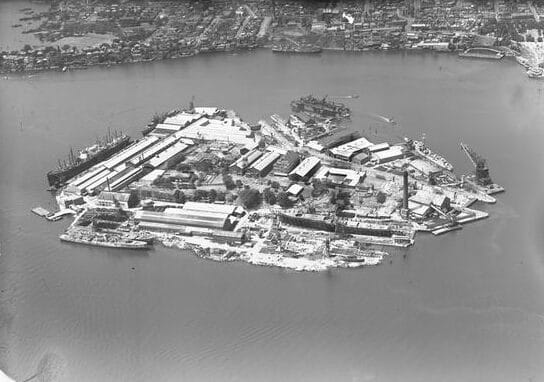
Frederick Wordsworth Ward, the bushranger known as Captain Thunderbolt, was serving time on Sydney‘s Cockatoo Island, a prison ringed by harbour currents and sheer sandstone cliffs and widely declared impossible to escape. On the night of 11 September 1863, Ward slipped his cell and plunged into the water, swimming through the cold, shark infested harbour to the mainland shore.
The breakout humiliated colonial authorities and turned Ward into a folk figure almost overnight. He spent the next seven years roaming the bush of northern New South Wales, robbing coaches, inns and travellers as one of the colony’s most enduring and elusive bushrangers before he was finally shot dead by police near Uralla in 1870.
Cockatoo Island, Sydney, 1951. Photograph by Frank Hurley. National Library of Australia, PIC FH/7951. Out of copyright.
Just three years after Maitland Gaol had officially opened its gates in 1848, its first gaoler, James Cox, was sacked. So many prisoners had slipped out under his watch that on 10 September 1851 the authorities removed him from the post entirely.
His replacement was John Wallace, formerly principal turnkey at Darlinghurst Gaol in Sydney, who took over as gaoler at Maitland. His wife, Mrs Wallace, was installed alongside him as the gaol’s matron, a husband and wife team brought in to tighten a prison that had already earned a reputation for losing its inmates.
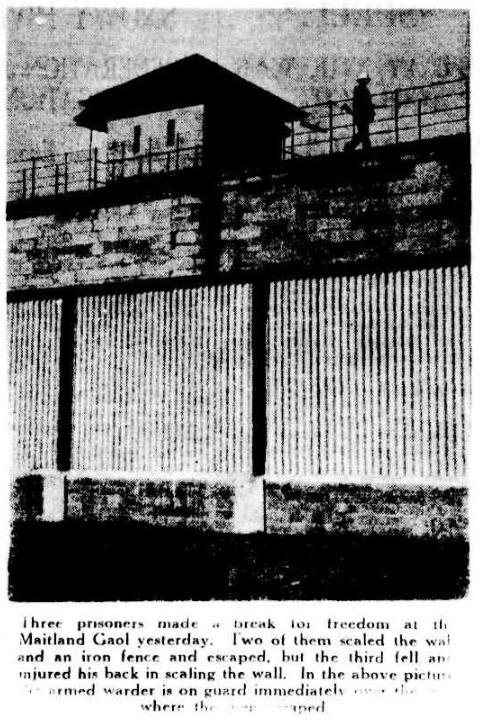
Warder guards wall after prisoner escape attempt at Maitland Gaol 1940
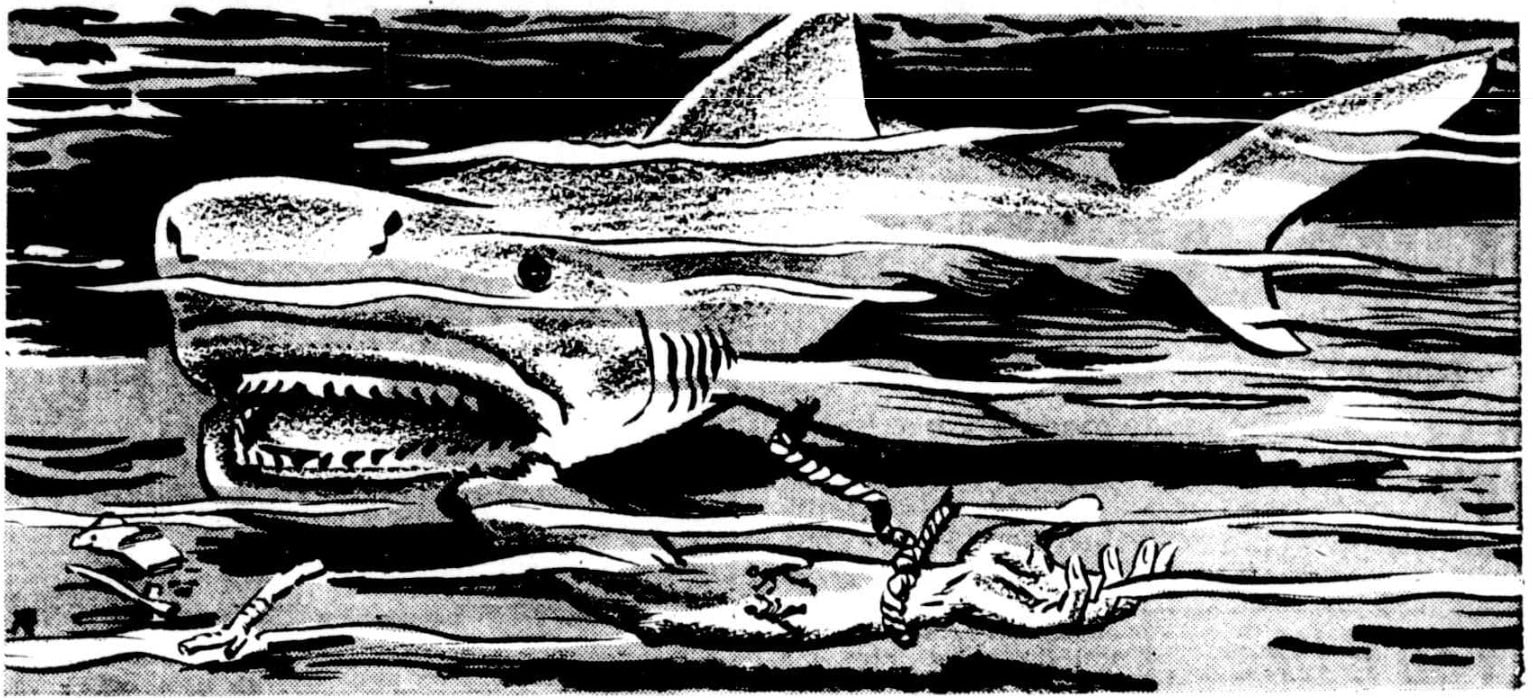
The case began in the most macabre way imaginable: on April 25, 1935, a captured shark on display at an Aquarium in Sydney vomited up a human arm. Tattoos identified the limb as belonging to James Smith, who had vanished after leaving home on April 8 with the stated intention of going on a fishing trip.
Police investigations focused on Patrick Brady, an associate of Smith who had been with him around the time of his disappearance. Another central figure was businessman Reginald Holmes, who was in a position to give direct evidence about Smith’s killing and Brady’s alleged involvement.
But before Holmes could give that evidence, the case took another extraordinary turn. In the early hours of June 12, just hours before he was due to appear at the inquest, Holmes was found shot dead in his car at Dawes Point. With the Crown’s key witness gone, the murder case against Brady was left largely dependent on circumstantial evidence.
Despite what Chief Justice Sir Frederick Jordan acknowledged was plenty of cause for suspicion, the prosecution now faced two fundamental problems: its key witness was dead, and there was no body to prove that Smith himself was dead. A person could, after all, survive the loss of an arm. On September 10, 1935, Jordan ruled that the evidence was insufficient to sustain a conviction and directed the jury to acquit Brady, bringing to an abrupt end what was described at the time as a case “without parallel in the annals of Australian criminal history.”
Brady’s freedom was short-lived. As soon as he stepped outside the court, detectives arrested him on an unrelated Tasmanian forgery charge. No one was ever convicted over Smith’s death or Holmes’s killing, and the infamous Shark Arm case remains unsolved.