Angelo Buono Jr., one half of the killing partnership known as the Hillside Stranglers, died of a heart attack at age 67 while serving a life sentence without parole at Calipatria State Prison in California. He had been convicted of nine murders committed with his cousin Kenneth Bianchi in Los Angeles between 1977 and 1978, victims who were kidnapped, tortured and strangled before their bodies were dumped on hillsides around the city.
Buono ran an upholstery shop that served as a base for the pair, luring young women into his van before the killings. Bianchi, who was arrested first in Washington State, struck a deal and testified against Buono in exchange for avoiding the death penalty, a betrayal that helped seal his cousin’s conviction after one of the longest and most expensive criminal trials in California history.
Buono spent the rest of his life in prison showing no remorse for the killings, dying quietly behind bars rather than facing execution.
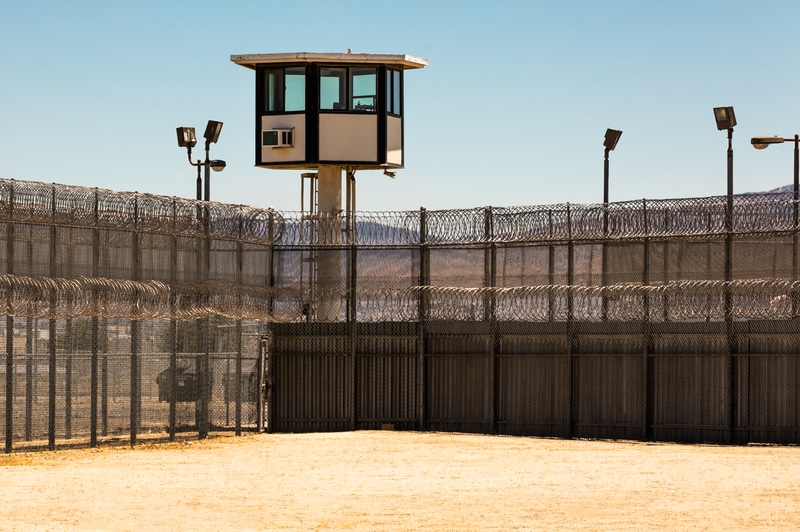
Empty desert prison yard with guard tower in background
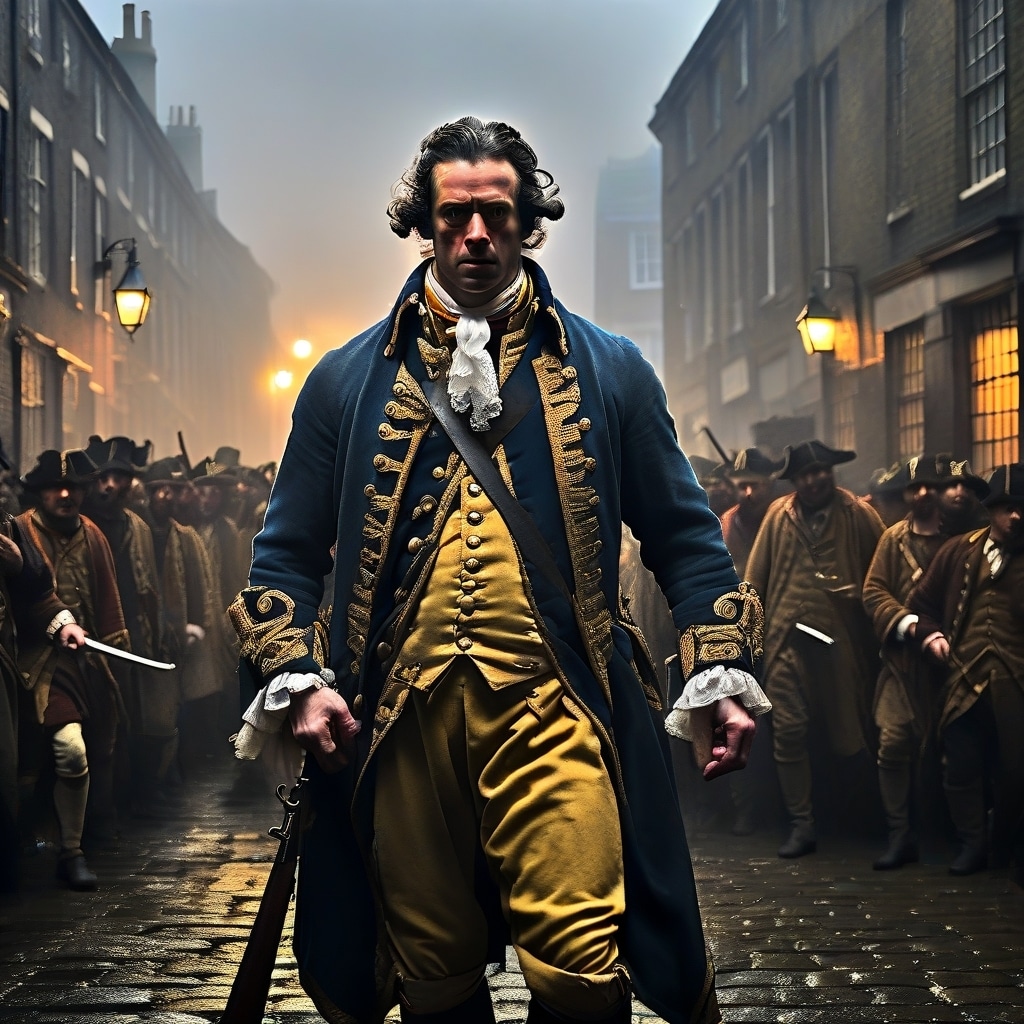
John Smith is a man shaped by war; bold, fierce, and trained to violence on the battlefields of Flanders, he returns to civilian life carrying a soldier’s instincts into a world that has no place for them. Lives of the Most Remarkable Criminals preserves his story as one of the most compact and unsettling true crime accounts of the early eighteenth century: a decorated veteran who squanders his pay and drifts toward theft and rage.
There is something volatile inside him that the wars merely sharpened. Discharged from military and naval service alike, he arrives in London with empty pockets, a jealous temper, and a loaded pistol he is not afraid to use.
What waits for a man like Smith, once the machinery of Georgian justice catches his scent, is a question the age answered without hesitation. Hear the full account now as Lives of the Most Remarkable Criminals tells it: in its own words, read aloud.
Click the RSS feed link below to subscribe and get new episodes the moment they drop.
Subscribe via RSS
Dark Lexicon: Old words. Dark meaning.
The past speaks its own dialect; here is what to listen for in this episode.
Trusses: not medical supports or roof beams as we might think today. In a military context, trusses were bundles of forage or provisions gathered for horses and troops. When the captain’s party was ‘obliged to leave their trusses behind them,’ they were abandoning their supplies under enemy pressure; a small humiliation that sets up Smith’s reckless act of bravery.
Livery: today the word conjures up stables or taxi hire, but in the eighteenth century livery meant the distinctive uniform or clothing worn by a servant or soldier to mark who they belonged to. Smith’s yellow livery becomes a kind of disguise; its colour just plausible enough to pass among French troops at a distance.
Walloon: the French dialect spoken in the southern provinces of the Low Countries, what is now Belgium. Smith spoke it badly enough to sound like a native Frenchman, which is a wonderfully backhanded compliment; his incompetence in the language was, paradoxically, his camouflage.
Clapping: nothing to do with applause. To clap something in this era meant to place it swiftly and forcefully. Smith ‘clapped a gag in his mouth’ and later ‘clapped a pistol to her breast’; the word carries an almost percussive violence, a sudden sharp motion.
Fray: a noisy disturbance or fight, from the old word ‘affray.’ Today we might say a brawl or a commotion. The word still echoes in legal language, where an affray remains a public order offence, but in Smith’s London it was simply what happened when a man waved a pistol in a crowded room.
Lewd women: Smith uses this phrase repeatedly and it does not merely mean sexually immoral. In the eighteenth century, lewd carried a broader sense of wicked, base, or disreputable. Smith blames these women for his downfall; whether they deserve the charge is another matter entirely.
Sessions at the Old Bailey: the periodic sittings of London’s central criminal court, held roughly eight times a year. Being convicted ‘at the next sessions’ meant the wheels of justice turned with startling speed; there was little delay between arrest and trial in Georgian England.
About This Series
Lives of the Most Remarkable Criminals is one of the earliest works of true crime writing in the English language, nearly 300 years old, covering murderers, thieves, highwaymen, forgers, coiners and worse.
The book is entirely in the public domain and every word of it can be read today for free. But if you would rather listen, this podcast does exactly that: one criminal at a time, every week, read aloud.
True crime was not invented by podcasts or streaming services. Eighteenth century readers were just as fascinated by outlaws and killers as we are today. They just consumed their dark stories by candlelight.
The voice you hear is David Dark: crime researcher, theatre script writer, producer of live immersive experiences, and audiobook narrator and voice artist. This podcast uses an AI voice model trained on David’s own voice, built using the maximum available training data to faithfully represent how he actually sounds. To hear David’s real voice in human generated form, visit him on Audible, Online Stage, Voices of Today, Spoken Realms, and Internet Archive.
For months in 1985, Richard Ramirez, the Night Stalker, terrorised California, breaking into homes while families slept to assault, mutilate, and murder. His reign of terror ended not with a police operation but with a newspaper front page: once his mugshot was published across California media, his anonymity was gone.
On 31 August 1985, Ramirez attempted to carjack vehicles in the Boyle Heights neighbourhood of East Los Angeles. Residents recognised him, chased him down the sreet, and beat him to the ground before police arrived to take him into custody. Facing the mob, Ramirez reportedly confessed to officers, preferring arrest to the alternative.