1536: The Price of an English Bible: William Tyndale Strangled and Burned for Heresy

William Tyndale committed one crime: he translated the New Testament into English so ordinary readers could understand it for themselves, defying a Church that insisted scripture remain in Latin and under clerical control. Hunted across Europe by agents loyal to Henry VIII’s government, he was finally betrayed and arrested in Antwerp.

Tried for heresy, he was condemned and taken to the fortress town of Vilvorde, where in October 1536 he was strangled at the stake and his body then burned. Within a few years, an English Bible drawing heavily on his translation was being placed in every parish church in the kingdom that had killed him.

According to tradition, his final words were a prayer rather than a protest: “Lord, open the King of England’s eyes.”
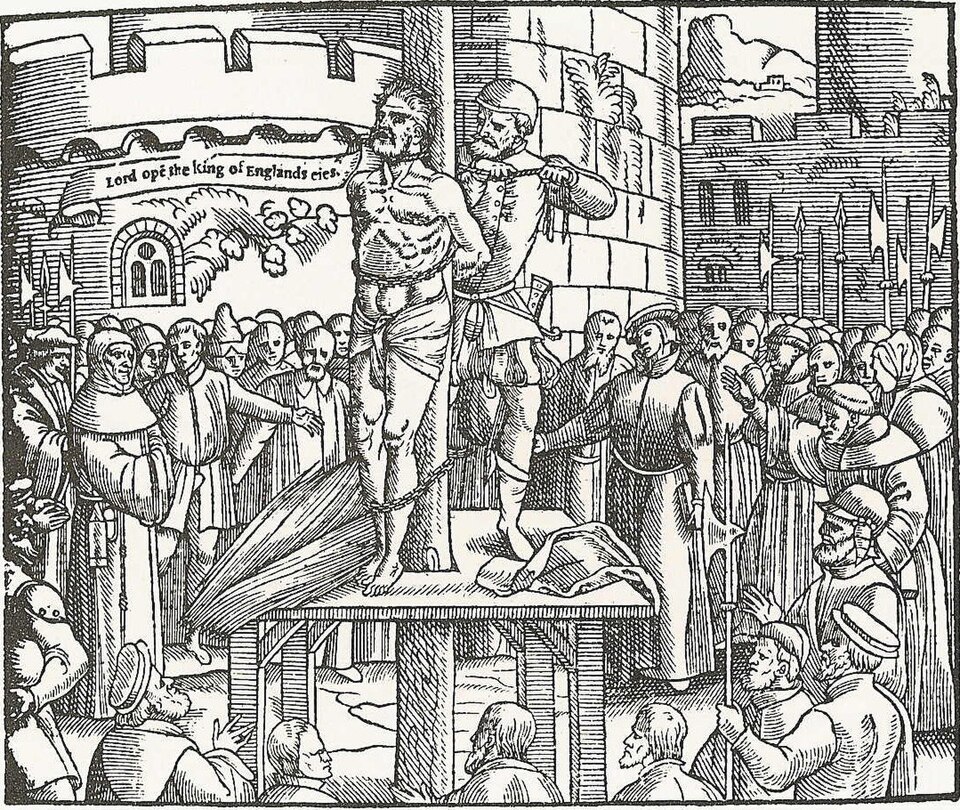

Portrait of William Tyndale from Foxes Book of Martyrs

⬅ See all events from 6 October

Spread the word on your favourite platform!

1965: The Situation Got Out of Hand: A Moors Murder Committed Before a Horrified Witness

In October 1965, Ian Brady picked up seventeen-year-old Edward Evans at a Manchester railway station, telling him he had been invited home for a drink. At the house on Wardle Brook Avenue, Brady had Myra Hindley fetch her brother-in-law David Smith under the pretext of sharing miniature wine bottles. Smith arrived in time to witness Brady strike Evans with a hatchet and strangle him with electrical cord, screams tearing through the house as Hindley called out for help.

Smith helped move the body to a spare room before fleeing home, where he was sick and told his wife everything. He contacted police the next morning armed with a screwdriver and bread knife in case Brady came after him. Officers found Evans’ body behind a locked door, and as he dressed for arrest, Brady offered a chillingly understated explanation: he and Evans “had a row and the situation got out of hand.” The killing exposed what became known as the Moors Murders.

Shocked male witness after fatal late night accident

⬅ See all events from 6 October

Spread the word on your favourite platform!

1999: Timestamps Do Not Lie: the Software Trail That Caught Harold Shipman

Harold Shipman was a trusted family doctor in Hyde, England, who killed his patients with lethal injections of diamorphine and then falsified their medical records to make the deaths look natural. He often urged grieving families toward cremation, quietly destroying the evidence a post-mortem might have found.

What he did not understand was his own surgery computer. The practice software secretly time stamped every entry, and when investigators compared those hidden timestamps to the dates on his altered files, the lie was obvious: he had been rewriting patient histories after his victims were already dead. He went on trial in 1999 charged with just 15 murders, though he is believed to have killed close to 250 patients over more than two decades, making him Britain’s most prolific serial killer.

Shipman never confessed and maintained his innocence throughout the trial. He was convicted on all counts and later took his own life in prison.

A Serial Killers Computer Log tracked everything.

⬅ See all events from 5 October

Spread the word on your favourite platform!

1960: Breathing for Seven Hours: The Forensic Test That Disproved a Kidnappers Alibi in the Graeme Thorne Murder

In July 1960, nine-year-old Graeme Thorne was snatched from a street in Sydney‘s Bondi, Australia’s first known kidnap for ransom case, and murdered within a day. His body turned up six weeks later at Seaforth, wrapped in a picnic blanket that would ultimately betray his killer.

Forensic scientists traced the rare blanket through its manufacturer, dyed Pekingese hairs, two uncommon tree species and flecks of pink mortar to a house at Clontarf owned by Hungarian immigrant Stephen Bradley. By the time police called on 3 October, Bradley had already sailed for England; he was arrested when his ship reached Ceylon and extradited to stand trial. He claimed the boy had simply suffocated in his car boot, a story investigators demolished by rigging a breathing mask to the same boot and drawing air from it for seven hours straight.

Bradley pleaded not guilty to murder but admitted the kidnapping and had earlier signed a confession he later retracted. He was sentenced to life imprisonment and died in custody seven years later.

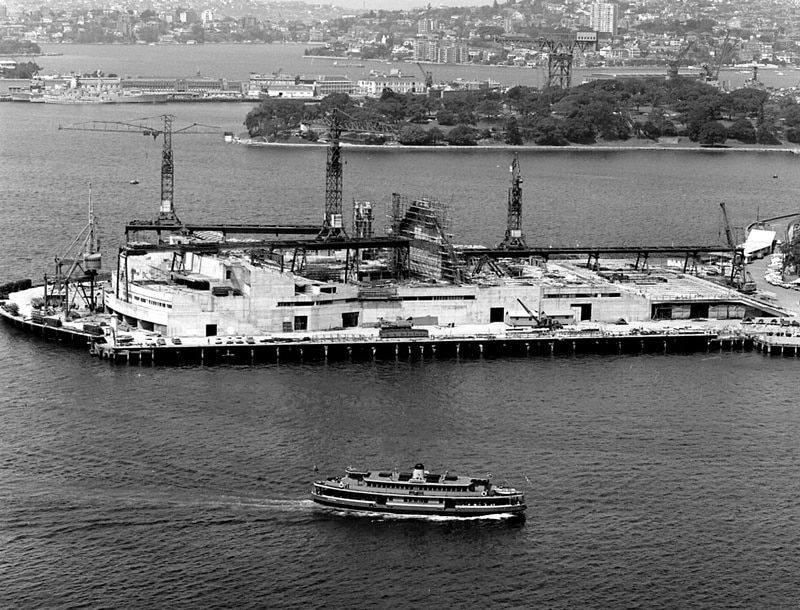
Sydney Opera House under construction in 1963.

⬅ See all events from 3 October

Spread the word on your favourite platform!
On This Day in True Crime History
1794·The First Free Settler Murdered in the Colony: Hanged at Sydney for a Parramatta Stabbing
1826·The Gun That Misfired Twice: Three Bushrangers Hanged Outside Sydney
1873·A Tearful Confession in Custody Cracked the Case: Two Men Hanged at Perth Gaol for Eating their Victim
1889·He Called It an Accident. The Jury Called It Murder: Robert Landells Hanged at Melbourne Gaol
1907·A Doctor Fooled Twice: Martha Rendell and the Second Child to Die of Diphtheria
2002·Shot Dead in His Own Bed: A Melbourne Gangland Killing Blamed on a Friend
More Crime On This Day →

Subscribe to Dark Stories

True crime stories, dark history and tour news, straight to your inbox.