Half the police force in Melbourne walked off the job over a secret supervisory system that monitored beat officers using men drawn from their own ranks, derisively nicknamed “spooks”. Hundreds of constables, many of them returned servicemen, refused duty rather than work under informants planted among their colleagues, and the government offered no guarantee against victimisation.
With the city effectively unpoliced, crowds poured out of Flinders Street station on the nights of 2 and 3 November 1923 and surged up Elizabeth and Swanston streets. Shop windows were smashed, stores stripped of merchandise, a tram overturned, and three people died in the chaos. The few police still on point duty were jeered and harassed until they retreated to the safety of the Town Hall.
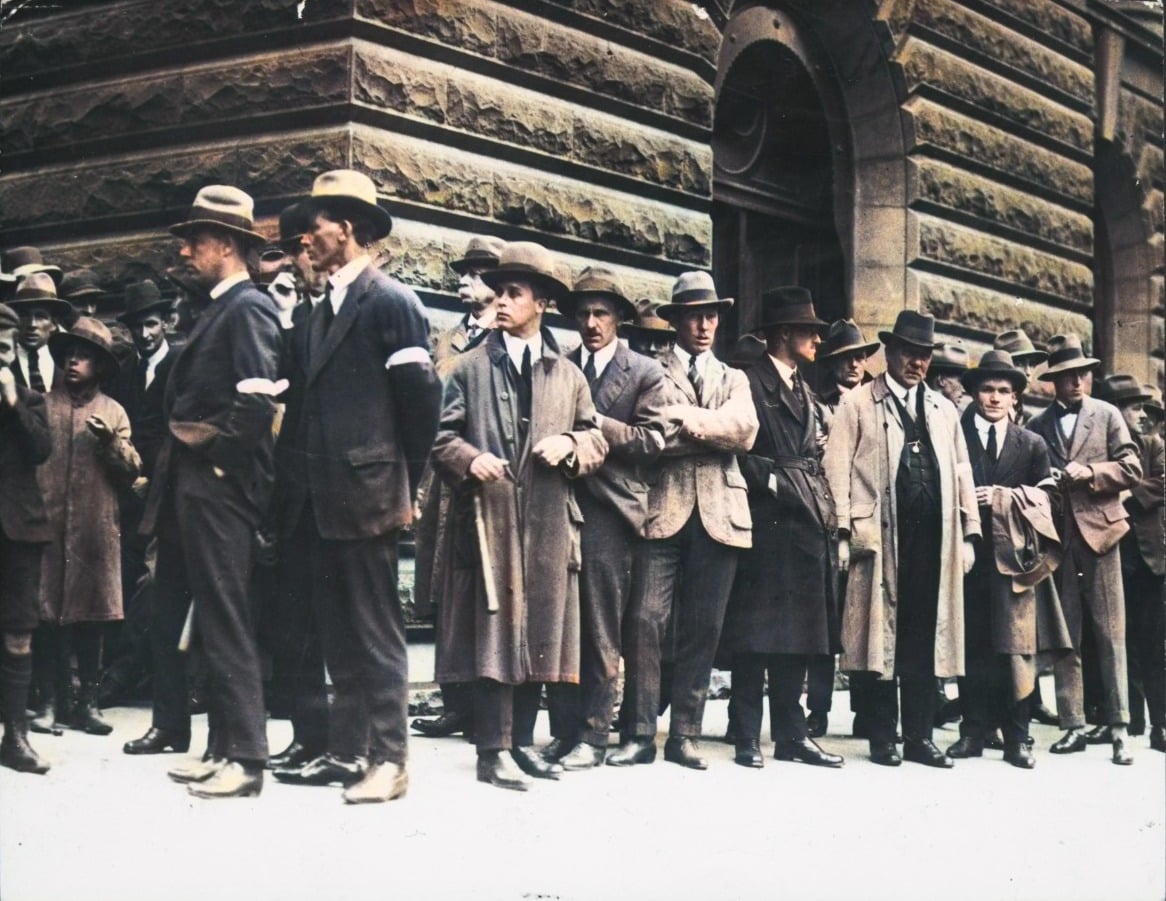
Melbourne’s papers rushed to blame the city’s criminal underworld, but court records later told a different story: most of those arrested were ordinary young men and boys with no prior offences. Order was only restored when five thousand volunteer special constables, sworn in under the direction of Sir John Monash, took to the streets in armbands and badges to do the job the regular police had abandoned.