Dark Stories True Crime Blog - Page 13

How to Recruit a Hangman

Every country has had one, but rarely does anyone stop to consider how a person gets hired for the position of national hangman. If you ever happen to come on a Dark Stories True Crime Walking Tour in Sydney, or elsewhere for that matter, there’s a reasonably high chance that you will hear a story about a hanging.

But did you ever imagine yourself, back in your school days, dreaming of becoming the head executioner in your state? How would your career advisor help you reach that goal? What electives could you take? What university should you attend? Then, after graduation, where would you apply? Is there some hangman recruitment agency to whom you could email your resume? Or conversely, what if you were looking to hire someone for the job; where would you even begin to search?

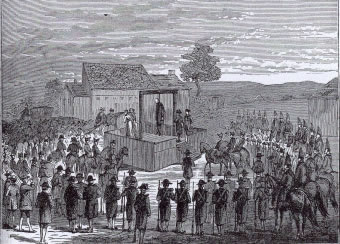
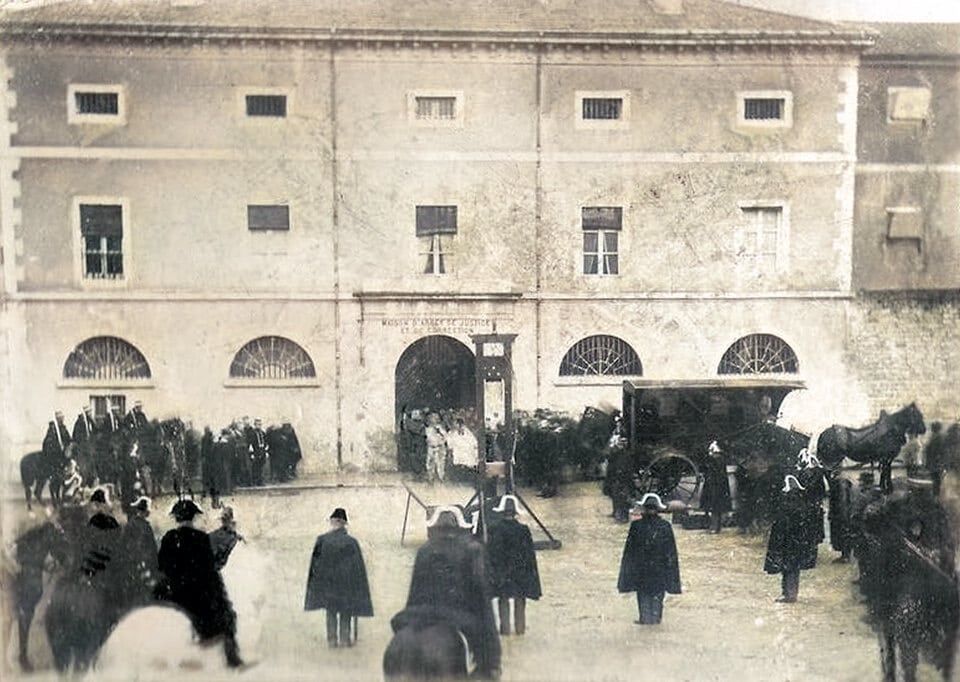
Governor Phillip faced this exact problem at the very beginning of Sydney’s fledgling colony life. Precisely one month and one day after the First Fleet arrived in Australia, there was an execution – the first in Australian history (we’ll even walk past the spot as we meander through on one of our walking tours in Sydney). However, the hangman was a last-minute recruit and not a permanent appointee; it was a one-off contract.

Hangman

The position needed permanent filling, but no one wanted the job. The officers despised the role of hangman and refused to do it, and the convicts saw the position as the lowest of the low. So what was the Governor to do? Discipline at this early stage of the colony’s life could have easily broken down, so he needed to find an executioner, and he needed to do it quickly to ensure that he wouldn’t lose face or control.

Then, in late February 1788, Governor Phillip found the solution to his problem.

The worst crime one could commit in the new colony concerned the government stores of food. The settlers had no way of knowing if or when resupplies might arrive or whether the crops they were planting would even survive (spoiler alert, they didn’t). They made it all around the world only to be immediately put on rations. Therefore, stealing food from government stores was considered an offence worse than murder, and such crimes demanded severe repercussions. So when four convicts were found guilty of theft from the government stores, they were condemned to die that very same day; justice was swift and severe.

But Governor Phillip still didn’t have a hangman! Nevertheless, the execution ritual began, and the four men advanced under guard to the hanging tree. The first man was granted a reprieve and given lashes instead. Then, the second man, James Freeman, was marched to the tree, and the hanging rope fastened around his neck. At the moment James expected to be launched into eternity, he received the offer of a full pardon, but only on the condition that he agree to take on the duty of executioner for as long as he remained in the country.

governor_arthur_phillip

James Freeman paused for a few moments, mustered his dignity, and agreed to accept the role. He was given a full pardon on condition of taking the position for the remainder of his original 7-year sentence and became a “free man” from that moment. Governor Phillip’s strategy was successful, and he granted the remaining two men a reprieve, meaning James Freeman could take some time to get used to his new job. 

On May 2nd, 1788, James Freeman executed his first man without any complaint from the unwilling customer. His first performance was a killer, and Governor Phillip’s innovative new HR Recruitment strategy had proven to be successful.

Discuss On Substack

Spread the word on your favourite platform!

Horror – The Master Poisoner

The Master Poisoner, an enthralling audio dark story presented by The Online Stage, stands out for its rich, engaging dialogue tinged with creepy, sinister elements, making it one of our top picks.

Adding a layer of intrigue to this macabre production, its co-author Maxwell Bodenheim met a fate strangely mirroring the story’s theme – he was tragically a murder victim.

Maxwell Bodenheim’s life was marked by personal turmoil. His third marriage to Ruth Fagin, who was 28 years his junior, was characterized by a destitute lifestyle, including homelessness and subsistence through panhandling and Ruth’s engagement in prostitution.

This period was marred by incidents of violence. Their lives met a tragic end in 1954 in Manhattan, where they were murdered by Weinberg, a dishwasher they had befriended. The violent altercation occurred in Weinberg’s room when the 62-year-old Bodenheim awoke from a drunken sleep to discover Weinberg and Ruth engaged in intimate activities. Bodenheim challenged Weinberg, and they began fighting. Weinberg shot Bodenheim twice in the chest and proceeded to beat Ruth before stabbing her four times in the back.

Here is an audio extract of The Master Poisoner written by Bodenheim, aka The Kin of Greenwich Village Bohemians, one of the most original dramatists of the early 20th century:-

The Master Poisoner - A Dark Story

The Master Poisoner comes courtesy of The Online Stage – producers of numerous AudioBook and Theatre Productions, with a huge range that is free to enjoy!

And as a final epitaph for Bodenheim, his very dark tendencies are on display below in the form of a sample of his dark poetry for your enjoyment.

Death by Maxwell Bodenheim

I shall walk down the road.
I shall turn and feel upon my feet
The kisses of Death, like scented rain.
For Death is a black slave with little silver birds
Perched in a sleeping wreath upon his head.
He will tell me, his voice like jewels
Dropped into a satin bag,
How he has tiptoed after me down the road,
His heart made a dark whirlpool with longing for me.
Then he will graze me with his hands
And I shall be one of the sleeping silver birds
Between the cold waves of his hair as he tiptoes on.

I shall walk down the road.
I shall turn and feel upon my feet
The kisses of Death, like scented rain.
For Death is a black slave with little silver birds
Perched in a sleeping wreath upon his head.
He will tell me, his voice like jewels
Dropped into a satin bag,
How he has tip-toed after me down the road,
His heart made a dark whirlpool with longing for me.
Then he will graze me with his hands
And I shall be one of the sleeping silver birds
Between the cold waves of his hair, as he tip-toes on.

Spread the word on your favourite platform!

Mother Hogan’s Brothel Guide

Crime history in Australia has a tradition of strong, dominating women ruling over small enclaves of inner-city a brothel and other vice-related activities.

Characters ranging from the famous Molly Morgan of Maitland to Sydneys Razor Gangs War with the infamous arch-rivals Kate Leigh and Tilly Devine, yet Brisbane also had its own high priestess of the night. She plied her trade in the heart of old Brisbane town from the 1870s up until her passing in what was colloquially known as Mother Hogan’s Brothel.

Madam

Throughout the 1800s, an area of the Brisbane CBD named Frog Hollow – an apt name as the swampland played host to a large population of frogs – quickly gained a reputation as the seediest part of town. Because the district swiftly flooded during storms, subsequent rents were the cheapest available in the city, leading to it becoming the first red-light district in Brisbane.

Numerous brothels sprung up in this part of town, and by far, the most ill-famed of them all was Mother Hogan’s brothel – an unofficial name that you wouldn’t find in any directory listing. It opened in the 1870s and was around for at least 50-60 years, even surviving the eventual passing of Mother Hogan herself. So, who was Mother Hogan?

As far back as the 1860s, she was a bright young thing going by the name of Mary and living in the town of Wagga. She was once pure and innocent; she once had a fond mother who watched over her and protected her from harm. Yet for 30 years of her life, she conducted one of the most immoral houses to be found on the face of the Australian Continent. Her house was almost as well known as the House of Parliament and had higher attendance than local churches and cathedrals.

Originally in her hometown of Wagga, she completed the pact of marriage, and for a time, her virtuous star shone in a pure blue sky. Then along came Mr. John Hogan – and introduced her to the world of infamy and vice of the most disgraceful kind, and she liked it.

TILLY AND KATE in 1948_color

The couple soon became inseparable, arrived in Brisbane together, and they went into business in the Frog Hollow district of the Brisbane CBD. John used to bring along the young lads of the upper-class villas, and Mary’s job was to trot out the wine, woman, and song.

In the year 1889, she became enamoured with an actor from the theatre, and she escaped her seemingly happy life and bolted with him to London, taking with her about £3000. As long as the cash lasted, she revelled in sin and luxury, but as soon as the money ran out, the actor departed and abandoned Mary to her own devices in the grimy streets of London. She was forced to return to her profession in Petticoat Lane to earn some good old-fashioned English coin.

For some inexplicable reasons, John Hogan felt lonely without his Mary and sent her the money that brought her back to Brisbane and once more set her up as the Queen of Mother Hogan’s Brothel.

It was rumoured to be an evil place where one would blush to tell about the things that happened there. Only a few men could describe the racy incidents that occurred from time to time. During its existence, some thousands of girls careered to ruin within its portals, and a number of men were said to become physical and moral wrecks through its agency.

For all her seeming faults, Mother Hogan was considered an honest woman, and no man was ever robbed of a penny when staying in the Hogan Household. Men were beaten and plundered in the Frog Hollow district, but dignity and honour made it difficult for these men to report these crimes lest their reputations suffer.

Mother Hogan’s end came in March 1904 when, at last, she went to meet her God, and as one person put it at the time – hers was a life wasted, having chosen the oldest profession in the world and lived a life of sin and shame.

The funeral itself was a gorgeous affair, with the hearse, the coffin, and the mourning coaches being up to the mark required for a Governor-General.

No local priest would attend the burial, so the services of a missionary man had to be recruited. There were girls in the cortege shedding tears, and a stranger would have thought the body of some pure, virtuous woman was undergoing sanctification rituals on her deposit into the earth. Many pundits thought only that here was a woman who fled with another man from her husband, then started a brothel and lived on its proceeds to the end.

Frog Hollow - Brisbane CBD

Mother Hogan’s brothel survived her passing and continued to remain in business and, according to locals, remained one of the worst examples of immorality to be found on the face of God’s earth – and was still in vigorous operation through to the 1920s and beyond.

A more in-depth look into Australia’s true criminal history reveals numerous examples to prove that the lucky country has more than had its fair share of tough female crime bosses in the days when it was thought to be impossible.

For more stories like this, then join the Dark Stories True Crime Tour in your town. The Brisbane True Crime Tour incorporates many parts of the old town. For those in the Hunter Valley, the Maitland True Crime Tour will give a good account of its uniquely dark history and Molly Morgan’s incredible influence on the town. For more information about the Razor Gang Wars and the rivalry between Tilly Devine and Kate Leigh, you will want to book your ticket on the Sydney Razor Gangs True Crime Tour.

Discuss On Substack

Spread the word on your favourite platform!

Shootout in Razor Gangs Central

This story is an excellent example of the effectiveness of the Pistol Licencing Act 1927, which did so much to bring forth the Razor as a weapon in the Razor Gangs wars that were starting to heat up in the Sydney streets.

On the evening of December 28th, 1931, when a man named Roberts approached a young woman, Renie, on William Street. He said that he wanted her to live with him as a “lady of the night”. The business of “white slavery” was thriving in the area at the time, with young women kidnapped and forced to work the streets for various local gangs. Roberts himself was known to police as a small-time underworld figure, under the alias Paddy Reynolds, and for threatening people with a gun or a razor.

Renie just laughed at Roberts, so he drew a revolver, pointed it at her and said: “Either you live with me, or I will shoot you. I will see you here at 6 p.m.” He then jabbed Renie several times with the gun. Renie ran home and told the man she was living with, James White, what had happened. White was a decent man who made his living “selling dolls and little toys to crowds of happy children at every showground”, including each year at Sydney’s Royal Easter Show. When Renie told him what had happened, White said: “I will see the chap that threatened to shoot you.”

The couple met Roberts on the corner of Kirketon Road and William Street just after 6 pm. It was quite busy, with lots of people around. White confronted Roberts: “What is the idea of pulling a gun on this girl?” Roberts replied, “Mind your own business, or I’ll blow your head off.”

White didn’t back down… so Roberts stepped out onto William Street and started firing. Terrified men, women and children scurried away for their lives as White ducked behind a pole for cover. He pulled out his own revolver and shot twice at Roberts, who backed away across Williams Street, firing four shots in quick succession; one of these almost hit Renie, who ducked just in time, the shop window above her head smashing into pieces.

Roberts reached the other side of the street. Blood was streaming from his chest, and he swayed where he stood. White’s gun had jammed, so a constable took him into custody. He calmly handed the gun over, saying, “I have a licence.”  Thank goodness for that! On the way to the police station, White said: “Fancy these mongrels coming out and victimising women.”

Meanwhile, another constable had gone to Roberts, who said: “He got me.” Roberts pulled open his coat to reveal a large amount of blood.  He was taken to hospital, where he died half an hour later.

Razor Gangs Sydney

At the trial, Renie testified that she had been threatened by shady members of the underworld. On one occasion two of them had forced their way into her flat. “You little copper!” said one. “You don’t think you’re going to give evidence for White, do you?   If you do, you’ll cop something for yourself.”  Despite this, Renie had bravely taken the stand, and White was found not guilty on grounds of self-defence… in further good news, the timing of his release meant that he was just in time to sell his wares at the Royal Easter Show.

And as for Roberts? Nobody, not even his relatives, said they had any association with him, and after the post-mortem was concluded, no one came forward to collect his body.

But most importantly of all, the Pistol Licences Act had done its job because – just for the record – no one in this case was shot by an unlicensed pistol.

If you want to learn more about the Razor Gang Wars, then you might be interested in doing the tour sometime.  Or else book in for any of our other tours in SydneyNewcastleMaitland and Brisbane.

Discuss On Substack

Spread the word on your favourite platform!