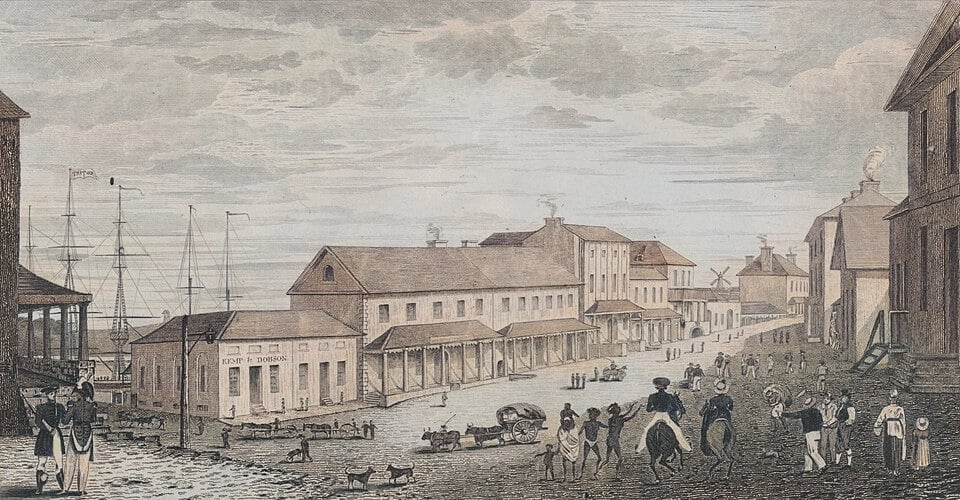
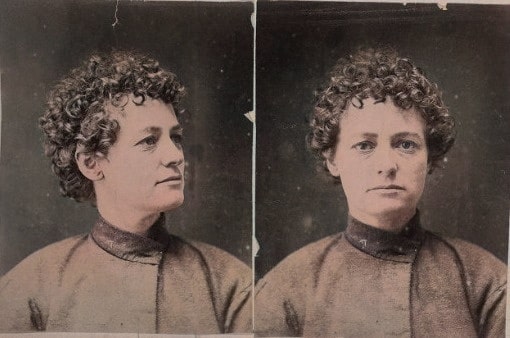
Among the most chilling cases in Australian criminal history, the story of Caroline Grills stands out for its sheer domestic horror. Known to her family and friends as ‘Aunt Carrie,’ this seemingly warm and generous woman spent years poisoning those closest to her with thallium, a tasteless and odourless rat poison that slowly destroyed her victims from the inside out. Between the late 1940s and early 1950s, Grills operated in plain sight across suburban Sydney, attending to the sick and dying with cups of tea laced with death. Her case remains one of the most disturbing examples of serial poisoning in the country, a reminder that the most dangerous killers can sometimes wear the most familiar faces.
A Beloved Figure in the Family
Caroline Grills was born in 1888 and spent most of her life in the working-class suburbs of Sydney. By all outward appearances, she was a devoted wife, a loving mother, and an attentive relative who went out of her way to care for family members in their time of need. She was short and stout, with thick spectacles and a warm smile that put everyone at ease. Neighbours and relatives alike described her as generous and kind, always the first to arrive with food and comfort when someone fell ill.
It was precisely this reputation that made her crimes so effective and so difficult to detect. In post-war Australia, families were tight-knit and relied heavily on one another. The idea that a beloved aunt or mother figure could be systematically murdering her own relatives was almost unthinkable. Grills exploited this trust with a calculated patience that would not be fully understood until years later, when the bodies had already been buried and the survivors were fighting for their lives.
The First Deaths: Suspicion Buried with the Victims
The poisoning spree is believed to have begun in November 1947 with the death of Christina Mickelson, Grills’ stepmother. The elderly woman was 87 years old and had been in declining health, and when she passed away, no one questioned the cause. It seemed like a natural death, the sad but unremarkable end of an ageing woman’s life. Grills had been at her bedside throughout, dutifully preparing meals and cups of tea.
Not long after, in January 1948, Angelina Thomas died. A relation of Grills’ husband, she too had been elderly and in apparently failing health, and again Aunt Carrie had been the devoted caregiver in attendance. Then came the death of John Lundberg, Grills’ husband’s brother-in-law, in late 1948. Each time the pattern was the same: a period of mysterious illness characterised by hair loss, numbness in the extremities, and severe gastrointestinal distress, followed by death. And each time, Caroline Grills had been present, hovering with her teapot and her sympathetic smile.
At the time, thallium poisoning was notoriously difficult to detect. The symptoms mimicked a range of natural illnesses, and unless a doctor specifically tested for the substance, it could easily be mistaken for everything from influenza to nerve disease. Thallium was also readily available in Australia as an ingredient in commercial rat poisons, making it terrifyingly easy for Grills to obtain her weapon of choice without arousing suspicion.
A Pattern Emerges
By 1949, the death toll in Grills’ extended family had begun to attract quiet whispers, though no one dared voice their suspicions openly. The fourth confirmed victim was Mary Anne Mickelson, Grills’ sister-in-law, who died that year after suffering the same agonising decline as those before her. Like the others, she had been under the attentive care of Aunt Carrie.
What made Grills particularly dangerous was her apparent lack of traditional motive. She did not stand to inherit vast fortunes from her victims. There were no bitter family feuds or obvious grudges. Some criminologists have since speculated that Grills derived a perverse satisfaction from the power she held over life and death, enjoying the attention and gratitude she received as a devoted caregiver.
Whatever her internal motivations, the external reality was devastating. Four people were dead, and Grills showed no signs of stopping. In fact, she appeared to be escalating, expanding her circle of victims to include not just elderly relatives but younger and healthier family members as well.
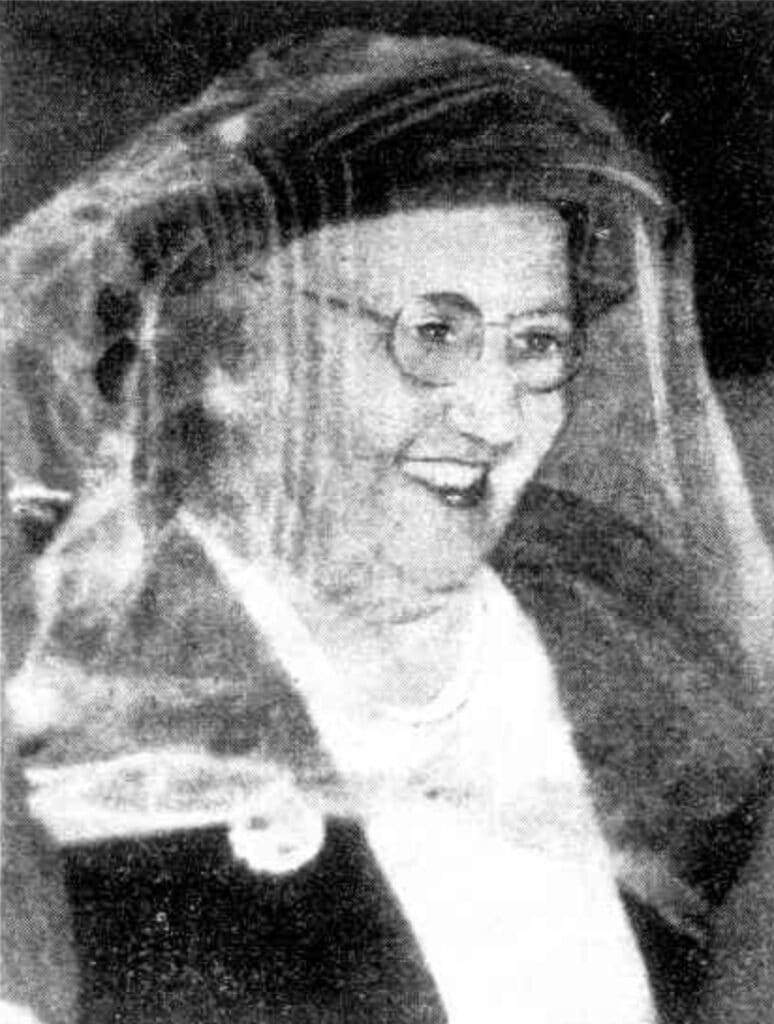

Grills was not operating in a vacuum. By early 1953, thallium poisoning had become a serious public health crisis in New South Wales. In the thirteen months leading up to her arrest, there had been 46 reported cases across the state, ten of them fatal, with five of those deaths believed to be murders. At any given time, multiple victims were being treated simultaneously in Sydney hospitals. The situation was alarming enough that in late April 1953, a group of Australian poison experts convened in Sydney for an emergency meeting, the first of its kind in the country, to pool clinical, chemical and analytical data on thallium poisoning and attempt to find an antidote. Poison experts around the world had been searching for one for years without success. Caroline Grills was not the only person poisoning with thallium in Sydney, but she would prove to be the most prolific.
The Survivors Who Broke the Case
The turning point came when Grills began poisoning relatives who did not die. In the early 1950s, several family members began experiencing the telltale symptoms of thallium poisoning: their hair fell out in clumps, they suffered excruciating pain in their limbs, and their vision deteriorated rapidly. Among those targeted were Eveline Lundberg, Grills’ own sister-in-law, along with Eveline’s daughter Christine Downey and her husband John Downey, all regular recipients of Aunt Carrie’s famous cups of tea.
It was within this circle that Grills was finally caught. A suspicious family member, already partially blinded from a previous poisoning, noticed Grills slip her hand into her dress pocket and move it over a cup of tea she had just prepared. He quietly switched the cup, decanted the tea into a bottle, and handed it to police. Laboratory analysis confirmed what the family had feared: the tea contained a lethal dose of thallium. Caroline Grills was arrested on 11 May 1953.
The Trial That Shocked Sydney
The trial of Caroline Grills in October 1953 became a media sensation across Australia. The image of a kindly grandmother deliberately poisoning her own family captivated and horrified the public in equal measure. Newspapers dubbed her ‘Aunt Thally,’ a darkly humorous nickname that belied the gravity of her crimes.
Prosecutors made a calculated decision about how to proceed. Although police charged Grills with four counts of murder, relating to the deaths of Christina Mickelson, Angelina Thomas, John Lundberg, and Mary Anne Mickelson, and three counts of attempted murder, they chose to try her on a single count: the attempted murder of Eveline Lundberg. It was their strongest and most direct case. The intercepted cup of tea was damning physical evidence, thallium had been found in Grills’ dress pocket, and a witness had seen her administer the poison with his own eyes, before that sight was also taken from him.
The murder charges were not abandoned entirely. The judge permitted evidence of the four suspicious deaths to be introduced during the trial as similar fact evidence, allowing the prosecution to establish Grills’ pattern of behaviour and intent without needing to mount four separate murder trials. Once she received the maximum available sentence, pursuing those additional prosecutions was deemed unnecessary.
Grills professed her innocence throughout, claiming police had pressured her family to testify against her and insisting she had lived to help, not to kill. Her behaviour in the courtroom, marked by outbursts of laughter, did little to help her cause. On 15 October 1953 she was found guilty of attempted murder and sentenced to death.
Her appeal was dismissed by the Court of Criminal Appeal in April 1954, and in September that year her sentence was commuted to life imprisonment, a decision that reflected evolving attitudes toward capital punishment in Australia during the 1950s. She would spend the rest of her days behind bars.
Life Behind Bars and a Grim Legacy
In prison, Grills reportedly maintained her cheerful and sociable demeanour, earning a measure of popularity among fellow inmates. It was said that she continued to make tea for other prisoners, a detail that carries an almost unbearable irony given the nature of her crimes. Whether her fellow inmates were aware of the full extent of her history is unclear, but the image of Aunt Carrie bustling about with her teapot in the State Reformatory for Women is one that has endured in Australian criminal folklore.
Grills gradually lost her eyesight during her years in prison and became increasingly frail. She died on 6 October 1960, still incarcerated, without ever having publicly expressed remorse for her crimes. The true number of her victims remains uncertain; while she was charged in connection with four deaths and several attempted murders, some investigators believe she may have been responsible for additional deaths that were never formally linked to her.
The Thallium Poisoning Legacy in Australia
The case of Caroline Grills had a lasting impact on Australian law and public health policy. In the wake of her trial, authorities moved to restrict the sale of thallium-based rat poisons, recognising the extraordinary danger posed by a substance that was both lethal and virtually undetectable. The case also highlighted significant gaps in forensic toxicology at the time, prompting improvements in post-mortem testing procedures across the country.
Grills’ crimes also contributed to a broader cultural awareness of poisoning as a method of domestic murder. In the decades that followed, her case was frequently cited in discussions about the particular dangers posed by killers who operate within the home, exploiting bonds of trust and familial obligation. Her story served as a grim warning that evil does not always announce itself with violence or aggression; sometimes it arrives with a smile and a cup of tea.
The case of Caroline Grills is one of many dark chapters profiled in the Dark Stories series, where we explore the lives and crimes of Australia’s most infamous criminals in no particular order. From suburban poisoners to outback outlaws, these stories reveal the shadows lurking beneath the surface of ordinary Australian life. One day, we plan to rank these criminals once and for all, settling the debate about who truly stands as the most notorious figure in the nation’s criminal history. Until then, the tea is served, and the stories keep coming.